Euxoa olivia
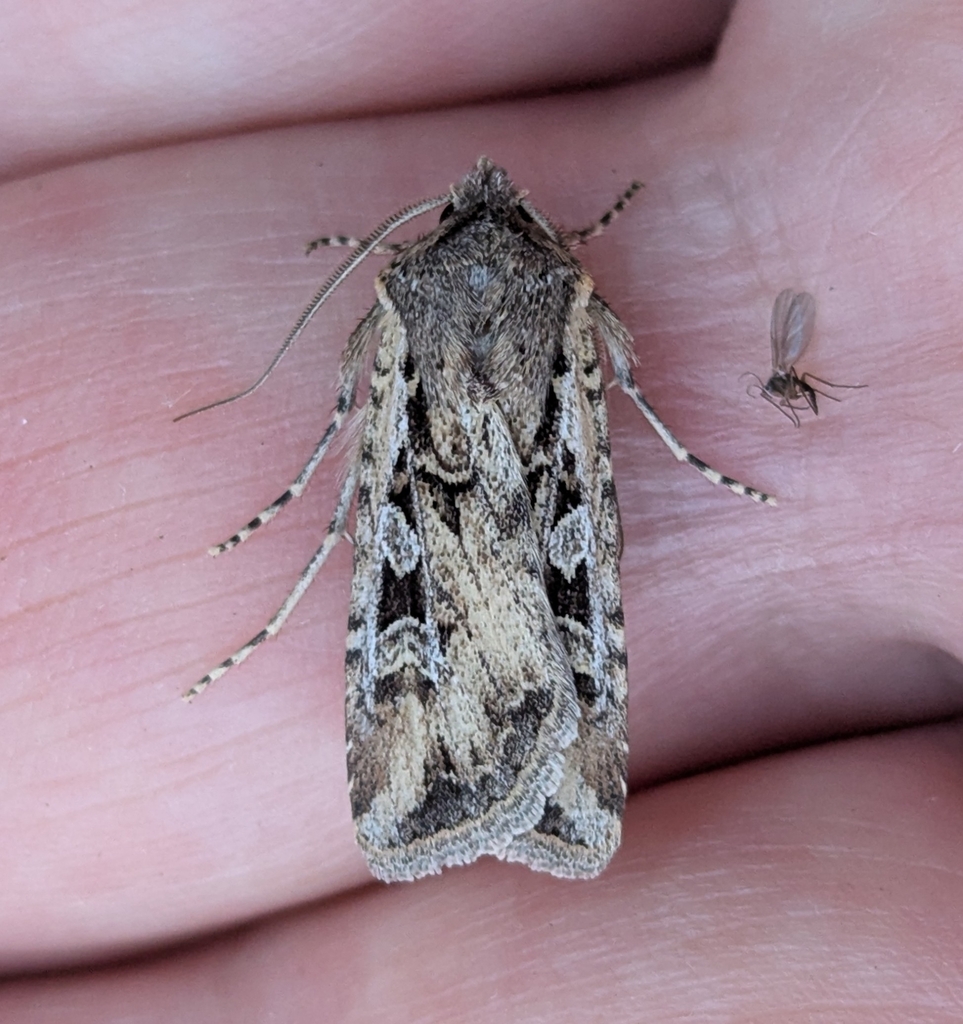
no rights reserved · CC0
Family: Noctuidae · Class: Insecta · Order: Lepidoptera
Euxoa olivia is a California animal in the Noctuidae family.
Euxoa olivia is a moth species belonging to the family Noctuidae, commonly known as owlet moths or cutworm moths. This nocturnal lepidopteran is part of the genus Euxoa, which comprises numerous species of dart moths distributed across North America. The species exhibits the typical noctuid characteristics of cryptic coloration and robust build adapted for nocturnal activity. The physical characteristics of E. olivia follow the general morphology of Euxoa species. Adults display forewings with muted earth tones, typically ranging from gray-brown to olive-brown coloration that provides effective camouflage against tree bark and soil substrates. The hindwings are generally paler, often whitish or light gray with darker marginal areas. Wing span measurements for this species group typically range from 28 to 35 millimeters (1.1 to 1.4 inches). The antennae are filiform in both sexes, though males may display slightly more pronounced segments. The geographic distribution of Euxoa olivia appears to be concentrated in western North America, consistent with many members of this genus that show affinities for arid and semi-arid environments. Many Euxoa species demonstrate restricted ranges tied to specific ecological conditions or host plant associations. The precise range limits and population distribution patterns for E. olivia require further documentation through systematic survey efforts. Habitat preferences for this species likely include open grasslands, shrublands, and mixed vegetation communities typical of western North American ecosystems. Euxoa species generally inhabit areas with sandy or well-drained soils where larval development can occur in the root zone of host plants. Elevation ranges for related species often span from valley floors to montane environments, suggesting potential adaptability to varied topographic conditions. The life cycle of E. olivia follows the standard noctuid pattern of complete metamorphosis. Adults are active during nighttime hours and are attracted to artificial light sources. Mating likely occurs during late spring or summer months, with females depositing eggs on or near host plant species. Larvae, known as cutworms, develop underground or at soil level, feeding on plant roots and lower stems. The larval stage represents the primary feeding phase, with pupation occurring in soil chambers. Most Euxoa species complete one generation annually, overwintering as larvae or pupae depending on climatic conditions. Dietary preferences center on herbaceous plants, with larvae typically feeding on grasses and forbs common to their habitat range. Adult moths obtain energy from nectar sources and may visit flowers of various plant species during nocturnal foraging activities. The conservation status of Euxoa olivia remains undetermined due to limited taxonomic and ecological research. Many noctuid moth species face pressures from habitat modification, pesticide applications, and light pollution that disrupts natural behavioral patterns. Comprehensive surveys are needed to establish baseline population data and assess potential conservation needs for this species within its native range.
Classification
Class: Insecta · Order: Lepidoptera · Family: Noctuidae
Frequently asked questions
How is Euxoa olivia classified?
Euxoa olivia belongs to class Insecta, order Lepidoptera, family Noctuidae.
What family does Euxoa olivia belong to?
Euxoa olivia is in the Noctuidae family.
What is Euxoa olivia?
Euxoa olivia is a moth species belonging to the family Noctuidae, commonly known as owlet moths or cutworm moths.
Is Euxoa olivia found in California?
Yes. Euxoa olivia is recorded in California in The California Species Project's catalogue.
Related species
Other California species in the same genus, family, or bioregion.
Data from The California Species Project — 14,000+ California species with verified data from CNPS, CDFW, USFWS, and more.