Euxoa pluralis
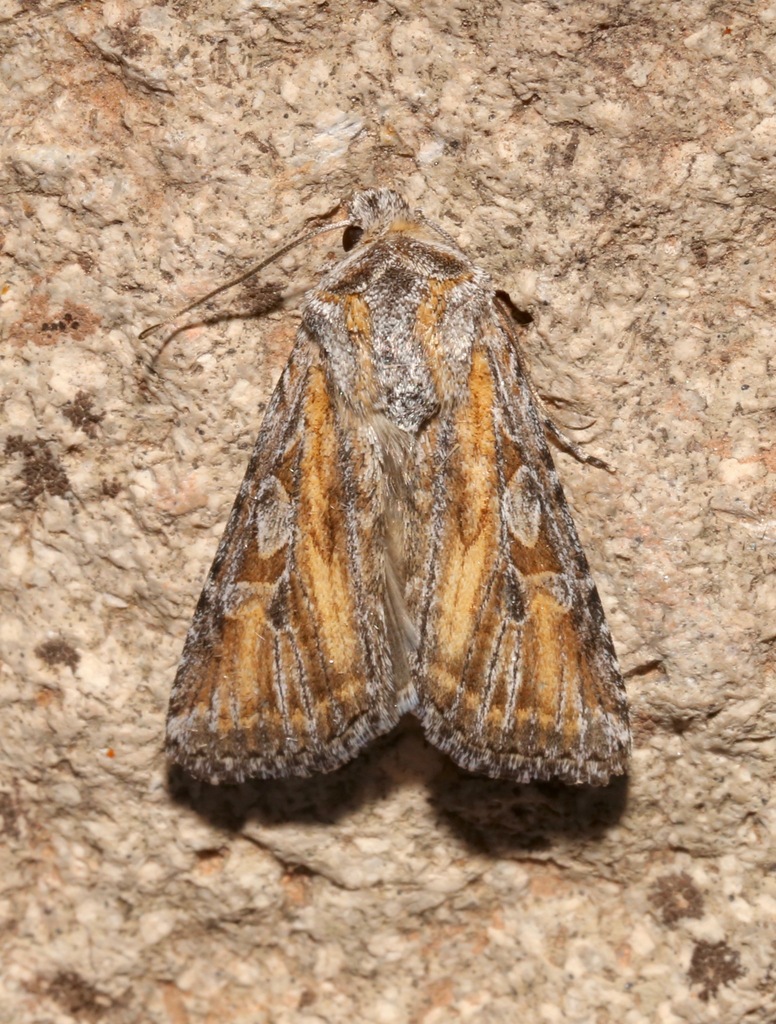
(c) Laura Gaudette, some rights reserved (CC BY) · licence
Family: Noctuidae · Class: Insecta · Order: Lepidoptera
Euxoa pluralis is a California animal in the Noctuidae family.
Euxoa pluralis is a moth species in the family Noctuidae, commonly known as cutworm moths or owlet moths. This noctuid moth belongs to the genus Euxoa, a large group of moths whose larvae are typically subterranean and feed on plant roots and lower stems. Adult moths in this genus are generally medium-sized with wingspans ranging from 25 to 40 mm, though specific measurements for E. pluralis are not well documented in the literature. The distribution and range of Euxoa pluralis remain poorly documented in current scientific literature. The species appears to have a limited distribution, potentially restricted to specific regions of western North America, though comprehensive range data are lacking. Many Euxoa species are known from montane and desert environments, suggesting this species may occupy similar habitats. Habitat requirements for E. pluralis are not well established in published sources. Most Euxoa species inhabit arid and semi-arid environments, including grasslands, shrublands, and desert areas. Adults are typically nocturnal and may be attracted to light sources during their flight period. The larvae, like other cutworm species, likely develop in soil environments where they feed on plant material below ground. The life cycle and behavior of E. pluralis follow the typical pattern of noctuidae moths. Adults are likely nocturnal, with flight activity concentrated during nighttime hours. Mating and egg-laying behaviors are presumed to occur during the active flight season, though specific timing is not documented for this species. Larvae develop underground, feeding on roots and lower portions of host plants. The larval stage likely overwinters in the soil, with pupation occurring in spring before adult emergence. Host plant associations for E. pluralis have not been definitively established through published research. Many Euxoa species utilize a variety of herbaceous plants and grasses as larval hosts, with some showing preferences for specific plant families including Asteraceae, Chenopodiaceae, and various grasses. The larvae typically feed on roots and may also consume stems near the soil surface. Conservation status information for Euxoa pluralis is extremely limited. The species does not appear on federal or state endangered species lists, and its global conservation rank has not been assessed by major conservation organizations. This lack of status information may reflect both the species' cryptic nature and limited research attention rather than actual rarity. Many noctuidae moths are poorly studied, particularly those with restricted ranges or specialized habitat requirements. The taxonomic validity and distinctiveness of E. pluralis may require further investigation, as moth taxonomy continues to evolve with molecular techniques. Without comprehensive surveys and ecological studies, the true distribution, abundance, and conservation needs of this species remain uncertain. Future research priorities should include systematic surveys to establish range limits, host plant relationships, and population assessments to determine appropriate conservation status.
Classification
Class: Insecta · Order: Lepidoptera · Family: Noctuidae
Frequently asked questions
How is Euxoa pluralis classified?
Euxoa pluralis belongs to class Insecta, order Lepidoptera, family Noctuidae.
What family does Euxoa pluralis belong to?
Euxoa pluralis is in the Noctuidae family.
What is Euxoa pluralis?
Euxoa pluralis is a moth species in the family Noctuidae, commonly known as cutworm moths or owlet moths.
Is Euxoa pluralis found in California?
Yes. Euxoa pluralis is recorded in California in The California Species Project's catalogue.
Related species
Other California species in the same genus, family, or bioregion.
Data from The California Species Project — 14,000+ California species with verified data from CNPS, CDFW, USFWS, and more.