Euxoa recula
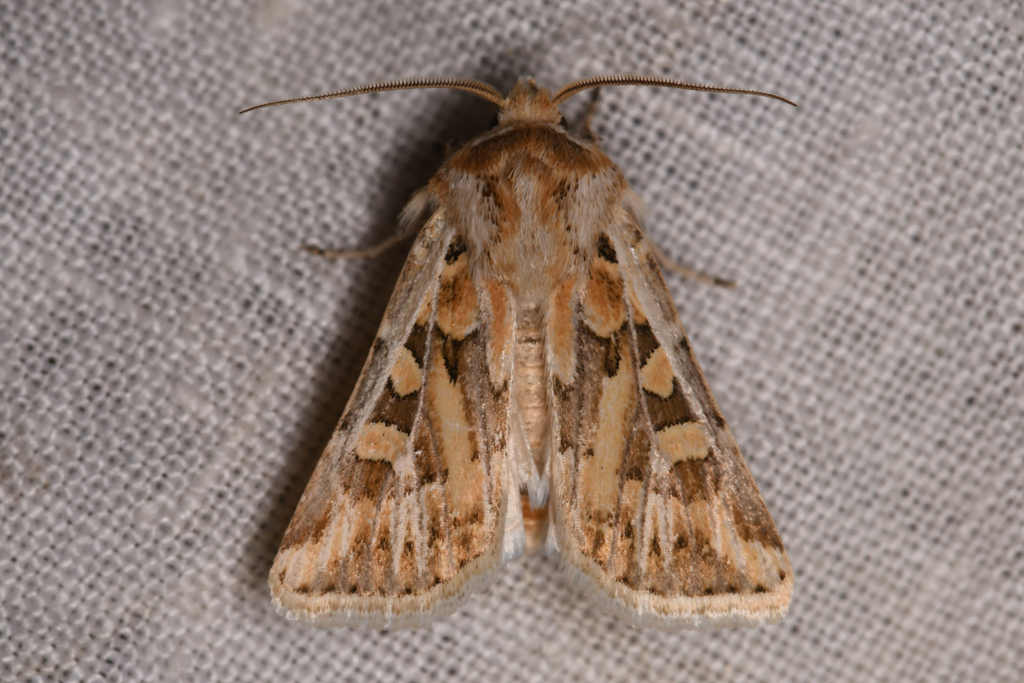
(c) Trevor Van Loon, some rights reserved (CC BY) · licence
Family: Noctuidae · Class: Insecta · Order: Lepidoptera
Euxoa recula is a California animal in the Noctuidae family.
Euxoa recula is a moth species in the family Noctuidae, commonly known as cutworm moths or dart moths. This species belongs to the genus Euxoa, which comprises numerous species of ground-dwelling moths found across North America. Adult moths typically measure 12 to 18 mm (0.5 to 0.7 inches) in forewing length, with wingspan ranging from 25 to 35 mm (1.0 to 1.4 inches). The forewings display muted earth tones, typically grayish-brown to pale brown, with subtle darker markings that provide effective camouflage against soil and vegetation. The hindwings are generally paler, often whitish or light gray with darker marginal areas. The range and distribution of Euxoa recula in California remains poorly documented in available literature. Like other Euxoa species, this moth likely occurs in specific habitat types that support its larval host plants and provide suitable conditions for adult reproduction. The genus Euxoa is typically associated with arid and semi-arid environments throughout western North America, suggesting this species may occur in similar habitats within California's diverse landscape. Euxoa species generally inhabit open grasslands, shrublands, and desert areas where their larval food plants occur. These moths prefer areas with sandy or loose soils that accommodate their larvae's subterranean lifestyle. Elevation ranges for California populations are not well-established, but related species in the genus occur from sea level to montane zones, depending on local habitat availability and climate conditions. Adult Euxoa recula moths are nocturnal and typically active during late spring through early fall, with peak flight periods varying by elevation and local climate. Adults are attracted to artificial lights and feed on nectar from various flowering plants. Females deposit eggs singly or in small clusters on or near host plants. The larvae, commonly called cutworms, are subterranean feeders that cut through plant stems at ground level. Larvae typically feed on roots and lower stems of grasses and herbaceous plants, remaining underground during daylight hours. The species likely completes one generation per year, with larvae overwintering in soil and pupating in spring. The conservation status of Euxoa recula is not well-documented, and the species does not appear on federal or state listing databases as of December 2025. Like many moth species, populations may face threats from habitat loss due to agricultural conversion, urban development, and altered fire regimes. Pesticide use in agricultural areas may impact both larval and adult stages. Climate change could affect the species through altered precipitation patterns and temperature extremes that influence host plant availability and larval survival rates. The limited available information about this species' distribution, population trends, and ecological requirements highlights the need for additional taxonomic and ecological research to better understand its conservation needs and status in California.
Classification
Class: Insecta · Order: Lepidoptera · Family: Noctuidae
Frequently asked questions
How is Euxoa recula classified?
Euxoa recula belongs to class Insecta, order Lepidoptera, family Noctuidae.
What family does Euxoa recula belong to?
Euxoa recula is in the Noctuidae family.
What is Euxoa recula?
Euxoa recula is a moth species in the family Noctuidae, commonly known as cutworm moths or dart moths.
Is Euxoa recula found in California?
Yes. Euxoa recula is recorded in California in The California Species Project's catalogue.
Related species
Other California species in the same genus, family, or bioregion.
Data from The California Species Project — 14,000+ California species with verified data from CNPS, CDFW, USFWS, and more.