Euxoa septentrionalis
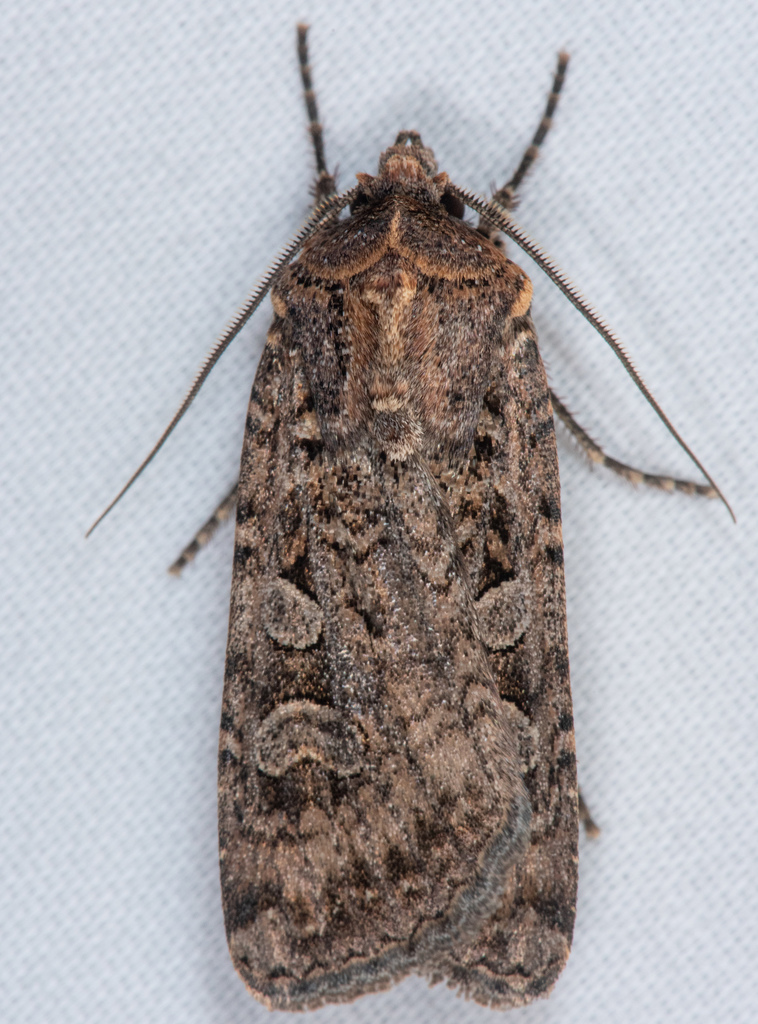
(c) Don Loarie, some rights reserved (CC BY) · licence
Family: Noctuidae · Class: Insecta · Order: Lepidoptera
Euxoa septentrionalis is a California animal in the Noctuidae family.
Euxoa septentrionalis is a moth species in the family Noctuidae, commonly known as cutworm moths. This species belongs to the genus Euxoa, which comprises numerous nocturnal moths found across North America. Adult moths typically exhibit the characteristic features of the Noctuidae family, with forewings displaying cryptic patterns of brown, gray, and black coloration that provide effective camouflage during daytime rest periods. The hindwings are generally paler, often whitish or light gray with darker marginal bands. Wing spans in the genus Euxoa typically range from 25 to 40 millimeters (1.0 to 1.6 inches), though specific measurements for E. septentrionalis require verification from taxonomic literature. The range and distribution of Euxoa septentrionalis in California remains poorly documented in available databases. The species name 'septentrionalis,' meaning 'northern,' suggests a possible association with higher latitude or elevation habitats. Many Euxoa species demonstrate restricted distributions, often associated with specific ecological conditions or host plant communities. Without verified location data, the precise California counties or regions where this species occurs cannot be definitively stated. Habitat requirements for Euxoa septentrionalis are not well-documented in current literature. Most Euxoa species inhabit open areas including grasslands, prairies, agricultural fields, and disturbed sites. Many species in this genus show preferences for areas with sparse vegetation where larvae can access suitable host plants and adults can find appropriate egg-laying sites. Elevation preferences and specific microhabitat requirements for E. septentrionalis require further research and documentation. The life cycle follows the typical pattern of Noctuidae moths, with complete metamorphosis through egg, larval, pupal, and adult stages. Larvae, known as cutworms, are typically nocturnal feeders that consume plant material at or near ground level. Many Euxoa species are univoltine, producing one generation per year, with adults active during specific seasonal periods. Flight periods, mating behaviors, and larval host plant associations for E. septentrionalis are not well-established in current taxonomic databases. Adult moths are attracted to artificial lights and sugar baits, behaviors common throughout the Noctuidae family. The conservation status of Euxoa septentrionalis remains unclear due to limited survey data and taxonomic uncertainty within the genus. Many Noctuidae species face pressures from habitat loss, agricultural intensification, and pesticide use. The lack of federal or state listing status may reflect either stable populations or insufficient data to assess population trends. Climate change potentially affects moth distributions through altered temperature regimes and precipitation patterns that influence both adult activity periods and larval host plant availability. Further research is needed to establish baseline population data, habitat requirements, and potential conservation concerns for this species in California.
Classification
Class: Insecta · Order: Lepidoptera · Family: Noctuidae
Frequently asked questions
How is Euxoa septentrionalis classified?
Euxoa septentrionalis belongs to class Insecta, order Lepidoptera, family Noctuidae.
What family does Euxoa septentrionalis belong to?
Euxoa septentrionalis is in the Noctuidae family.
What is Euxoa septentrionalis?
Euxoa septentrionalis is a moth species in the family Noctuidae, commonly known as cutworm moths.
Is Euxoa septentrionalis found in California?
Yes. Euxoa septentrionalis is recorded in California in The California Species Project's catalogue.
Related species
Other California species in the same genus, family, or bioregion.
Data from The California Species Project — 14,000+ California species with verified data from CNPS, CDFW, USFWS, and more.