Euxoa subandera
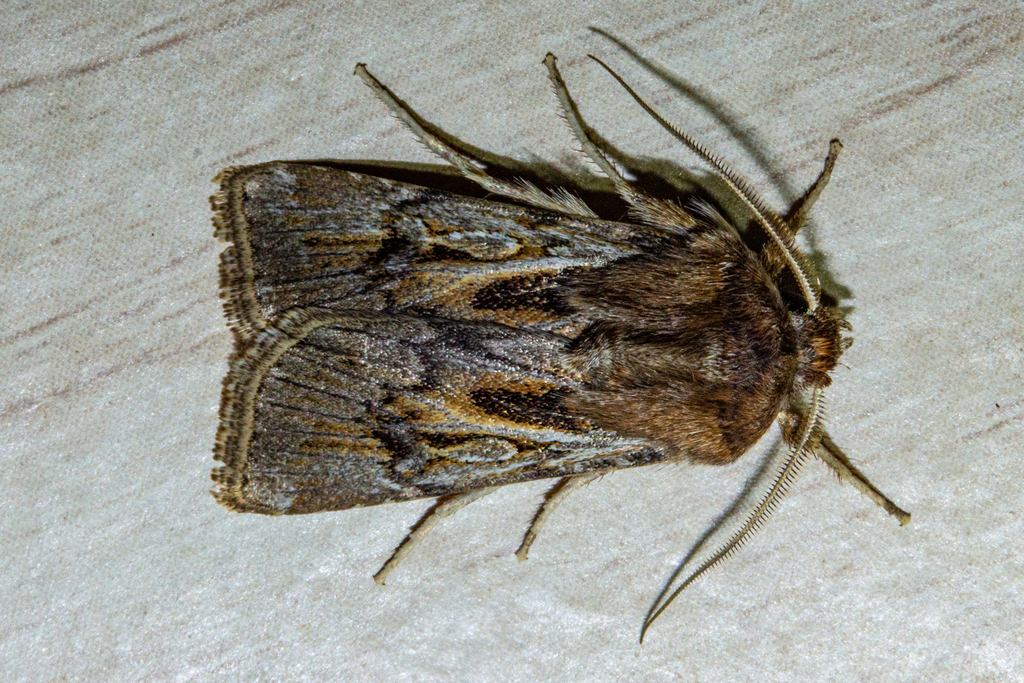
no rights reserved · CC0
Family: Noctuidae · Class: Insecta · Order: Lepidoptera
Euxoa subandera is a California animal in the Noctuidae family.
Euxoa subandera is a moth species in the family Noctuidae, commonly known as cutworm moths or dart moths. This species belongs to the genus Euxoa, which comprises numerous nocturnal moths found throughout North America. Limited taxonomic and biological information is available for this particular species, reflecting the challenges in studying many nocturnal lepidopterans. The physical characteristics of Euxoa subandera follow the general morphology typical of the genus Euxoa. Adult moths likely measure 12 to 18 mm (0.47 to 0.71 inches) in forewing length, consistent with related species in the group. The forewings are typically earth-toned, ranging from gray to brown, often with subtle patterning that provides camouflage against bark and soil surfaces. The hindwings are generally paler than the forewings, appearing whitish to light gray. Like other Euxoa species, adults possess feathery or thread-like antennae in males and simpler antennae in females. The distribution and range of Euxoa subandera remain poorly documented in available literature. Many Euxoa species are found across western North America, particularly in arid and semi-arid regions. Without specific collection records or published distribution data, the precise range of this species cannot be definitively stated. The genus as a whole occurs from sea level to high elevations, with different species adapted to various climatic conditions. Habitat preferences for Euxoa subandera are not well-established in current literature. Related Euxoa species typically inhabit open areas including grasslands, shrublands, desert regions, and disturbed habitats. Many species in this genus are associated with areas containing low-growing vegetation and bare soil, where larvae can burrow and feed on plant roots and organic matter near the soil surface. Behavioral and ecological information for Euxoa subandera is limited. Following patterns observed in related species, adults are likely nocturnal and attracted to artificial lights. The species probably has one generation per year, with adults active during late summer or fall months. Larvae, known as cutworms, likely feed on roots and lower stems of herbaceous plants, living in soil burrows during daylight hours. Pupation presumably occurs in soil chambers, with adults emerging after completing development. The conservation status of Euxoa subandera has not been formally assessed. No federal or state listing status has been assigned to this species as of December 2025. The lack of comprehensive surveys and taxonomic studies for many nocturnal moth species means that population trends and potential threats remain unknown. Climate change, habitat loss from development, and agricultural practices may affect populations, but specific impacts on this species have not been documented. Further research is needed to understand the distribution, ecology, and conservation needs of Euxoa subandera.
Classification
Class: Insecta · Order: Lepidoptera · Family: Noctuidae
Frequently asked questions
How is Euxoa subandera classified?
Euxoa subandera belongs to class Insecta, order Lepidoptera, family Noctuidae.
What family does Euxoa subandera belong to?
Euxoa subandera is in the Noctuidae family.
What is Euxoa subandera?
Euxoa subandera is a moth species in the family Noctuidae, commonly known as cutworm moths or dart moths.
Is Euxoa subandera found in California?
Yes. Euxoa subandera is recorded in California in The California Species Project's catalogue.
Related species
Other California species in the same genus, family, or bioregion.
Data from The California Species Project — 14,000+ California species with verified data from CNPS, CDFW, USFWS, and more.