Euxoa tessellata
Tessellate Dart
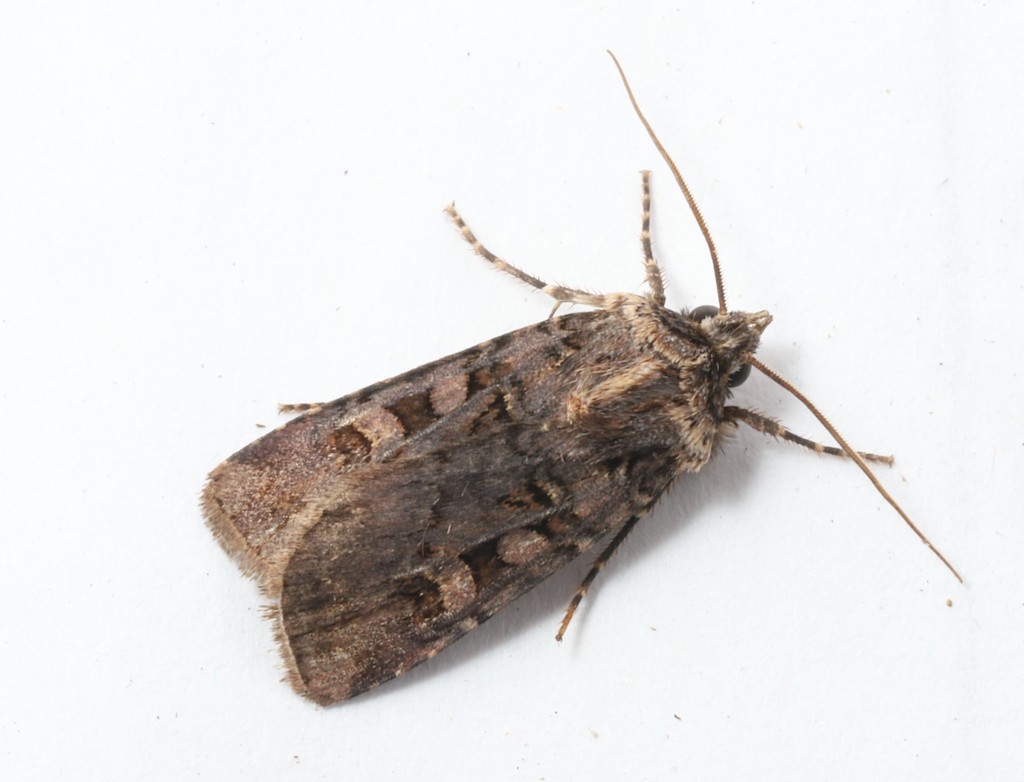
no rights reserved · CC0
Family: Noctuidae · Class: Insecta · Order: Lepidoptera
Euxoa tessellata (Tessellate Dart) is a California animal in the Noctuidae family.
The Tessellate Dart (Euxoa tessellata) is a noctuid moth in the family Noctuidae, subfamily Noctuinae. This species belongs to a large genus of cutworm moths characterized by their earth-toned coloration and nocturnal habits. Adult moths have forewings that typically measure 15-18 mm in length, displaying a mottled pattern of browns and grays that creates a tessellated or checkered appearance, from which the species derives its common name. The forewings feature subtle darker and lighter patches arranged in irregular geometric patterns. The hindwings are typically lighter, ranging from pale gray to whitish with darker marginal borders. The antennae are filiform in both sexes, and the moths exhibit the typical robust body form characteristic of the Euxoa genus. The range and distribution of Euxoa tessellata in California remains poorly documented in the literature. This species appears to be part of the diverse western North American Euxoa fauna, which includes numerous species adapted to arid and semi-arid environments. Many Euxoa species have restricted distributions tied to specific habitat types and elevation zones. Without comprehensive survey data, the precise extent of this species' California range cannot be definitively stated. Habitat requirements for the Tessellate Dart likely follow patterns typical of other western Euxoa species, which generally inhabit dry, open environments including grasslands, shrublands, and desert margins. These moths are typically associated with areas supporting their larval host plants, which in the genus Euxoa commonly include various herbaceous plants and grasses. The elevation range and specific plant community associations for E. tessellata in California require further documentation through targeted surveys and taxonomic work. Like other members of the genus, adult Tessellate Darts are nocturnal and likely attracted to artificial lights during their flight period. The larvae, known as cutworms, feed on plant material near or below the soil surface. Cutworms typically cut through plant stems at ground level, giving the group its common name. The life cycle likely includes overwintering as larvae or pupae, with adult emergence timed to coincide with favorable conditions for reproduction. Flight periods for related western species often occur during spring or early summer months, though the specific timing for E. tessellata requires documentation. The conservation status of Euxoa tessellata is not well established due to limited survey data and taxonomic uncertainty within the genus. Many Euxoa species are known from few specimens and may have naturally small populations or restricted ranges. The lack of federal or state listing status may reflect insufficient data rather than stable populations. Climate change, habitat conversion, and urbanization represent potential threats to specialized moth species in California. Comprehensive surveys and taxonomic revision of the genus Euxoa would help clarify the conservation needs of this and related species. Light pollution may also affect nocturnal moth behavior and reproduction, particularly in areas near urban development.
Classification
Class: Insecta · Order: Lepidoptera · Family: Noctuidae
Frequently asked questions
How is Euxoa tessellata classified?
Euxoa tessellata belongs to class Insecta, order Lepidoptera, family Noctuidae.
What family does Euxoa tessellata belong to?
Euxoa tessellata is in the Noctuidae family.
What is Euxoa tessellata?
The Tessellate Dart (Euxoa tessellata) is a noctuid moth in the family Noctuidae, subfamily Noctuinae.
Is Euxoa tessellata found in California?
Yes. Euxoa tessellata is recorded in California in The California Species Project's catalogue.
Related species
Other California species in the same genus, family, or bioregion.
Data from The California Species Project — 14,000+ California species with verified data from CNPS, CDFW, USFWS, and more.