Evergestis funalis
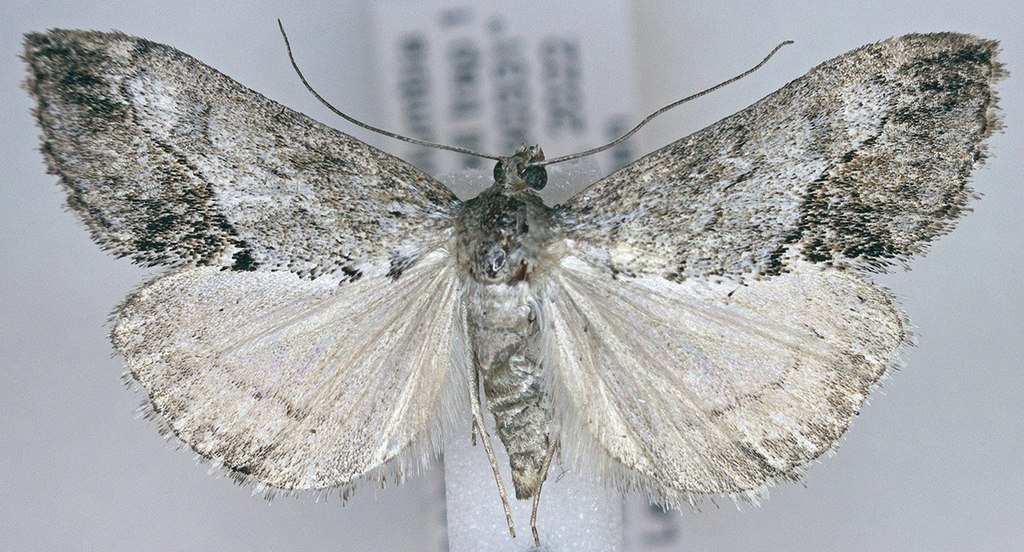
(c) Dave, some rights reserved (CC BY) · licence
Family: Crambidae · Class: Insecta · Order: Lepidoptera
Evergestis funalis is a California animal in the Crambidae family.
Evergestis funalis is a small moth species in the family Crambidae, commonly known as the grass moth family. This lepidopteran species belongs to a genus of micromoths that are typically associated with herbaceous plants and agricultural crops. Adults of E. funalis are small moths with wingspan measurements typically ranging from 18 to 25 mm (0.7 to 1.0 inches), though specific measurements for this species require verification from taxonomic literature. The forewings of Evergestis funalis display a characteristic pattern common to the genus, with pale ground coloration marked by darker transverse lines and spots. The hindwings are typically lighter in coloration, often pale gray or whitish. As with other Crambidae species, the moths hold their wings in a triangular position when at rest, with the forewings folded over the hindwings. The antennae are filiform in both sexes, and the proboscis is well-developed for nectar feeding. The distribution of Evergestis funalis in North America requires clarification through current taxonomic databases. Members of the genus Evergestis are found across temperate regions of North America, with several species documented in western states including California. However, the specific range and occurrence records for E. funalis in California need verification from recent surveys and museum collections. Habitat preferences for Evergestis funalis likely follow patterns observed in related species within the genus. These moths typically inhabit open areas with abundant herbaceous vegetation, including grasslands, agricultural fields, disturbed sites, and garden environments. Larvae of Evergestis species are known to feed on plants in the Brassicaceae (mustard family) and Chenopodiaceae (goosefoot family), developing as leaf feeders or borers within plant stems. The life cycle of E. funalis follows the typical holometabolous development pattern of Lepidoptera. Adults are likely active during warmer months, with flight periods potentially extending from late spring through early fall depending on local climate conditions. Females deposit eggs on or near host plants, and larvae develop through five instars before pupating. Some Evergestis species are multivoltine, producing multiple generations per year in favorable climates. The conservation status of Evergestis funalis is not well-documented in available databases. Many small moth species lack comprehensive population assessments due to identification challenges and limited survey efforts. The species does not appear on federal or state endangered species lists, suggesting it is not considered immediately threatened. However, like many lepidopteran species, E. funalis may face pressures from habitat loss, agricultural intensification, and pesticide use if it occurs in areas subject to human development. Further research is needed to establish current distribution records, host plant relationships, and population status for Evergestis funalis in California. Comprehensive moth surveys using light traps and pheromone lures would help clarify the species' occurrence and abundance patterns across potential habitat areas.
Classification
Class: Insecta · Order: Lepidoptera · Family: Crambidae
Frequently asked questions
How is Evergestis funalis classified?
Evergestis funalis belongs to class Insecta, order Lepidoptera, family Crambidae.
What family does Evergestis funalis belong to?
Evergestis funalis is in the Crambidae family.
What is Evergestis funalis?
Evergestis funalis is a small moth species in the family Crambidae, commonly known as the grass moth family.
Is Evergestis funalis found in California?
Yes. Evergestis funalis is recorded in California in The California Species Project's catalogue.
Related species
Other California species in the same genus, family, or bioregion.
Data from The California Species Project — 14,000+ California species with verified data from CNPS, CDFW, USFWS, and more.