Exaeretia ciniflonella
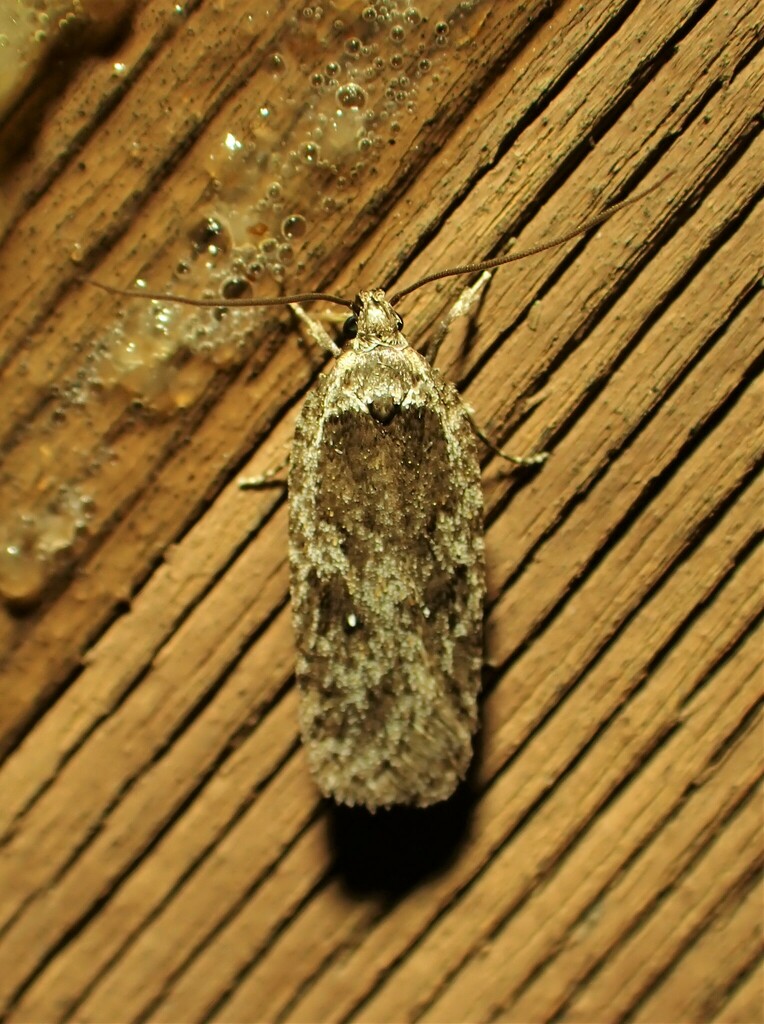
(c) Louis Imbeau, some rights reserved (CC BY) · licence
Family: Depressariidae · Class: Insecta · Order: Lepidoptera
Exaeretia ciniflonella is a California animal in the Depressariidae family.
Exaeretia ciniflonella is a small moth in the family Depressariidae, a group known for their narrow forewings and specialized larval feeding habits. This species belongs to a genus of micromoths that typically have wingspans ranging from 8 to 12 millimeters. Adult moths in this family are characterized by their slender build, thread-like antennae, and forewings that are often marked with metallic scales or distinctive patterns. The range and distribution of Exaeretia ciniflonella is poorly documented in the scientific literature. Like many microlepidoptera, this species likely has a restricted distribution within California, though specific locality records are limited. The genus Exaeretia contains several North American species, with some known from western states including California. Without verified collection records, the precise geographic range cannot be definitively established. Habitat requirements for Exaeretia ciniflonella remain largely unknown. Members of the Depressariidae family typically inhabit areas where their host plants occur, with adults often found in proximity to larval feeding sites. The larvae of many elachistid moths are leaf miners or stem borers, creating characteristic feeding tunnels in their host plants. Some species in related genera are associated with shrubs or herbaceous plants in Mediterranean climate zones. The life history and ecology of Exaeretia ciniflonella has not been thoroughly studied. Like other elachistid moths, this species likely undergoes complete metamorphosis with four life stages: egg, larva, pupa, and adult. The larval stage is presumably the primary feeding phase, during which the caterpillar may mine leaves or bore into plant tissues. Adult flight periods are unknown, though many California micromoths are active during spring and fall months when temperatures are moderate. Reproductive behavior in this genus typically involves females laying eggs on or near host plants. The eggs are often minute and difficult to locate in the field. Larval development may take several weeks to months, depending on environmental conditions and host plant availability. Pupation likely occurs within the host plant or in nearby soil or leaf litter. The conservation status of Exaeretia ciniflonella is not formally assessed. No federal or state listing status has been assigned to this species, and it does not appear in conservation databases as of December 2025. The lack of recent collection records and taxonomic uncertainty surrounding many microlepidoptera species makes population assessment challenging. Like many specialized insects, potential threats may include habitat loss, invasive plant species that displace native host plants, pesticide use, and climate change effects on phenology and host plant distributions. Further research is needed to document the basic biology, distribution, and host plant associations of Exaeretia ciniflonella. Systematic surveys targeting microlepidoptera in California ecosystems would help clarify the current status and conservation needs of this and other poorly known moth species.
Classification
Class: Insecta · Order: Lepidoptera · Family: Depressariidae
Frequently asked questions
How is Exaeretia ciniflonella classified?
Exaeretia ciniflonella belongs to class Insecta, order Lepidoptera, family Depressariidae.
What family does Exaeretia ciniflonella belong to?
Exaeretia ciniflonella is in the Depressariidae family.
What is Exaeretia ciniflonella?
Exaeretia ciniflonella is a small moth in the family Depressariidae, a group known for their narrow forewings and specialized larval feeding habits.
Is Exaeretia ciniflonella found in California?
Yes. Exaeretia ciniflonella is recorded in California in The California Species Project's catalogue.
Related species
Other California species in the same genus, family, or bioregion.
Data from The California Species Project — 14,000+ California species with verified data from CNPS, CDFW, USFWS, and more.