Exaeretia gracilis
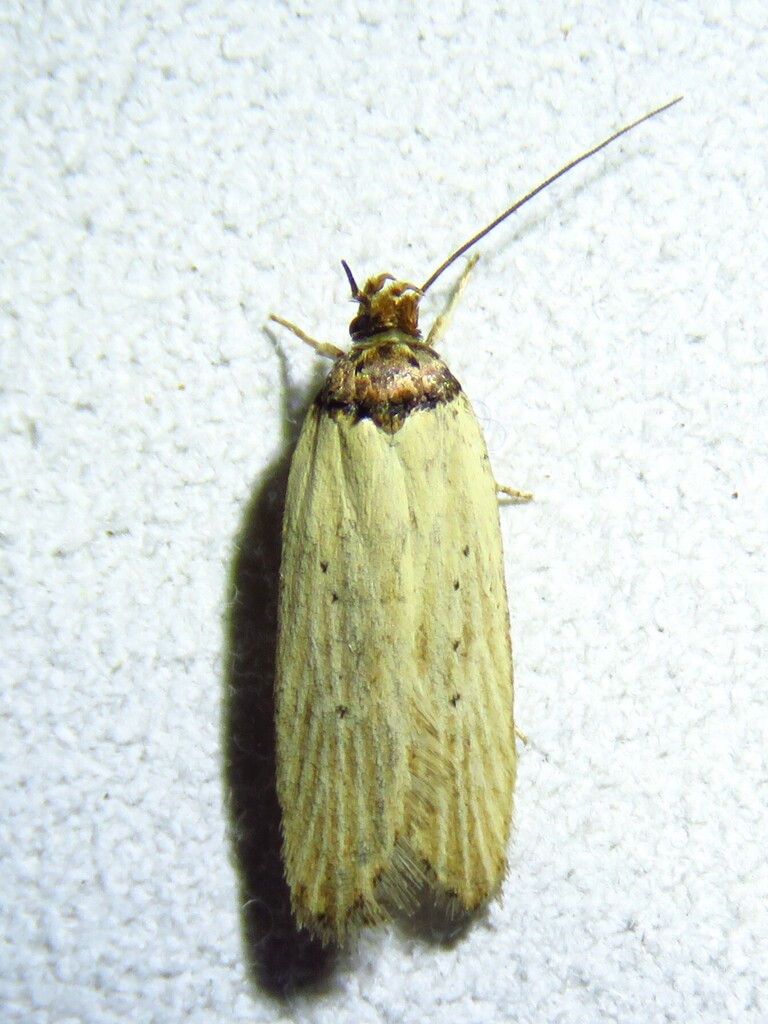
(c) Annika Lindqvist, some rights reserved (CC BY) · licence
Family: Depressariidae · Class: Insecta · Order: Lepidoptera
Exaeretia gracilis is a California animal in the Depressariidae family.
Exaeretia gracilis is a small moth in the family Depressariidae, a diverse group of microlepidoptera commonly known as grass miner moths. This species represents one of numerous specialized moths within the genus Exaeretia, which contains over 100 described species worldwide. Adult moths of this genus typically measure 6 to 12 millimeters in wingspan, with narrow forewings and reduced hindwings characteristic of the Depressariidae family. The forewings are generally brown or gray with subtle patterns, though specific coloration details for E. gracilis require further documentation. The distribution and range of Exaeretia gracilis remain poorly documented in the literature. Based on available taxonomic records, the species appears to be associated with western North America, though specific locality data for California populations are limited. Many Depressariidae species have restricted distributions tied to their host plant requirements, suggesting E. gracilis may occur in localized populations where suitable host plants are present. Habitat preferences for Exaeretia gracilis are closely linked to the distribution of its larval host plants. Members of the genus Exaeretia typically develop as leaf miners or stem borers in herbaceous plants, particularly in the families Asteraceae, Poaceae, and other flowering plant groups. The larvae create distinctive mining patterns within plant tissues, feeding on internal cellular material while avoiding external exposure to predators and environmental stresses. Adults are most active during twilight hours and may be attracted to artificial lights. The life cycle of E. gracilis follows the typical pattern of Depressariidae species, with complete metamorphosis through egg, larval, pupal, and adult stages. Females deposit eggs directly on or near host plant tissues, where larvae develop through multiple instars within the plant material. The larval stage represents the primary feeding phase, during which the caterpillars create characteristic mines or galleries. Pupation may occur within the host plant or in nearby soil or plant debris. Adults likely emerge during specific seasonal periods that coincide with host plant availability and favorable environmental conditions. The conservation status of Exaeretia gracilis has not been formally assessed by state or federal agencies. Like many microlepidoptera species, E. gracilis faces potential threats from habitat loss, invasive plant species that may displace native host plants, pesticide applications, and climate change effects on plant communities. The specialized nature of many Depressariidae species makes them particularly vulnerable to environmental changes that affect their specific host plant relationships. Urban development and agricultural intensification in California may pose additional risks to populations of specialized moth species. Research needs for Exaeretia gracilis include basic surveys to determine current distribution and population status, identification of specific host plant relationships, and assessment of habitat requirements. The cryptic nature and small size of many Depressariidae species often results in their being overlooked in general biodiversity surveys, emphasizing the need for targeted sampling efforts using specialized techniques such as light trapping and host plant rearing to better understand their ecology and conservation needs.
Classification
Class: Insecta · Order: Lepidoptera · Family: Depressariidae
Frequently asked questions
How is Exaeretia gracilis classified?
Exaeretia gracilis belongs to class Insecta, order Lepidoptera, family Depressariidae.
What family does Exaeretia gracilis belong to?
Exaeretia gracilis is in the Depressariidae family.
What is Exaeretia gracilis?
Exaeretia gracilis is a small moth in the family Depressariidae, a diverse group of microlepidoptera commonly known as grass miner moths.
Is Exaeretia gracilis found in California?
Yes. Exaeretia gracilis is recorded in California in The California Species Project's catalogue.
Related species
Other California species in the same genus, family, or bioregion.
Data from The California Species Project — 14,000+ California species with verified data from CNPS, CDFW, USFWS, and more.