Exoprosopa jonesi
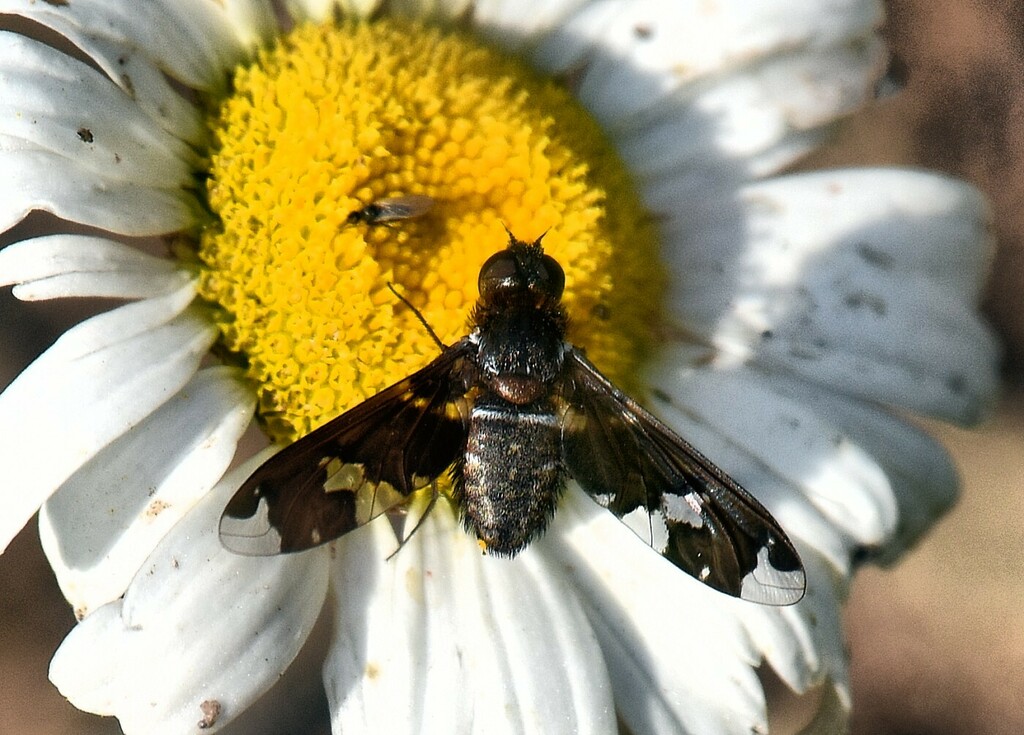
(c) Jimmy Dee, some rights reserved (CC BY-SA) · licence
Family: Bombyliidae · Class: Insecta · Order: Diptera
Exoprosopa jonesi is a California animal in the Bombyliidae family.
Exoprosopa jonesi is a bee fly species in the family Bombyliidae, first described by Cresson in 1919. This dipteran belongs to the subfamily Anthracinae and tribe Exoprosopini, representing one of the numerous bee fly species found in North America. Like other members of its genus, E. jonesi exhibits the characteristic robust, hairy body typical of bee flies, which often leads to their common name due to their superficial resemblance to bees. The species can be distinguished from closely related taxa through specific wing pattern characteristics. According to BugGuide, the brown coloration on the wings stops short of completely filling the marginal cell (R1), which differentiates it from E. dorcadion where the brown color extends to fill this cell entirely. This wing pattern serves as a key diagnostic feature for field identification. The body displays the typical bee fly morphology with dense setae covering the thorax and abdomen, and the proboscis is well-developed for nectar feeding. The documented range of Exoprosopa jonesi includes western North America, though specific distributional data remains limited in the scientific literature. Like many bee fly species, E. jonesi likely occurs in arid and semi-arid regions where suitable host organisms and flowering plants are present. The species appears to be associated with areas supporting diverse plant communities that provide nectar sources for adult feeding. Habitat preferences for E. jonesi have not been extensively documented, but bee flies in the genus Exoprosopa typically inhabit open areas including desert washes, chaparral margins, and grasslands. These environments provide both the flowering plants necessary for adult nutrition and suitable conditions for larval development. The species likely requires areas with exposed soil or sandy substrates where females can deposit eggs near potential host organisms. Adult E. jonesi, like other bee flies, are nectar feeders that visit a variety of flowering plants. The larvae are parasitoids, typically developing within the nests or bodies of other insects, particularly ground-nesting bees and wasps. This parasitoid lifestyle is characteristic of the Bombyliidae family, with females hovering near potential host nesting sites and flicking eggs into burrows or onto surfaces where larvae can locate and parasitize their hosts. Flight periods likely coincide with peak flowering times and host activity, though specific seasonal patterns for E. jonesi have not been well documented. Conservation status information for Exoprosopa jonesi is not available through standard wildlife databases, suggesting the species has not been formally assessed for conservation concern. Like many invertebrate species, particularly specialized parasitoids, E. jonesi may face threats from habitat modification and declining populations of host species. The limited ecological documentation highlights the need for further research into the biology and distribution of this and other bee fly species to better understand their conservation needs and ecological roles.
Classification
Class: Insecta · Order: Diptera · Family: Bombyliidae
Frequently asked questions
How is Exoprosopa jonesi classified?
Exoprosopa jonesi belongs to class Insecta, order Diptera, family Bombyliidae.
What family does Exoprosopa jonesi belong to?
Exoprosopa jonesi is in the Bombyliidae family.
What is Exoprosopa jonesi?
Exoprosopa jonesi is a bee fly species in the family Bombyliidae, first described by Cresson in 1919.
Is Exoprosopa jonesi found in California?
Yes. Exoprosopa jonesi is recorded in California in The California Species Project's catalogue.
Related species
Other California species in the same genus, family, or bioregion.
Data from The California Species Project — 14,000+ California species with verified data from CNPS, CDFW, USFWS, and more.