Falco columbarius
Merlin
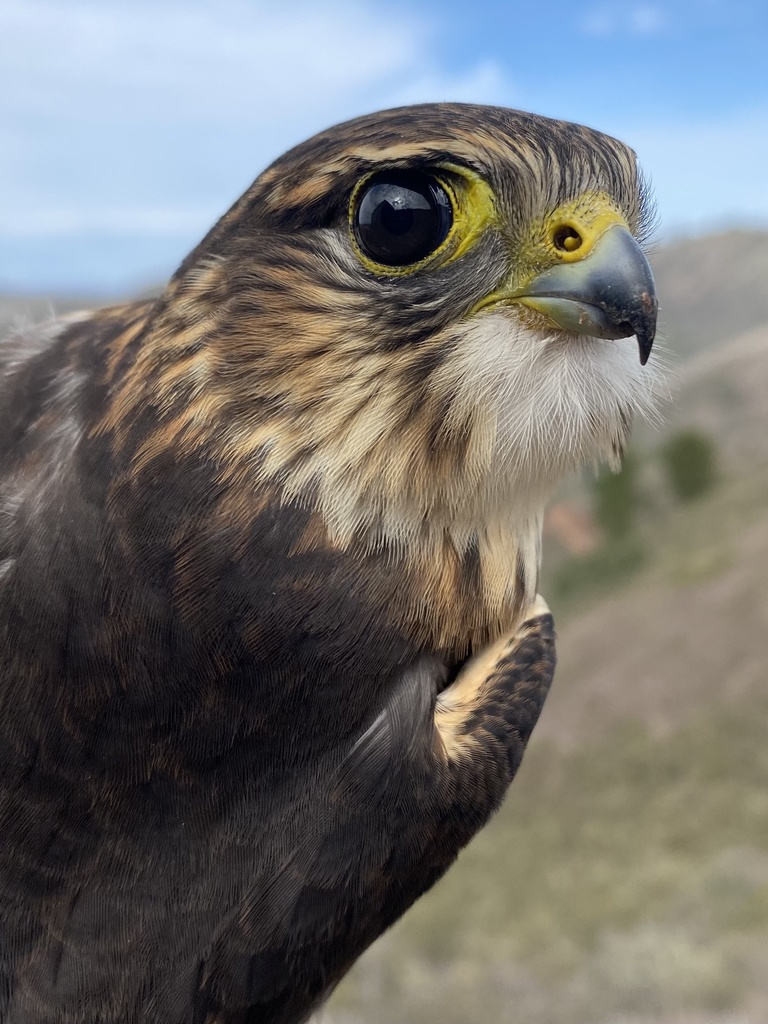
(c) Cricket Raspet, some rights reserved (CC BY) · licence
Family: Falconidae · Class: Aves · Order: Falconiformes
Conservation status: WL · G5 S3S4
Falco columbarius (Merlin) is a California animal in the Falconidae family.
The Merlin is a small, compact falcon measuring 24 to 33 cm (9.5 to 13 inches) in length with a wingspan of 53 to 73 cm (21 to 29 inches). Males weigh 165 to 210 grams, while females are larger at 230 to 300 grams. Adult males display blue-gray upperparts with heavily streaked rufous underparts, while females and juveniles are brown above with streaked buff to cream underparts. The species lacks the prominent facial markings of the American Kestrel and shows pointed wings and a relatively short, banded tail. In flight, Merlins exhibit rapid, direct wingbeats interspersed with brief glides. Merlins breed across northern North America from Alaska to Newfoundland, with the breeding range extending south into the northern United States. In California, the species occurs primarily as a migrant and winter resident from September through April. During migration and winter, Merlins are found throughout California's lowland areas, coastal regions, and Central Valley, with concentrations along the coast and in urban areas. The species breeds at scattered locations in the northeastern Sierra Nevada and Cascade Range at elevations between 1,200 and 2,400 meters (4,000 to 8,000 feet). Merlins occupy diverse habitats including open woodlands, parklands, prairies, coastal areas, and increasingly urban environments. During breeding season, they prefer coniferous or mixed forests near openings such as clearcuts, meadows, or water bodies. In California's wintering areas, Merlins frequent agricultural lands, grasslands, wetland margins, and suburban areas with scattered trees. The species adapts well to human-modified landscapes and commonly hunts in parks, golf courses, and residential areas. Merlins are specialized bird hunters, with small passerines comprising 85 to 90 percent of their diet. Primary prey includes sparrows, finches, larks, and swallows, captured through rapid pursuit flights or surprise attacks from perches. Hunting typically occurs in open areas where the falcon can utilize its superior speed and agility. Breeding begins in April, with females laying 3 to 6 eggs in stick nests built by other species, particularly American Crows or Common Ravens. Incubation lasts 28 to 32 days, and young fledge after 25 to 35 days. Pairs may produce one brood per year, with both parents participating in prey delivery during the nestling period. The Merlin is designated as a Watch List species in California with a state rank of S3S4, indicating the breeding population is uncommon to fairly common but faces potential conservation concerns. Historically, populations declined significantly due to DDT pesticide use, which caused eggshell thinning and reproductive failure. Following the DDT ban in 1972, Merlin populations have recovered substantially across most of their range. Current threats include habitat loss from development, collision with vehicles and structures, and climate change impacts on prey availability. Urban populations appear stable and may be increasing as the species adapts to city environments and abundant prey resources.
Classification
Class: Aves · Order: Falconiformes · Family: Falconidae
Conservation status
WL · G5 S3S4
Frequently asked questions
How is Falco columbarius classified?
Falco columbarius belongs to class Aves, order Falconiformes, family Falconidae.
What family does Falco columbarius belong to?
Falco columbarius is in the Falconidae family.
Is Falco columbarius protected or of conservation concern?
Falco columbarius carries the following status: WL · G5 S3S4.
What is Falco columbarius?
The Merlin is a small, compact falcon measuring 24 to 33 cm (9.5 to 13 inches) in length with a wingspan of 53 to 73 cm (21 to 29 inches).
Is Falco columbarius found in California?
Yes. Falco columbarius is recorded in California in The California Species Project's catalogue.
Related species
Other California species in the same genus, family, or bioregion.
Data from The California Species Project — 14,000+ California species with verified data from CNPS, CDFW, USFWS, and more.