Fazia micrura
Diamond Spottail
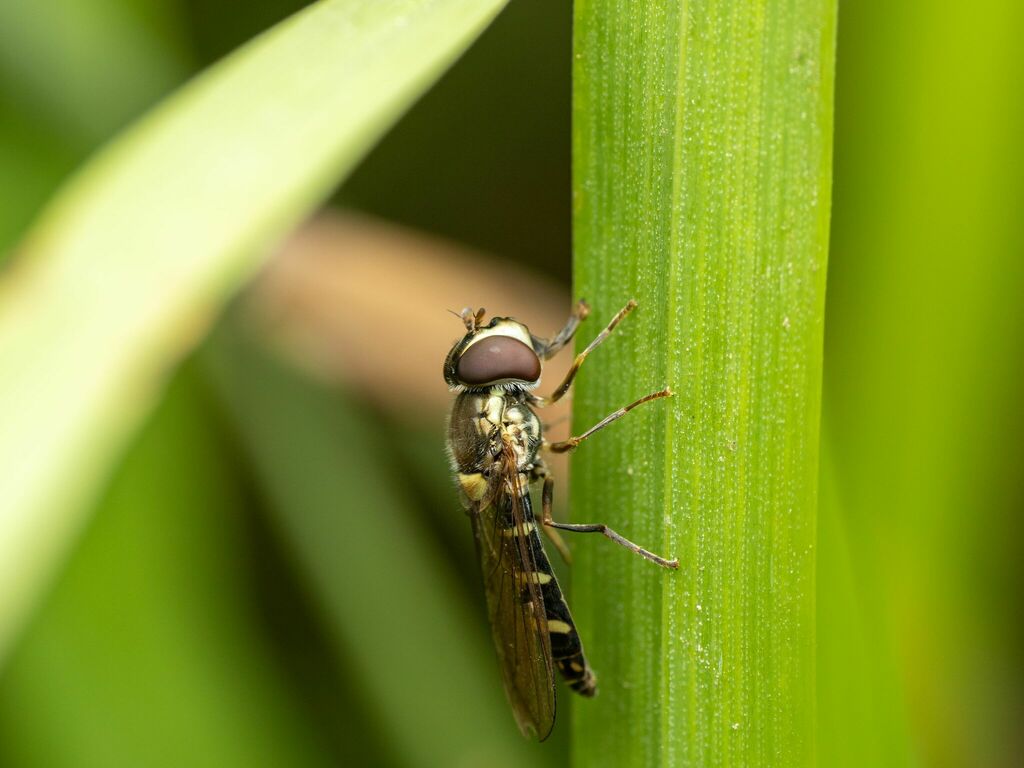
(c) Zachary Dankowicz, some rights reserved (CC BY) · licence
Family: Syrphidae · Class: Insecta · Order: Diptera
Fazia micrura (Diamond Spottail) is a California animal in the Syrphidae family.
Fazia micrura, commonly known as the Diamond Spottail, is a small hoverfly in the family Syrphidae, order Diptera. This species belongs to a diverse group of flies that are important pollinators and often mimic bees or wasps in appearance. Members of the genus Fazia are characterized by their distinctive wing patterns and body markings, though specific morphological details for F. micrura have not been comprehensively documented in readily available literature. The range and distribution of Fazia micrura remain poorly documented in current scientific literature. Like many members of the Syrphidae family, this species likely has a restricted geographic distribution, though specific locality records and range maps are not available through standard biodiversity databases as of December 2025. The lack of comprehensive distribution data reflects the broader challenge of documenting smaller dipteran species, particularly those that may be rare or have specialized habitat requirements. Habitat preferences for the Diamond Spottail have not been well characterized in published studies. Syrphid flies typically inhabit areas with abundant flowering plants, as adults require nectar sources for energy and mating activities. Many species in this family show preferences for specific vegetation types or elevation ranges, but such ecological requirements remain undocumented for F. micrura. The microhabitat needs of larvae, which often develop in decaying organic matter, soil, or plant tissues depending on the species, are similarly unknown for this taxon. Behavioral and ecological information for Fazia micrura is extremely limited. Adult syrphid flies are generally active during daylight hours and serve as pollinators for various flowering plants. Mating typically occurs on or near host plants, with females depositing eggs in suitable larval development sites. The specific host plant relationships, if any, breeding season timing, and larval ecology of F. micrura have not been documented in accessible scientific literature. This knowledge gap extends to feeding preferences, flight periods, and potential mimicry patterns that are characteristic of many hoverfly species. Fazia micrura does not appear on federal or state threatened species lists, and its conservation status has not been formally assessed. The absence of recent collection records or ecological studies suggests either extreme rarity, restricted distribution, or potential taxonomic confusion with related species. Without basic biological data, it is impossible to evaluate population trends or identify potential threats to this species. The lack of information highlights the need for systematic surveys of dipteran diversity, particularly in regions where this species may occur. Scientific documentation for this species remains extremely limited. The information presented here synthesizes available taxonomic databases and dipteran literature, though substantial knowledge gaps persist regarding all aspects of this species' biology. If you have additional verified information about Fazia micrura, including distribution records, ecological observations, or taxonomic clarifications, please contact us to help improve this species account.
Classification
Class: Insecta · Order: Diptera · Family: Syrphidae
Frequently asked questions
How is Fazia micrura classified?
Fazia micrura belongs to class Insecta, order Diptera, family Syrphidae.
What family does Fazia micrura belong to?
Fazia micrura is in the Syrphidae family.
What is Fazia micrura?
Fazia micrura, commonly known as the Diamond Spottail, is a small hoverfly in the family Syrphidae, order Diptera.
Is Fazia micrura found in California?
Yes. Fazia micrura is recorded in California in The California Species Project's catalogue.
Related species
Other California species in the same genus, family, or bioregion.
Data from The California Species Project — 14,000+ California species with verified data from CNPS, CDFW, USFWS, and more.