Felimare porterae
Porter's Chromodorid
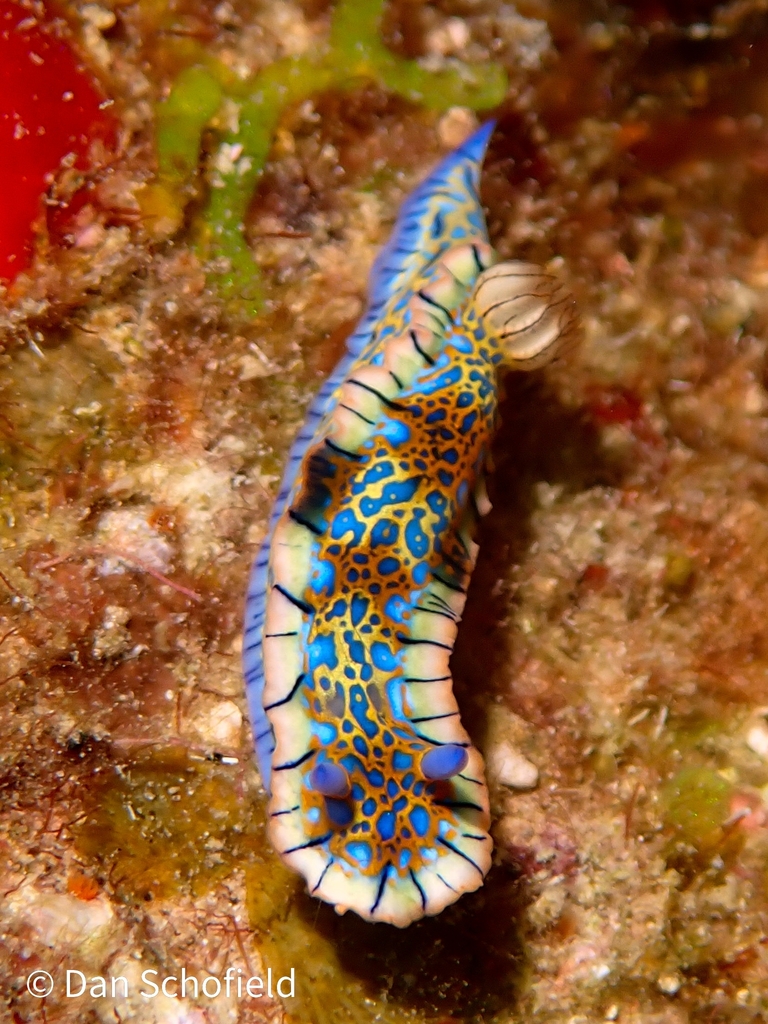
(c) Dan Schofield, some rights reserved (CC BY) · licence
Family: Chromodorididae · Class: Gastropoda · Order: Nudibranchia
Felimare porterae (Porter's Chromodorid) is a California animal in the Chromodorididae family.
Felimare porterae, commonly known as Porter's chromodorid, is a marine nudibranch mollusk in the family Chromodorididae. This sea slug displays the characteristic elongated body form typical of dorid nudibranchs, with a smooth dorsal surface and distinctive coloration patterns that aid in species identification. The body exhibits translucent qualities with white or pale coloration, often featuring subtle markings that distinguish it from closely related chromodorid species. Porter's chromodorid occurs along the California coast, with documented populations in the Channel Islands region. The species has been observed at Richardson Rock State Marine Reserve, located northwest of San Miguel Island, the westernmost of California's Channel Islands. This marine protected area encompasses diverse underwater habitats ranging from the surface to depths exceeding 550 feet, providing suitable conditions for nudibranch communities. The species inhabits rocky subtidal environments, particularly areas with vertical rock walls and reef structures. At Richardson Rock, the habitat includes sandy and rocky seafloor areas with reefs and large rocky outcroppings, where the sheer vertical walls plunge to depths of over 550 feet. These complex three-dimensional reef structures provide the microhabitats necessary for nudibranch feeding and reproduction. Porter's chromodorid typically occurs in association with encrusting organisms such as sponges, bryozoans, and other invertebrates that serve as food sources. Like other chromodorid nudibranchs, Porter's chromodorid is a specialized predator that feeds on specific prey items, likely including sponges or other sessile invertebrates. The species exhibits the typical nudibranch reproductive strategy, being hermaphroditic with individuals capable of both egg production and sperm transfer. Reproduction involves the deposition of characteristic spiral egg masses, which have been documented in the Richardson Rock area. These gelatinous egg ribbons contain numerous small eggs that develop into planktonic larvae before settling and metamorphosing into juvenile sea slugs. Porter's chromodorid appears to have a limited distribution along the California coast, with most documented occurrences in the Channel Islands region. The species benefits from protection within the Richardson Rock State Marine Reserve, where regulations prohibit the taking, injury, or possession of any living marine resources. This protection is particularly important for nudibranch species, which often have specialized habitat requirements and limited dispersal capabilities. The complex rocky reef habitats essential for this species face ongoing pressures from climate change, ocean acidification, and other environmental stressors that affect marine ecosystems throughout the California Current system. Limited scientific documentation exists regarding population trends, specific threats, or conservation status for this species, reflecting the general lack of comprehensive data for many marine invertebrate species along the California coast.
Classification
Class: Gastropoda · Order: Nudibranchia · Family: Chromodorididae
Frequently asked questions
How is Felimare porterae classified?
Felimare porterae belongs to class Gastropoda, order Nudibranchia, family Chromodorididae.
What family does Felimare porterae belong to?
Felimare porterae is in the Chromodorididae family.
What is Felimare porterae?
Felimare porterae, commonly known as Porter's chromodorid, is a marine nudibranch mollusk in the family Chromodorididae.
Is Felimare porterae found in California?
Yes. Felimare porterae is recorded in California in The California Species Project's catalogue.
Related species
Other California species in the same genus, family, or bioregion.
Data from The California Species Project — 14,000+ California species with verified data from CNPS, CDFW, USFWS, and more.