Felimida macfarlandi
MacFarland's Chromodorid
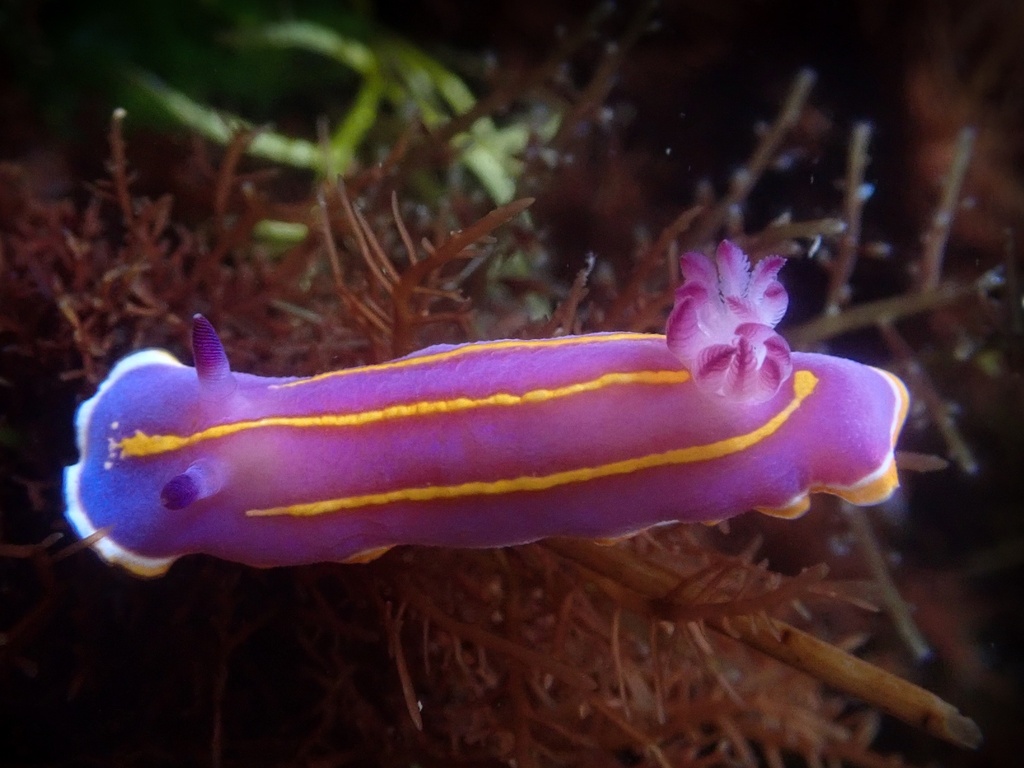
(c) Madeleine Claire, some rights reserved (CC BY) · licence
Family: Chromodorididae · Class: Gastropoda · Order: Nudibranchia
Felimida macfarlandi (MacFarland's Chromodorid) is a California animal in the Chromodorididae family.
Felimida macfarlandi, commonly known as MacFarland's Chromodorid, is a marine nudibranch gastropod in the family Chromodorididae. This sea slug species belongs to the order Nudibranchia, characterized by the absence of a shell and the presence of external gills and sensory tentacles called rhinophores. Like other chromodorids, this species likely displays bright coloration patterns that serve as warning signals to potential predators, advertising the presence of chemical defenses derived from its diet. The body form is typically elongate and flattened, with a distinct head region bearing two rhinophores that function as chemoreceptors for detecting food and mates. The gills are arranged in a circular pattern around the anus on the dorsal posterior surface. Size and specific morphological details for this species have not been well documented in readily accessible scientific literature. The species was named in honor of Frank Mace MacFarland, a prominent American malacologist who made significant contributions to the study of Pacific Coast nudibranchs in the early 20th century. MacFarland's Chromodorid is presumed to occur along the Pacific Coast, consistent with the distribution patterns of related chromodorid species, though specific range information requires verification from specialized taxonomic sources. Like other members of the Chromodorididae, this species likely inhabits rocky intertidal and subtidal zones where it feeds on sponges. The diet of chromodorids is typically highly specialized, with individual species often feeding on specific sponge species. This dietary specialization allows the nudibranchs to sequester chemical compounds from their prey, which they then use for their own chemical defense against predators. Reproduction in chromodorids follows the general nudibranch pattern of hermaphroditism, with individuals capable of both male and female reproductive functions. Mating typically involves the exchange of sperm between two individuals, followed by the deposition of spiral egg masses. The larvae undergo a planktonic stage before settling and metamorphosing into the adult form. The conservation status of Felimida macfarlandi has not been formally assessed. As with many marine invertebrates, population trends and threats are poorly understood due to limited research and monitoring efforts. Potential threats to nudibranch species include habitat degradation, ocean acidification, and changes in prey availability due to climate change impacts on marine ecosystems. The taxonomic classification of many nudibranch species continues to evolve with advances in molecular techniques, and the current placement and validity of species names may be subject to revision.
Classification
Class: Gastropoda · Order: Nudibranchia · Family: Chromodorididae
Frequently asked questions
How is Felimida macfarlandi classified?
Felimida macfarlandi belongs to class Gastropoda, order Nudibranchia, family Chromodorididae.
What family does Felimida macfarlandi belong to?
Felimida macfarlandi is in the Chromodorididae family.
What is Felimida macfarlandi?
Felimida macfarlandi, commonly known as MacFarland's Chromodorid, is a marine nudibranch gastropod in the family Chromodorididae.
Is Felimida macfarlandi found in California?
Yes. Felimida macfarlandi is recorded in California in The California Species Project's catalogue.
Related species
Other California species in the same genus, family, or bioregion.
Data from The California Species Project — 14,000+ California species with verified data from CNPS, CDFW, USFWS, and more.