Feralia deceptiva
Deceptive Sallow
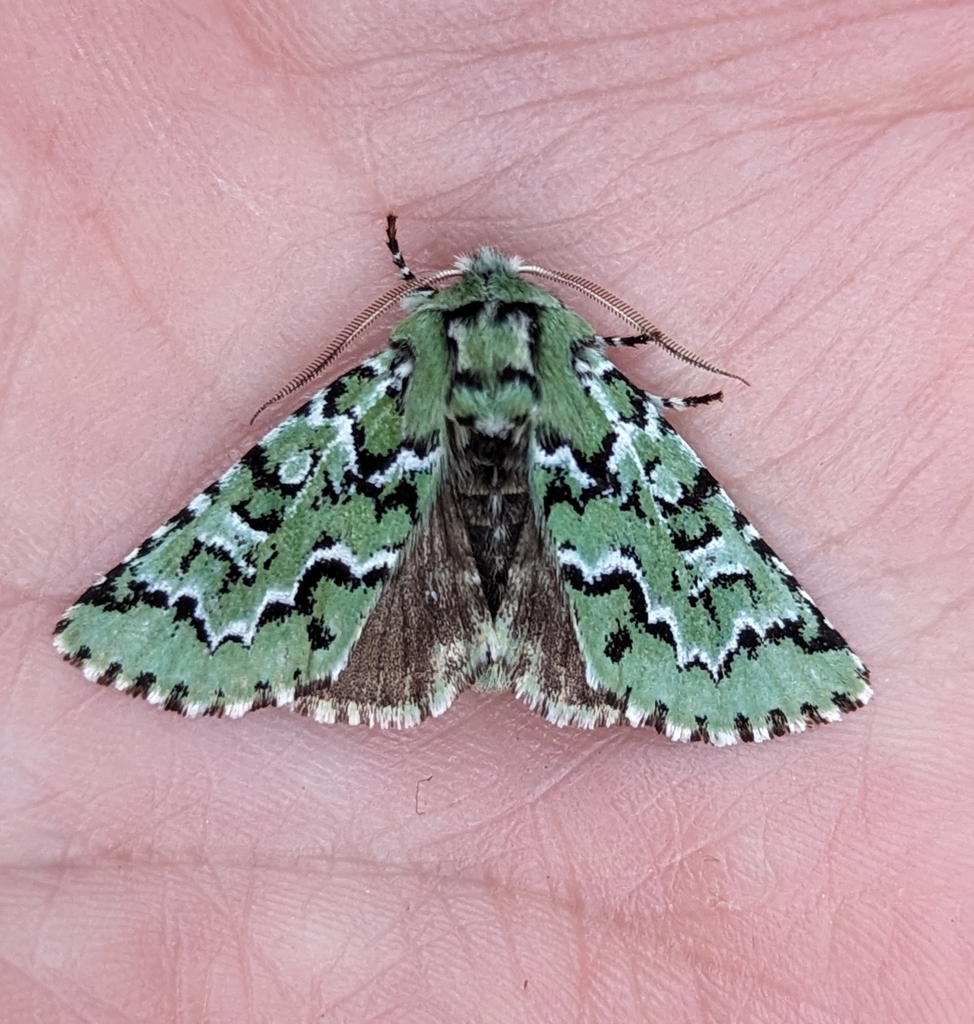
no rights reserved · CC0
Family: Noctuidae · Class: Insecta · Order: Lepidoptera
Feralia deceptiva (Deceptive Sallow) is a California animal in the Noctuidae family.
The Deceptive Sallow (Feralia deceptiva) is a moth in the family Noctuidae, part of the diverse noctuid group commonly known as owlet moths. Adults typically have a wingspan of 32-38 mm (1.3-1.5 inches), with forewings displaying muted gray-brown coloration marked by subtle darker bands and spots. The hindwings are lighter, often pale gray to whitish. Like other members of the genus Feralia, this species exhibits the characteristic reniform and orbicular spots on the forewings, though these markings may be indistinct, contributing to its common name "deceptive." The antennae are filiform in both sexes, and the body is robust and densely scaled. Feralia deceptiva occurs along the Pacific Coast of North America, with its range extending from British Columbia south through Washington, Oregon, and into northern California. In California, the species is documented from coastal and near-coastal counties, particularly in areas where Douglas fir forests are present. The distribution appears closely tied to the range of its primary host plant, Douglas fir (Pseudotsuga menziesii). This species inhabits coniferous forests dominated by Douglas fir, typically at elevations ranging from sea level to approximately 1,500 meters (4,900 feet). The moths are associated with mature and old-growth Douglas fir stands, where the host trees provide both larval food sources and adult habitat. These forests are characterized by dense canopies, moderate to high humidity, and relatively cool temperatures throughout much of the year. Larvae of Feralia deceptiva feed exclusively on Douglas fir needles, developing through several instars before pupating. The species is univoltine, producing one generation per year. Adults typically emerge in late winter or early spring, generally between February and April, when temperatures begin to warm but before new needle growth begins on the host trees. Mating and egg-laying occur during this brief adult flight period. Females deposit eggs on Douglas fir needles or nearby bark, where they remain until hatching coincides with new needle development. The larvae feed throughout the growing season, reaching maturity by late summer or early fall before entering pupal stage. The conservation status of Feralia deceptiva has not been formally assessed at state or federal levels, and the species lacks formal protection under endangered species legislation. However, the moth's dependence on Douglas fir forests makes it potentially vulnerable to habitat loss from logging, development, and climate change. Douglas fir forests along the California coast face increasing pressure from urban expansion and altered fire regimes. Climate change may shift suitable habitat northward or to higher elevations, potentially reducing available habitat within the species' current range. The narrow host plant specialization typical of many Feralia species suggests that Deceptive Sallow populations could decline if Douglas fir forests are significantly reduced or fragmented. Long-term monitoring of both the species and its forest habitat would help assess population trends and conservation needs.
Classification
Class: Insecta · Order: Lepidoptera · Family: Noctuidae
Frequently asked questions
How is Feralia deceptiva classified?
Feralia deceptiva belongs to class Insecta, order Lepidoptera, family Noctuidae.
What family does Feralia deceptiva belong to?
Feralia deceptiva is in the Noctuidae family.
What is Feralia deceptiva?
The Deceptive Sallow (Feralia deceptiva) is a moth in the family Noctuidae, part of the diverse noctuid group commonly known as owlet moths.
Is Feralia deceptiva found in California?
Yes. Feralia deceptiva is recorded in California in The California Species Project's catalogue.
Related species
Other California species in the same genus, family, or bioregion.
Data from The California Species Project — 14,000+ California species with verified data from CNPS, CDFW, USFWS, and more.