Feralia februalis
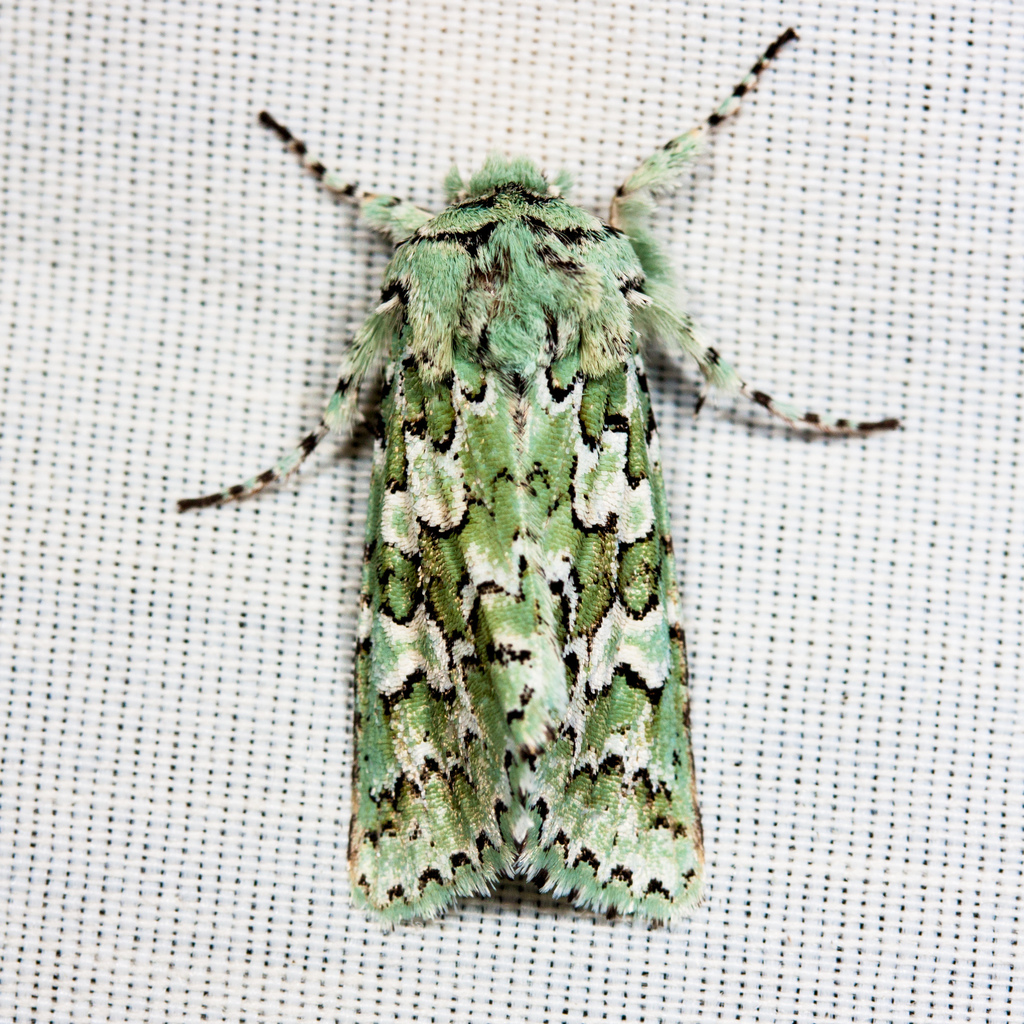
(c) Ken-ichi Ueda, some rights reserved (CC BY) · licence
Family: Noctuidae · Class: Insecta · Order: Lepidoptera
Feralia februalis is a California animal in the Noctuidae family.
Feralia februalis is a medium-sized moth in the family Noctuidae, commonly known as the February Dagger Moth. Adults have a wingspan of approximately 35 to 45 mm (1.4 to 1.8 inches). The forewings are gray to brownish-gray with distinctive dark markings, including a prominent reniform spot and orbicular spot characteristic of noctuid moths. The hindwings are paler, typically whitish-gray with darker marginal areas. Males can be distinguished from females by their more heavily pectinated antennae and slightly smaller size. This species ranges along the Pacific Coast from Oregon south through California. In California, Feralia februalis occurs in coastal and inland regions where suitable host plants are present, extending from the North Coast ranges through the Central Valley foothills and into southern California mountains. The distribution follows oak woodlands and chaparral communities throughout much of the state's western regions. Feralia februalis inhabits oak woodlands, mixed oak-conifer forests, and chaparral communities at elevations from near sea level to approximately 1,500 meters (4,900 feet). The species is closely associated with its host plants, which include various oak species (Quercus) and mountain-mahogany (Cercocarpus). These habitats typically feature Mediterranean climate conditions with dry summers and wet winters, supporting the diverse plant communities that sustain both larval and adult stages. The species exhibits univoltine life cycle characteristics, with adults emerging primarily during winter months, particularly February and March, which accounts for its common name. Larvae feed on the foliage of oak and mountain-mahogany, developing through five instars before pupating in soil or leaf litter. The caterpillars are typically brown or gray with darker striping, providing camouflage among host plant branches. Adults are nocturnal and attracted to artificial lights during their brief flight period. Mating occurs shortly after emergence, with females depositing eggs on host plant buds or bark crevices where they overwinter before hatching in spring. Feralia februalis does not appear on federal or state endangered species lists, and its conservation status has not been formally assessed. However, like many oak-associated species, it may face habitat pressures from urban development, agricultural conversion, and climate change effects on oak woodland ecosystems. Oak woodlands in California have experienced significant fragmentation and loss, particularly in coastal and valley regions where development pressure is highest. The species' dependence on specific host plants makes it potentially vulnerable to habitat modifications that reduce oak and mountain-mahogany populations. Fire management practices that alter natural fire cycles in oak woodlands may also impact population dynamics. Conservation of oak woodland habitats through land preservation and restoration efforts would benefit this species along with the broader community of oak-dependent organisms throughout California's Mediterranean climate regions.
Classification
Class: Insecta · Order: Lepidoptera · Family: Noctuidae
Frequently asked questions
How is Feralia februalis classified?
Feralia februalis belongs to class Insecta, order Lepidoptera, family Noctuidae.
What family does Feralia februalis belong to?
Feralia februalis is in the Noctuidae family.
What is Feralia februalis?
Feralia februalis is a medium-sized moth in the family Noctuidae, commonly known as the February Dagger Moth.
Is Feralia februalis found in California?
Yes. Feralia februalis is recorded in California in The California Species Project's catalogue.
Related species
Other California species in the same genus, family, or bioregion.
Data from The California Species Project — 14,000+ California species with verified data from CNPS, CDFW, USFWS, and more.