Ficedula albicilla
Taiga Flycatcher
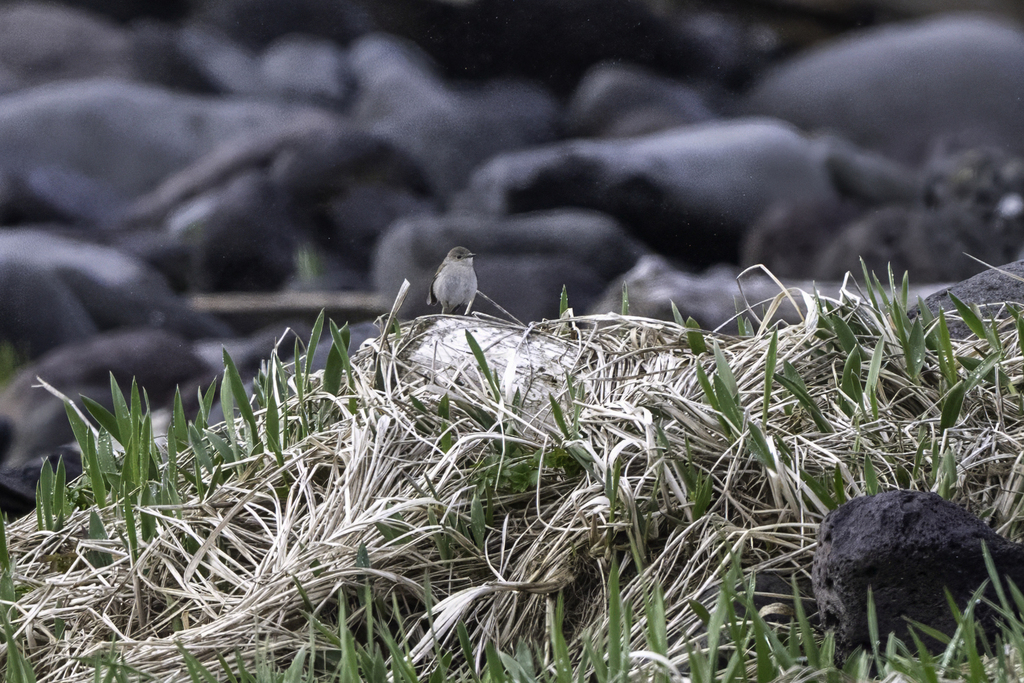
(c) Emily Turteltaub Nelson, some rights reserved (CC BY) · licence
Family: Muscicapidae · Class: Aves · Order: Passeriformes
Ficedula albicilla (Taiga Flycatcher) is a California animal in the Muscicapidae family.
The Taiga Flycatcher is a small passerine bird measuring approximately 13-14 cm (5.1-5.5 inches) in length with a wingspan of 20-24 cm (7.9-9.4 inches). Adults weigh 9-13 grams. Males in breeding plumage display dark grayish-brown upperparts with a distinctive white patch at the base of the outer tail feathers, visible in flight. The underparts are whitish with a pale buff or orange wash on the throat and breast. Females and non-breeding males are duller with less pronounced coloration. The bill is dark with a pale base, and the legs are dark brown to black. Juveniles resemble females but show spotted plumage on the upperparts. This species breeds across the boreal forests of northern Eurasia, from Scandinavia east through Siberia to the Russian Far East. In North America, the Taiga Flycatcher is an extremely rare vagrant, with documented records primarily from western Alaska during migration periods. California records are exceptional, with fewer than five confirmed sightings documented in the state, typically occurring during fall migration along the coast. The Taiga Flycatcher inhabits coniferous and mixed forests, particularly areas dominated by spruce, fir, and birch. During migration and winter, it utilizes a broader range of wooded habitats including deciduous forests, parks, and wooded gardens. The species prefers areas with open understory that provide suitable perching sites and foraging opportunities. Elevation range extends from sea level to approximately 1,000 meters (3,280 feet) in breeding areas. This insectivorous species employs typical flycatcher foraging behavior, perching on exposed branches and making short aerial sallies to capture flying insects including flies, mosquitoes, small beetles, and moths. The diet also includes caterpillars and other small arthropods gleaned from foliage. Breeding occurs from May through July, with females constructing cup-shaped nests in tree cavities or nest boxes. Clutch size ranges from 4-7 pale blue eggs, incubated for 12-14 days. Young fledge after 13-16 days. The species is generally monogamous during the breeding season. The Taiga Flycatcher is not federally listed in the United States, as it is not a breeding resident. Globally, the species is classified as Least Concern by the International Union for Conservation of Nature, with stable populations across its primary range. However, like many boreal forest species, it faces potential threats from climate change affecting northern forest ecosystems and logging activities in breeding areas. The species' occurrence in California represents natural vagrancy rather than established residency, with records typically associated with weather systems that displace migrants from their normal Pacific routes. Conservation efforts focus on maintaining boreal forest habitat integrity across the species' primary breeding range in Eurasia.
Classification
Class: Aves · Order: Passeriformes · Family: Muscicapidae
Frequently asked questions
How is Ficedula albicilla classified?
Ficedula albicilla belongs to class Aves, order Passeriformes, family Muscicapidae.
What family does Ficedula albicilla belong to?
Ficedula albicilla is in the Muscicapidae family.
What is Ficedula albicilla?
The Taiga Flycatcher is a small passerine bird measuring approximately 13-14 cm (5.1-5.5 inches) in length with a wingspan of 20-24 cm (7.9-9.4 inches).
Is Ficedula albicilla found in California?
Yes. Ficedula albicilla is recorded in California in The California Species Project's catalogue.
Related species
Other California species in the same genus, family, or bioregion.
Data from The California Species Project — 14,000+ California species with verified data from CNPS, CDFW, USFWS, and more.