Fissicrambus intermedius
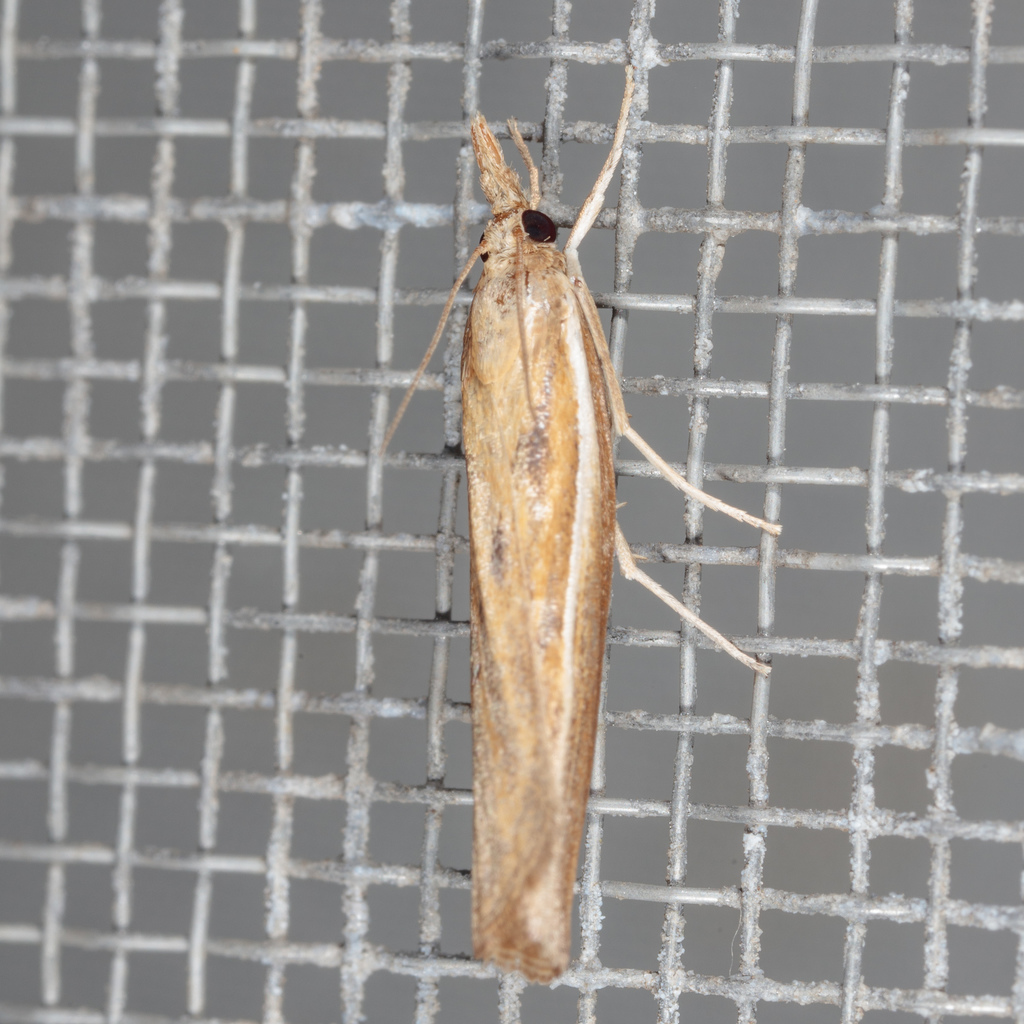
(c) Victor Engel, some rights reserved (CC BY) · licence
Family: Crambidae · Class: Insecta · Order: Lepidoptera
Fissicrambus intermedius is a California animal in the Crambidae family.
Fissicrambus intermedius is a moth in the family Crambidae, described by Kearfott in 1908. This species belongs to the grass moth family, a group characterized by narrow forewings and distinctive wing patterns. Specific morphological details for this species have not been well documented in the scientific literature, though members of the genus Fissicrambus typically display muted coloration patterns adapted to their grassland habitats. The species is found in North America, where it has been recorded from Arizona, California, and Texas (Moth Photographers Group). In California, the specific distribution and county records have not been comprehensively documented. The species appears to have a southwestern United States distribution pattern, suggesting adaptation to arid and semi-arid environments characteristic of these regions. Habitat requirements for Fissicrambus intermedius have not been extensively studied. Based on the genus characteristics and regional distribution, the species likely inhabits grassland and shrubland environments typical of the southwestern United States. Many Crambidae moths are associated with grasses and herbaceous plants, and larvae often develop as borers in grass stems or feed on root systems. The elevation range and specific microhabitat preferences for this species remain undocumented. Behavioral and ecological information for Fissicrambus intermedius is limited in the scientific literature. Like other members of the Crambidae family, adults are likely nocturnal and attracted to artificial lights. Flight period, mating behaviors, and larval host plant associations have not been definitively established for this species. The larval stage presumably develops on grasses or related herbaceous plants, consistent with the feeding patterns observed in related Fissicrambus species, though specific host plant relationships require further investigation. No conservation status has been assigned to Fissicrambus intermedius at federal or state levels. The species does not appear on any conservation lists, suggesting either stable populations or insufficient data to assess conservation needs. Population trends, threats, and conservation requirements remain unknown due to limited research attention. The broad geographic distribution across multiple states may indicate some resilience to environmental changes, though habitat loss and fragmentation in grassland ecosystems could potentially impact local populations. Scientific documentation for this species remains limited. The information presented here is based on available sources including taxonomic databases and the Moth Photographers Group. If you have additional verified information about this species' biology, distribution, or ecology, please contact us to help improve this species account.
Classification
Class: Insecta · Order: Lepidoptera · Family: Crambidae
Frequently asked questions
How is Fissicrambus intermedius classified?
Fissicrambus intermedius belongs to class Insecta, order Lepidoptera, family Crambidae.
What family does Fissicrambus intermedius belong to?
Fissicrambus intermedius is in the Crambidae family.
What is Fissicrambus intermedius?
Fissicrambus intermedius is a moth in the family Crambidae, described by Kearfott in 1908.
Is Fissicrambus intermedius found in California?
Yes. Fissicrambus intermedius is recorded in California in The California Species Project's catalogue.
Related species
Other California species in the same genus, family, or bioregion.
Data from The California Species Project — 14,000+ California species with verified data from CNPS, CDFW, USFWS, and more.