Fissicrambus quadrinotellus
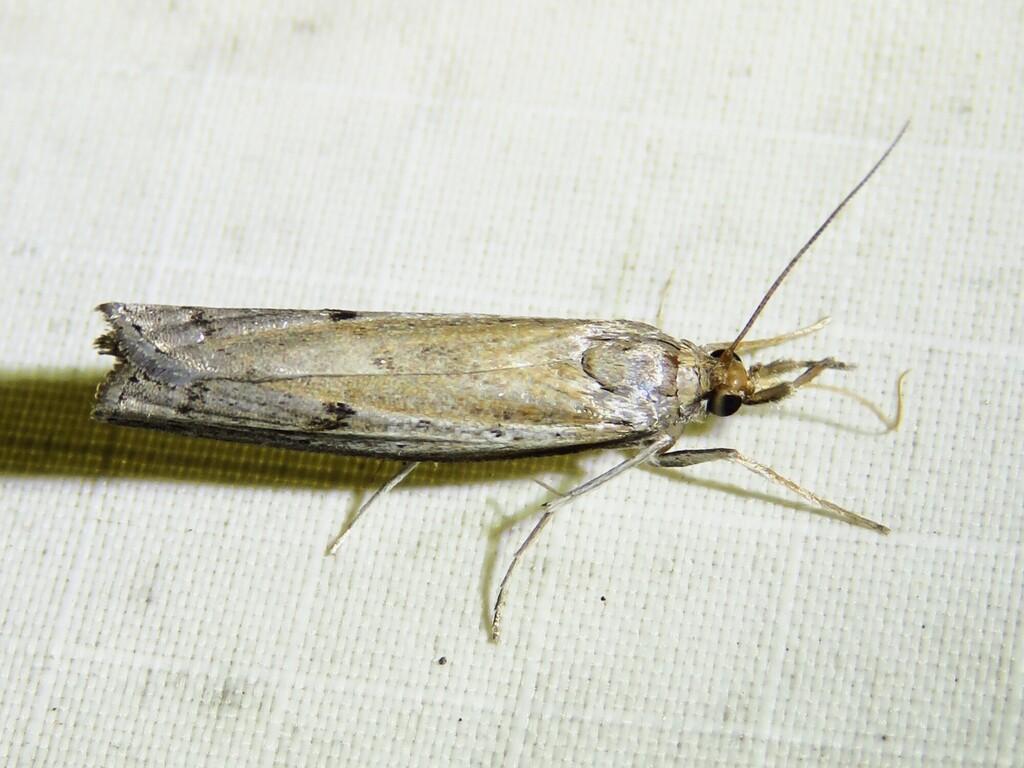
(c) Annika Lindqvist, some rights reserved (CC BY) · licence
Family: Crambidae · Class: Insecta · Order: Lepidoptera
Fissicrambus quadrinotellus is a California animal in the Crambidae family.
Fissicrambus quadrinotellus is a small moth in the family Crambidae, commonly known as grass moths or crambid snout moths. This species belongs to the genus Fissicrambus, which comprises moths typically associated with grassland habitats across North America. Adult moths display the characteristic features of the Crambidae family, including relatively narrow forewings and a prominent labial palp that projects forward like a snout. The forewings are typically pale brown to tan with subtle markings, though specific coloration patterns for F. quadrinotellus require further documentation. The species name 'quadrinotellus' suggests the presence of four distinct markings or spots on the wings, though detailed morphological descriptions are limited in current literature. The range and distribution of Fissicrambus quadrinotellus within California remains poorly documented in accessible scientific literature. Members of the genus Fissicrambus are generally distributed across temperate regions of North America, with various species occupying different ecological niches from grasslands to agricultural areas. Without specific collection records or survey data readily available, the precise counties or regions where this species occurs in California cannot be definitively stated. This data gap represents a significant limitation in understanding the species' conservation needs and ecological role. Habitat requirements for F. quadrinotellus likely follow patterns typical of other Crambidae moths, which are often associated with grassland ecosystems, meadows, and areas with abundant graminoid vegetation. Many crambid moths have larvae that feed on grasses and related monocots, suggesting this species may inhabit native grasslands, coastal prairies, or similar herbaceous plant communities. Elevation ranges and specific microhabitat preferences remain undocumented for this species. Behavioral and ecological information for Fissicrambus quadrinotellus is extremely limited in current scientific literature. Most Crambidae moths are nocturnal and attracted to lights, with adults typically active during warmer months. Larval stages likely feed on grasses or related plants, developing in soil or at the base of host plants. Life cycle timing, mating behaviors, and specific host plant relationships require further research and documentation. The conservation status of Fissicrambus quadrinotellus cannot be assessed due to insufficient data on population size, trends, and distribution. The species lacks federal or state conservation designations, which may reflect either stable populations or simply inadequate survey effort and taxonomic attention. Many small moth species remain understudied, particularly those without obvious economic significance or striking appearances. The absence of readily available ecological data highlights the need for comprehensive lepidopteran surveys and taxonomic research in California. Without baseline population data and habitat requirements, it is impossible to evaluate potential threats or conservation needs for this species. This represents a broader challenge in invertebrate conservation, where numerous species may be at risk but lack the basic biological information necessary for effective management decisions.
Classification
Class: Insecta · Order: Lepidoptera · Family: Crambidae
Frequently asked questions
How is Fissicrambus quadrinotellus classified?
Fissicrambus quadrinotellus belongs to class Insecta, order Lepidoptera, family Crambidae.
What family does Fissicrambus quadrinotellus belong to?
Fissicrambus quadrinotellus is in the Crambidae family.
What is Fissicrambus quadrinotellus?
Fissicrambus quadrinotellus is a small moth in the family Crambidae, commonly known as grass moths or crambid snout moths.
Is Fissicrambus quadrinotellus found in California?
Yes. Fissicrambus quadrinotellus is recorded in California in The California Species Project's catalogue.
Related species
Other California species in the same genus, family, or bioregion.
Data from The California Species Project — 14,000+ California species with verified data from CNPS, CDFW, USFWS, and more.