Fissilicreagris imperialis
Empire Cave Pseudoscorpion
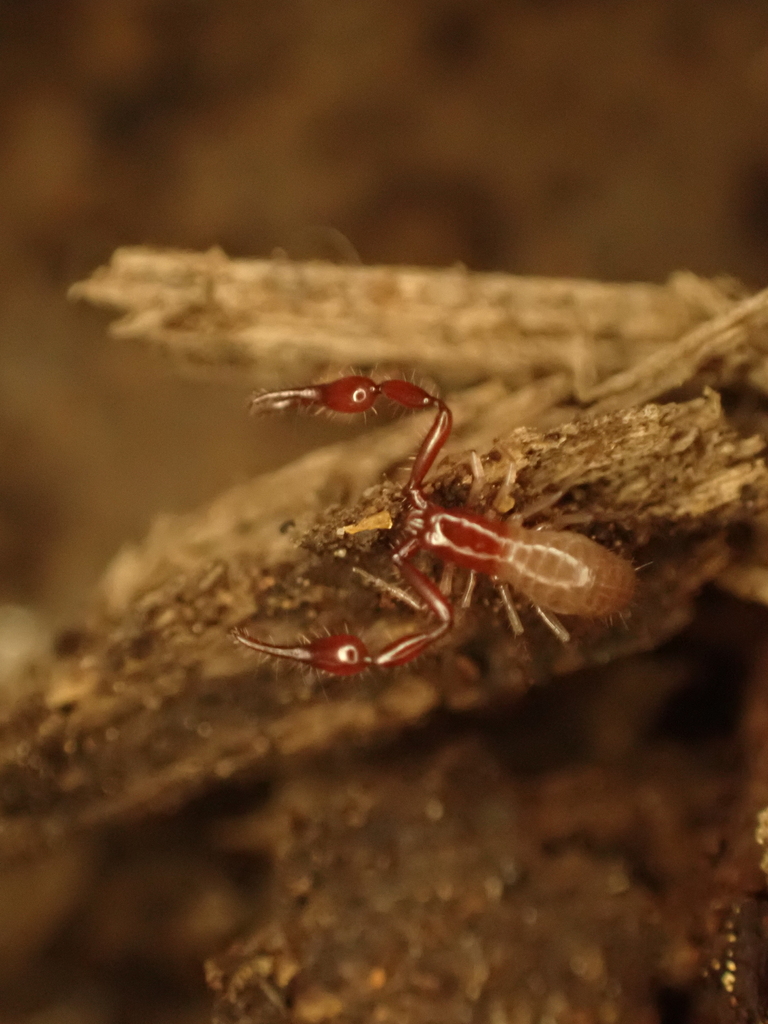
(c) reagan peschke, some rights reserved (CC BY) · licence
Family: Neobisiidae · Class: Unknown · Order: Pseudoscorpiones
Conservation status: G1 S1
Fissilicreagris imperialis (Empire Cave Pseudoscorpion) is a California animal in the Neobisiidae family.
The Empire Cave Pseudoscorpion (Fissilicreagris imperialis) is a small arachnid belonging to the order Pseudoscorpiones, family Neobisiidae. As a member of the subfamily Microcreagrinae, this species represents one of only four known species within the genus Fissilicreagris. Like other pseudoscorpions, F. imperialis possesses pedipalps with pincer-like chelae resembling those of scorpions but lacks the characteristic tail and stinger. Specific morphological measurements and detailed physical descriptions for this species have not been well documented in the scientific literature. Fissilicreagris imperialis is endemic to cave systems, though its precise geographic distribution within California remains poorly documented. The species' common name suggests association with a specific cave system, likely the Empire Cave, but comprehensive range data is not available in current taxonomic databases. As a cave-obligate species, its distribution is inherently limited to underground karst environments where suitable conditions exist. This pseudoscorpion inhabits cave ecosystems, representing a highly specialized troglobiotic lifestyle. Cave environments provide stable temperature and humidity conditions year-round, typically maintaining constant temperatures and near-saturated humidity levels. The species likely occupies specific microhabitats within caves, such as areas with organic debris accumulation or zones with particular moisture levels. Cave ecosystems depend on organic matter input from surface environments, either through active transport by animals or passive deposition through water flow and gravity. The ecological role and specific behavioral patterns of F. imperialis remain largely unstudied. Like other pseudoscorpions, the species is likely predatory, feeding on small arthropods including springtails, small beetles, and other cave-dwelling invertebrates. Pseudoscorpions are generally sit-and-wait predators that use their chelae to capture prey. Reproductive biology, including mating behaviors, egg-laying patterns, and developmental timing, has not been documented for this species. Cave-dwelling pseudoscorpions typically exhibit slower metabolic rates and extended lifespans compared to surface-dwelling relatives, adaptations that reflect the resource-limited cave environment. Fissilicreagris imperialis holds a global conservation rank of G1, indicating it is critically imperiled with a very high risk of extinction due to extreme rarity or other factors (NatureServe). This species is included on the California Department of Fish and Wildlife's Special Animals List. This ranking reflects the species' apparent restriction to very few locations and its specialized habitat requirements. Cave ecosystems face numerous threats including human disturbance, altered hydrology from surface development, contamination from agricultural or urban runoff, and climate change impacts on regional water tables. The species' cave-obligate nature makes it particularly vulnerable to habitat disruption, as cave environments cannot be easily restored once damaged. No federal listing status has been assigned to this species as of December 2025, despite its critically imperiled global ranking. The limited scientific knowledge regarding this species' distribution, population size, and ecological requirements represents a significant barrier to comprehensive conservation planning and threat assessment.
Classification
Class: Unknown · Order: Pseudoscorpiones · Family: Neobisiidae
Conservation status
G1 S1
Frequently asked questions
How is Fissilicreagris imperialis classified?
Fissilicreagris imperialis belongs to class Unknown, order Pseudoscorpiones, family Neobisiidae.
What family does Fissilicreagris imperialis belong to?
Fissilicreagris imperialis is in the Neobisiidae family.
Is Fissilicreagris imperialis protected or of conservation concern?
Fissilicreagris imperialis carries the following status: G1 S1.
What is Fissilicreagris imperialis?
The Empire Cave Pseudoscorpion (Fissilicreagris imperialis) is a small arachnid belonging to the order Pseudoscorpiones, family Neobisiidae.
Is Fissilicreagris imperialis found in California?
Yes. Fissilicreagris imperialis is recorded in California in The California Species Project's catalogue.
Related species
Other California species in the same genus, family, or bioregion.
Data from The California Species Project — 14,000+ California species with verified data from CNPS, CDFW, USFWS, and more.