Fluminicola seminalis
Nugget Pebblesnail
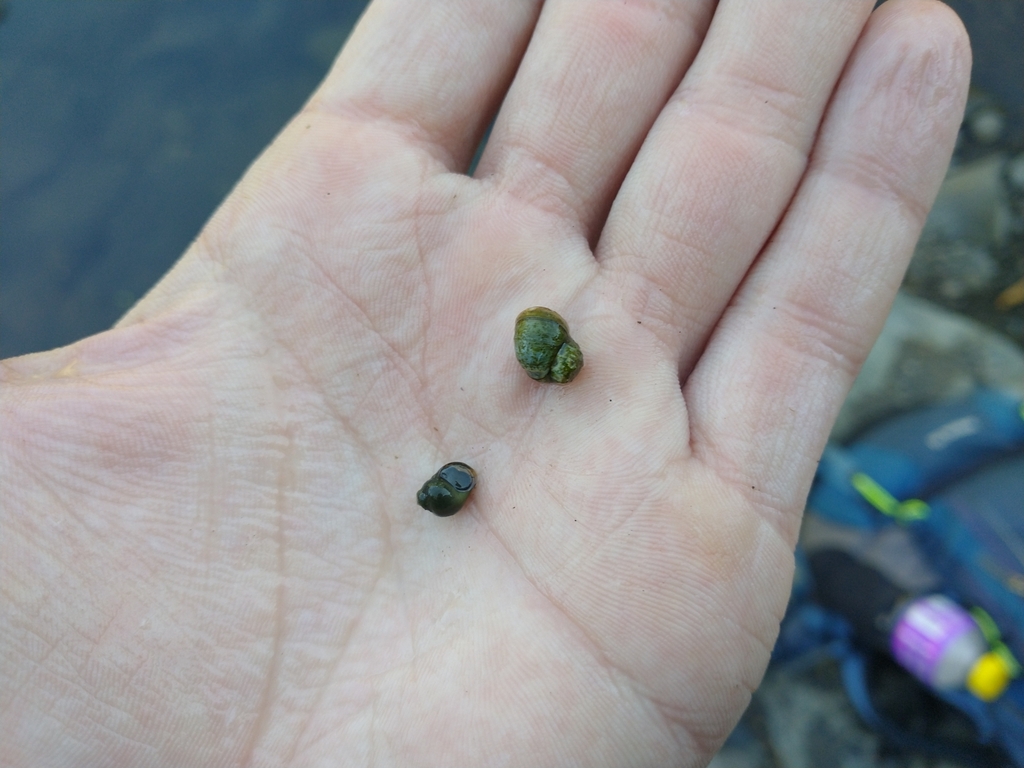
no rights reserved · CC0
Family: Lithoglyphidae · Class: Gastropoda · Order: Littorinimorpha
Conservation status: G2 S3
Fluminicola seminalis (Nugget Pebblesnail) is a California animal in the Lithoglyphidae family.
The Nugget pebblesnail (Fluminicola seminalis) is a small freshwater gastropod mollusk in the family Lithoglyphidae. This aquatic snail typically measures 2-4 mm in shell height, with a conical to globose shell that ranges from light brown to yellowish in coloration. The shell surface exhibits fine spiral ridges and growth lines, with an aperture that is oval-shaped and slightly expanded. The species can be distinguished from other pebblesnails by its relatively compact shell form and specific whorl characteristics. Historically, the Nugget pebblesnail was known from spring systems and small streams in northern California and southern Oregon. Current distribution appears to be limited to select locations in California, though specific county-level occurrence data remains poorly documented. The species' range has likely contracted significantly from historical levels due to habitat modifications and water management activities (USFWS Species Profile 2025). Population surveys conducted in recent decades suggest substantial declines in both the number of occupied sites and overall abundance (USFWS Species Profile 2025). This species inhabits cold, clear spring systems and their associated outflows, typically in areas with stable water temperatures and consistent flow regimes. Nugget pebblesnails require well-oxygenated water with rocky or gravelly substrates that provide attachment surfaces and shelter (USFWS Species Profile 2025). They are typically found in shallow areas with moderate current, often associated with aquatic vegetation or algal growth. Water chemistry parameters, including dissolved oxygen levels and mineral content, appear to be critical habitat factors for this species. Nugget pebblesnails are grazing organisms that feed primarily on periphyton, diatoms, and other microscopic algae growing on hard surfaces (USFWS Species Profile 2025). They use their radula, a rasping feeding structure, to scrape food particles from rocks and other substrates. Reproduction involves the deposition of small, transparent egg masses on hard surfaces, though specific breeding timing and larval development patterns have not been thoroughly documented. The species likely exhibits direct development without a planktonic larval stage, typical of many freshwater gastropods in this family. The Nugget pebblesnail currently holds a global conservation rank of G2 (imperiled) and a state rank of S3 (vulnerable) in California (NatureServe 2025), reflecting significant conservation concern. The U.S. Fish and Wildlife Service has conducted status reviews for this species as part of evaluations of aquatic mollusks in the region (USFWS ECOS 2025). Primary threats include habitat degradation from water diversions, groundwater pumping, and spring modifications that alter natural flow regimes and water chemistry (USFWS Species Profile 2025). Urban development, agricultural activities, and recreational use of spring areas pose additional risks through sedimentation, pollution, and physical disturbance. Climate change may exacerbate these threats by affecting precipitation patterns and groundwater recharge rates that maintain spring habitats. The species' limited distribution and specialized habitat requirements make it particularly vulnerable to local extirpations, emphasizing the need for targeted conservation measures focused on spring ecosystem protection and restoration.
Classification
Class: Gastropoda · Order: Littorinimorpha · Family: Lithoglyphidae
Conservation status
G2 S3
Frequently asked questions
How is Fluminicola seminalis classified?
Fluminicola seminalis belongs to class Gastropoda, order Littorinimorpha, family Lithoglyphidae.
What family does Fluminicola seminalis belong to?
Fluminicola seminalis is in the Lithoglyphidae family.
Is Fluminicola seminalis protected or of conservation concern?
Fluminicola seminalis carries the following status: G2 S3.
What is Fluminicola seminalis?
The Nugget pebblesnail (Fluminicola seminalis) is a small freshwater gastropod mollusk in the family Lithoglyphidae.
Is Fluminicola seminalis found in California?
Yes. Fluminicola seminalis is recorded in California in The California Species Project's catalogue.
Related species
Other California species in the same genus, family, or bioregion.
Data from The California Species Project — 14,000+ California species with verified data from CNPS, CDFW, USFWS, and more.