Forficula dentata
Western Earwig
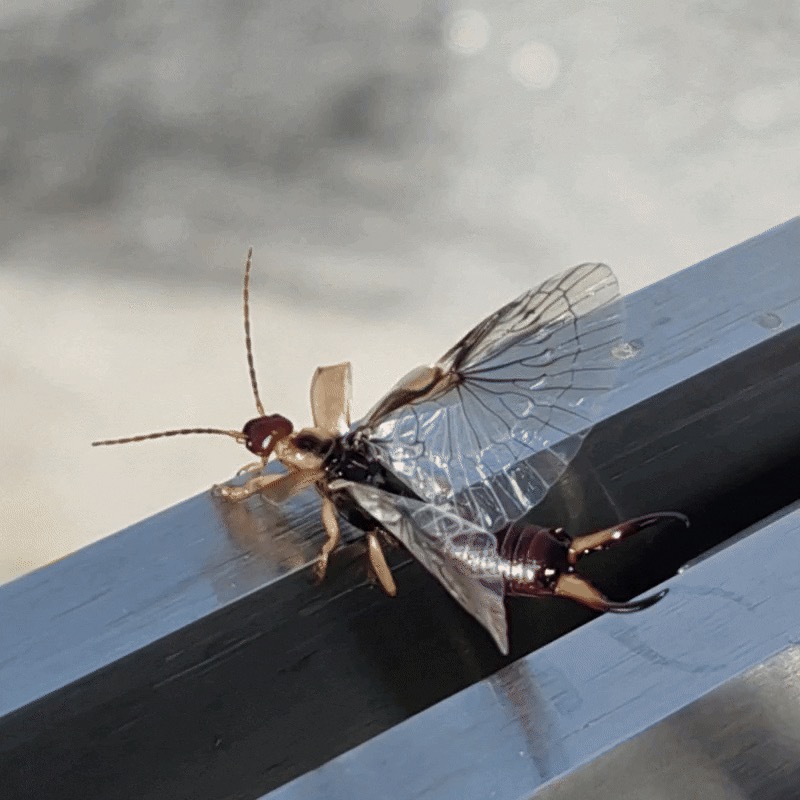
(c) Tynen Benson, some rights reserved (CC BY) · licence
Family: Forficulidae · Class: Insecta · Order: Dermaptera
Forficula dentata (Western Earwig) is a California animal in the Forficulidae family.
The Western Earwig (Forficula dentata) is a small dermapteran insect in the family Forficulidae. Adults typically measure 5-12 mm in length, with a dark brown to black coloration and the characteristic pincer-like cerci (forceps) at the rear of the abdomen. Males possess larger, more curved forceps compared to females, which have straighter, smaller cerci. The body is elongated and somewhat flattened, with short wing covers (elytra) that may conceal functional hindwings in some individuals. Forficula dentata occurs across western North America, with documented populations extending from British Columbia south through California. In California, the species has been recorded in multiple counties including San Benito County, where specimens have been observed in garden habitats near Aromas (BugGuide 2008). The species appears to have a broader western distribution compared to the more widespread European Earwig (F. auricularia), though detailed range mapping remains incomplete. This earwig inhabits diverse terrestrial environments, showing preference for areas with adequate moisture and shelter. Documented habitats include live oak and chaparral ecosystems, riparian zones along rivers, and residential gardens with damp soil conditions (BugGuide 2008). The species is commonly found under debris, rocks, bark, and leaf litter in both natural and disturbed habitats. Unlike some specialized earwig species, F. dentata appears adaptable to various microhabitat conditions from dry chaparral to moist riparian areas. Western Earwigs are primarily nocturnal and omnivorous, feeding on decaying organic matter, small insects, and plant material. Like other forficulids, they exhibit maternal care behavior, with females guarding eggs and early instar nymphs in protected spaces such as soil crevices or under rocks. Reproduction typically occurs in spring and early summer, with females depositing 20-50 eggs in underground chambers. Development is hemimetabolous, with juveniles resembling miniature adults but lacking fully developed cerci and wings. The species undergoes multiple molts before reaching sexual maturity, with the characteristic forceps becoming more pronounced in males during final developmental stages. Adults may live 6-12 months, overwintering in protected locations such as deep soil layers, rock crevices, or human-made structures. Forficula dentata currently lacks formal conservation status designations at federal or state levels. The species appears to maintain stable populations across its range, though comprehensive population surveys have not been conducted. As a native North American dermapteran, it faces minimal immediate conservation concerns compared to habitat-specialist insects. However, like many terrestrial arthropods, the species may be influenced by habitat modification, urbanization, and climate change effects on moisture availability in its preferred environments. The Western Earwig's ecological role as both predator of pest insects and decomposer of organic matter contributes to ecosystem functioning in western North American terrestrial communities.
Classification
Class: Insecta · Order: Dermaptera · Family: Forficulidae
Frequently asked questions
How is Forficula dentata classified?
Forficula dentata belongs to class Insecta, order Dermaptera, family Forficulidae.
What family does Forficula dentata belong to?
Forficula dentata is in the Forficulidae family.
What is Forficula dentata?
The Western Earwig (Forficula dentata) is a small dermapteran insect in the family Forficulidae.
Is Forficula dentata found in California?
Yes. Forficula dentata is recorded in California in The California Species Project's catalogue.
Related species
Other California species in the same genus, family, or bioregion.
Data from The California Species Project — 14,000+ California species with verified data from CNPS, CDFW, USFWS, and more.