Forficula mediterranea
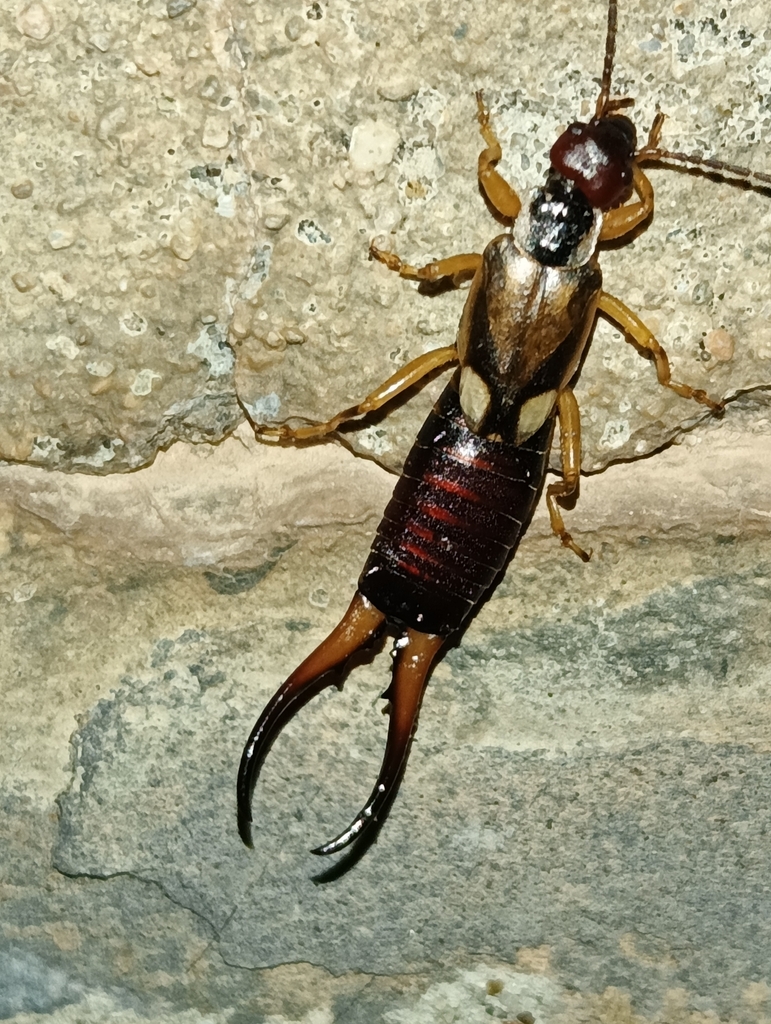
(c) Karim Haddad, some rights reserved (CC BY) · licence
Family: Forficulidae · Class: Insecta · Order: Dermaptera
Forficula mediterranea is a California animal in the Forficulidae family.
The taxonomic status of Forficula mediterranea requires clarification, as this name does not appear in current authoritative taxonomic databases or California wildlife documentation. The most likely scenario is that this represents either a misidentification or an outdated synonym for Forficula auricularia, the European earwig, which is well-documented as an introduced species in California. Forficula auricularia is a robust earwig measuring 12-15 millimeters in length, characterized by a dark reddish-brown to blackish coloration and prominent forceps-like cerci at the posterior end. Males possess curved, asymmetrical cerci, while females have straighter, more symmetrical cerci. The species exhibits sexual dimorphism in cercal morphology, with male cerci being more robust and curved. Adult European earwigs are active primarily at night, seeking shelter during daylight hours under stones, logs, leaf litter, and human-made structures. In California, this introduced species has established populations throughout much of the state, particularly in areas with Mediterranean-type climates. The species occurs from sea level to moderate elevations, adapting well to both natural and disturbed habitats including gardens, agricultural areas, and urban environments. European earwigs prefer moist conditions and are commonly found in irrigated landscapes, riparian zones, and areas with regular moisture availability. The species demonstrates considerable habitat plasticity, occupying coastal scrub, oak woodlands, grasslands, and extensively modified agricultural and residential areas. Forficula auricularia exhibits omnivorous feeding behavior, consuming both plant and animal matter. Diet includes soft plant tissues, fruits, flowers, small arthropods, and organic detritus. Reproduction occurs annually, with adults overwintering and mating in early spring. Females create underground chambers where they deposit 20-80 cream-colored eggs. Maternal care is extensive, with females tending eggs and first-instar nymphs. Development includes four to five molts before reaching adult stage, typically requiring 70-80 days under favorable conditions. As a non-native species, Forficula auricularia has integrated into California's arthropod communities but can impact native ecosystems. Federal Register documentation indicates that high densities of earwigs, including this species, may contribute to ecological disruption in sensitive habitats, particularly those supporting endangered butterfly species like the quino checkerspot. The species serves as both predator and scavenger in food webs but may compete with native arthropods for resources and shelter sites. Management considerations focus on preventing further spread rather than conservation, as the species requires no protection measures. Understanding the correct taxonomic identification of specimens attributed to 'Forficula mediterranea' remains important for accurate biodiversity assessments and ecological monitoring in California ecosystems.
Classification
Class: Insecta · Order: Dermaptera · Family: Forficulidae
Frequently asked questions
How is Forficula mediterranea classified?
Forficula mediterranea belongs to class Insecta, order Dermaptera, family Forficulidae.
What family does Forficula mediterranea belong to?
Forficula mediterranea is in the Forficulidae family.
What is Forficula mediterranea?
The taxonomic status of Forficula mediterranea requires clarification, as this name does not appear in current authoritative taxonomic databases or California wildlife documentation.
Is Forficula mediterranea found in California?
Yes. Forficula mediterranea is recorded in California in The California Species Project's catalogue.
Related species
Other California species in the same genus, family, or bioregion.
Data from The California Species Project — 14,000+ California species with verified data from CNPS, CDFW, USFWS, and more.