Formica integroides
Western Mound Ant
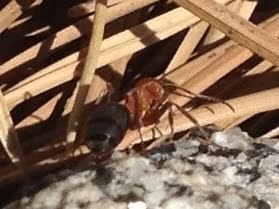
(c) 101595408250610106310, some rights reserved (CC BY) · licence
Family: Formicidae · Class: Insecta · Order: Hymenoptera
Formica integroides (Western Mound Ant) is a California animal in the Formicidae family.
The Western Mound Ant (*Formica integroides*) is a species of mound-building ant in the family Formicidae. Workers typically measure 4-7 mm in length, with a reddish-brown to dark brown coloration. The species exhibits the characteristic polymorphic worker caste system common to *Formica* species, with minor and major workers displaying size variation. The head and thorax are typically darker than the abdomen, and workers possess a single petiolar node between the thorax and gaster. This species occurs in western North America, with populations documented in California and adjacent regions. In California, *F. integroides* has been recorded from various counties, though specific distribution data requires further documentation. The species appears to have a relatively limited range compared to more widespread *Formica* species. Western Mound Ants construct characteristic earthen mounds that can reach heights of 30-60 cm and diameters of up to 1 meter. These mounds serve as the colony's nest structure and are typically built in open areas with partial sun exposure. The species shows preference for well-drained soils in grassland, oak woodland, and chaparral habitats. Colonies are often established on gentle slopes or flat terrain where soil conditions allow for stable mound construction. Colonies of *F. integroides* are perennial, with reproductive flights typically occurring during late spring to early summer months. Queens establish new colonies through independent founding or potentially through budding from established colonies. Workers are generalist foragers, collecting a variety of food sources including other arthropods, honeydew from aphids and other hemipterans, and occasionally seeds. The species exhibits typical *Formica* behavioral patterns including trail recruitment and aggressive defense of territory around the nest mound. The conservation status of *F. integroides* has not been formally assessed at federal or state levels. Like many native ant species, potential threats may include habitat conversion, pesticide applications, and competition from introduced ant species. The species' mound-building behavior makes colonies particularly vulnerable to direct habitat disturbance. Current population trends and specific threats to this species remain poorly documented, reflecting the general lack of comprehensive surveys for native ant species in California. Scientific documentation for this species remains limited. The information presented here is based on available taxonomic records and general knowledge of *Formica* ecology. If you have additional verified information about this species' biology, distribution, or ecology, please contact us to help improve this species account.
Classification
Class: Insecta · Order: Hymenoptera · Family: Formicidae
Frequently asked questions
How is Formica integroides classified?
Formica integroides belongs to class Insecta, order Hymenoptera, family Formicidae.
What family does Formica integroides belong to?
Formica integroides is in the Formicidae family.
What is Formica integroides?
The Western Mound Ant (*Formica integroides*) is a species of mound-building ant in the family Formicidae.
Is Formica integroides found in California?
Yes. Formica integroides is recorded in California in The California Species Project's catalogue.
Related species
Other California species in the same genus, family, or bioregion.
Data from The California Species Project — 14,000+ California species with verified data from CNPS, CDFW, USFWS, and more.