Formica moki
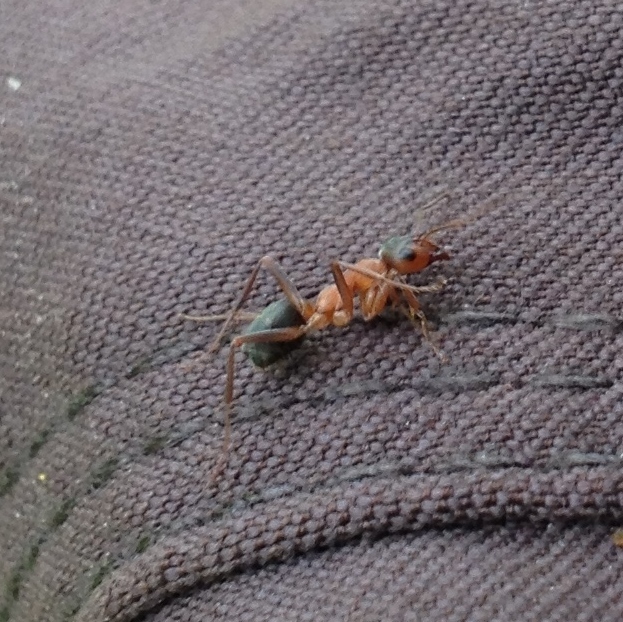
(c) Justin Johnsen, some rights reserved (CC BY) · licence
Family: Formicidae · Class: Insecta · Order: Hymenoptera
Formica moki is a California animal in the Formicidae family.
Formica moki is an ant species in the genus Formica, family Formicidae. This species is part of the diverse ant fauna found in western North America, though detailed morphological descriptions and distinguishing characteristics have not been comprehensively documented in the scientific literature. The current distribution of Formica moki appears to be centered in the western United States, with documented occurrences tracked by the U.S. Fish and Wildlife Service. The species is included in federal taxonomic databases, indicating its recognized taxonomic status, though specific range boundaries and habitat associations remain poorly characterized in available literature. Habitat requirements for Formica moki have not been well documented in published studies. Like other members of the genus Formica, this species likely inhabits terrestrial environments where it constructs subterranean or surface nests. Formica species typically occupy a variety of habitat types including grasslands, shrublands, and forest edges, but specific microhabitat preferences for F. moki remain unstudied. Ecological information for this species is limited. Members of the genus Formica are generally omnivorous, feeding on a combination of plant secretions, small arthropods, and honeydew from aphids and other hemipterans. These ants typically form colonies with distinct worker castes and reproductive individuals. Foraging behavior, colony size, seasonal activity patterns, and reproductive biology specific to F. moki have not been documented in the available literature. Formica moki appears on the California Department of Fish and Wildlife's Special Animals List, which tracks species regardless of their formal legal protection status (California Department of Fish and Wildlife 2016). This inclusion suggests the species may be considered rare, of conservation concern, or data-deficient within California. The species does not appear to have federal protection status under the Endangered Species Act, nor does it appear on current IUCN Red List assessments. Population trends, distribution changes, and specific conservation threats have not been assessed for this species. The limited documentation available for Formica moki reflects the broader challenge of studying ant diversity, particularly for species that may have restricted distributions or occur in low densities. Many ant species remain poorly studied despite their ecological importance as soil engineers, seed dispersers, and predators of other arthropods. Further research is needed to characterize the morphology, distribution, habitat requirements, and conservation status of this species. Scientific documentation for this species remains extremely limited. The information presented here is based on available sources including federal taxonomic databases and state tracking lists. If you have additional verified information about this species' biology, distribution, or ecology, please contact us to help improve this species account.
Classification
Class: Insecta · Order: Hymenoptera · Family: Formicidae
Frequently asked questions
How is Formica moki classified?
Formica moki belongs to class Insecta, order Hymenoptera, family Formicidae.
What family does Formica moki belong to?
Formica moki is in the Formicidae family.
What is Formica moki?
Formica moki is an ant species in the genus Formica, family Formicidae.
Is Formica moki found in California?
Yes. Formica moki is recorded in California in The California Species Project's catalogue.
Related species
Other California species in the same genus, family, or bioregion.
Data from The California Species Project — 14,000+ California species with verified data from CNPS, CDFW, USFWS, and more.