Frederickia cyda
Mesquite Looper Moth
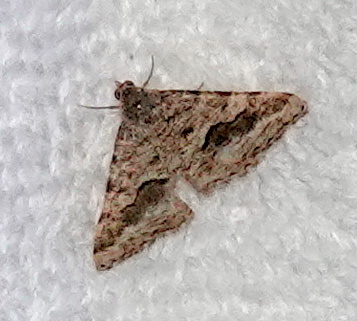
(c) desertnaturalist, some rights reserved (CC BY) · licence
Family: Geometridae · Class: Insecta · Order: Lepidoptera
Frederickia cyda (Mesquite Looper Moth) is a California animal in the Geometridae family.
Frederickia cyda, the mesquite looper moth, is a species of moth in the family Geometridae, subfamily Ennominae. This species belongs to the group commonly known as geometrid moths or inchworm moths, characterized by their larvae's distinctive looping locomotion. The taxonomic placement has been recently revised, with the species formerly placed in the genus Rindgea Ferguson, 2008, which was determined to be a junior primary homonym and replaced with Frederickia (Rajaei, Hausmann & Sihvonen 2022). Detailed morphological descriptions for this species are not well documented in available literature. As with other geometrid moths, adults likely possess the characteristic broad wings and slender body typical of the family. The larvae, as suggested by the common name "looper moth," presumably exhibit the typical geometrid caterpillar body plan with reduced prolegs, causing them to arch their bodies when moving. Frederickia cyda has a broad distribution across North America, ranging from Louisiana to southern California (BugGuide). The species also occurs in Central America, extending its range beyond the United States borders. Within this range, the moth has been recorded as a vagrant species in Oklahoma, Arkansas, Missouri, and Kansas, indicating occasional dispersal beyond its core habitat. The association with mesquite, as suggested by its common name, likely influences its distribution patterns in arid and semi-arid regions of the southwestern United States where mesquite plants are prevalent. Habitat preferences for this species appear to be closely linked to mesquite ecosystems, though specific microhabitat requirements have not been thoroughly documented. The distribution pattern suggests adaptation to arid and semi-arid environments typical of the southwestern United States and northern Mexico, where various mesquite species (Prosopis spp.) form important components of the vegetation. The ecological relationships and life history details of Frederickia cyda remain poorly studied. The common name suggests a potential association with mesquite plants, possibly as larval host plants, though this relationship has not been scientifically verified in available literature. Like other geometrid moths, the species likely undergoes complete metamorphosis with egg, larval, pupal, and adult stages. Seasonal activity patterns, reproductive behavior, and specific dietary requirements have not been well documented for this species. No conservation status has been assigned to Frederickia cyda at federal or state levels. The species' wide distribution across multiple states and into Central America suggests it may not face immediate conservation concerns, though specific population trends and threats have not been assessed. The lack of detailed biological and ecological information represents a significant knowledge gap that limits our understanding of this species' conservation needs and ecological role within mesquite ecosystems. Scientific documentation for this species remains limited despite its broad geographic range. If you have additional verified information about this species' biology, distribution, or ecology, please contact us to help improve this species account.
Classification
Class: Insecta · Order: Lepidoptera · Family: Geometridae
Frequently asked questions
How is Frederickia cyda classified?
Frederickia cyda belongs to class Insecta, order Lepidoptera, family Geometridae.
What family does Frederickia cyda belong to?
Frederickia cyda is in the Geometridae family.
What is Frederickia cyda?
Frederickia cyda, the mesquite looper moth, is a species of moth in the family Geometridae, subfamily Ennominae.
Is Frederickia cyda found in California?
Yes. Frederickia cyda is recorded in California in The California Species Project's catalogue.
Related species
Other California species in the same genus, family, or bioregion.
Data from The California Species Project — 14,000+ California species with verified data from CNPS, CDFW, USFWS, and more.