Fringilla montifringilla
Brambling
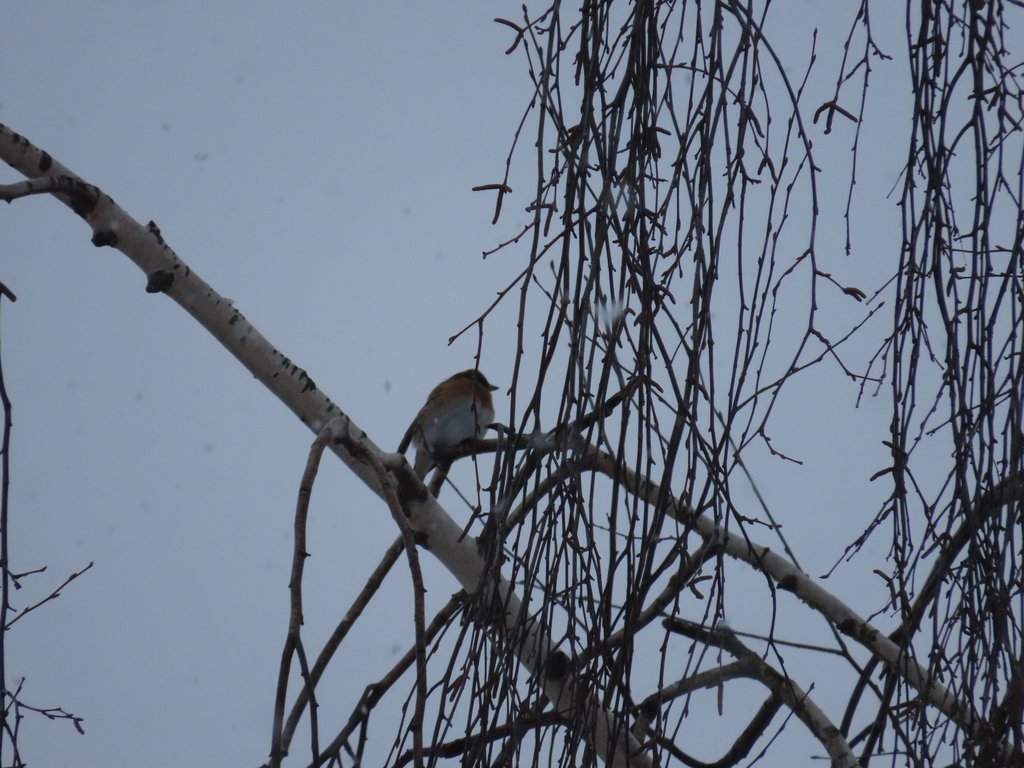
(c) Дмитрий Кошелев, some rights reserved (CC BY) · licence
Family: Fringillidae · Class: Aves · Order: Passeriformes
Fringilla montifringilla (Brambling) is a California animal in the Fringillidae family.
The Brambling is a medium-sized finch native to the boreal and subarctic forests of northern Eurasia. Adults measure 14-16 centimeters (5.5-6.3 inches) in length with a wingspan of 25-26 centimeters (9.8-10.2 inches) and weigh 18-29 grams (0.6-1.0 ounces). During breeding season, males display a distinctive black head and upper back contrasting with bright orange-buff breast, throat, and shoulders. The wings show prominent white patches and orange markings. Females and non-breeding males exhibit more subdued coloration with brown and buff tones replacing the male's black head. Both sexes possess a characteristic white rump patch visible in flight and a slightly forked tail. The Brambling breeds across the taiga zone from Scandinavia east through Siberia to the Pacific Coast, with the southern breeding range extending into mountainous regions of central Europe and Asia. In North America, the species occurs as a rare but regular vagrant, primarily in Alaska's western and central regions during migration periods. California records are extremely rare, with fewer than 10 documented occurrences statewide as of December 2025. Most California sightings have occurred along the coast during fall and winter months, typically at bird feeding stations or mixed finch flocks. Breeding habitat consists of birch, aspen, and mixed coniferous-deciduous forests, particularly areas with abundant birch trees. The species shows strong preference for mature forest stands with open understory and nearby clearings. During winter and migration, Bramblings utilize a broader range of habitats including agricultural areas, parks, gardens, and woodland edges. Elevation preferences vary by region, from sea level to approximately 1,000 meters (3,300 feet) in breeding areas. Bramblings are highly social outside the breeding season, forming flocks that may number in the thousands during winter concentration periods. Their diet consists primarily of seeds, particularly birch and alder catkins during breeding season, supplemented by insects including beetles, moths, and their larvae when feeding young. The species is nomadic during winter, with flock movements driven by food availability. Breeding occurs from May through July, with females constructing cup-shaped nests in birch or conifer trees 2-15 meters (6-50 feet) above ground. Clutch size ranges from 5-7 eggs, with incubation lasting 11-12 days. The Brambling is not federally listed in the United States and holds no special conservation status in California due to its vagrant nature. Globally, the species is classified as Least Concern by the International Union for Conservation of Nature, with stable populations across its extensive Eurasian range. Primary threats include habitat loss from logging and agricultural conversion in breeding areas, though the species' adaptability to various forest types provides some resilience. Climate change may affect breeding range boundaries and winter distribution patterns, but current population trends remain stable.
Classification
Class: Aves · Order: Passeriformes · Family: Fringillidae
Frequently asked questions
How is Fringilla montifringilla classified?
Fringilla montifringilla belongs to class Aves, order Passeriformes, family Fringillidae.
What family does Fringilla montifringilla belong to?
Fringilla montifringilla is in the Fringillidae family.
What is Fringilla montifringilla?
The Brambling is a medium-sized finch native to the boreal and subarctic forests of northern Eurasia.
Is Fringilla montifringilla found in California?
Yes. Fringilla montifringilla is recorded in California in The California Species Project's catalogue.
Related species
Other California species in the same genus, family, or bioregion.
Data from The California Species Project — 14,000+ California species with verified data from CNPS, CDFW, USFWS, and more.