Fulica americana
American Coot
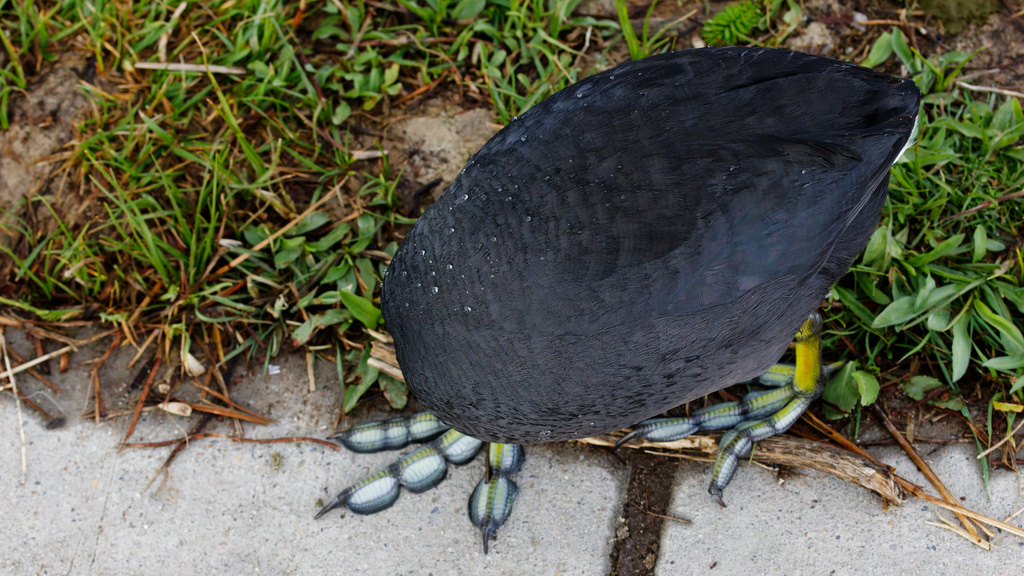
(c) Daughter Dad, some rights reserved (CC BY) · licence
Family: Rallidae · Class: Aves · Order: Gruiformes
Fulica americana (American Coot) is a California animal in the Rallidae family.
The American Coot is a medium-sized aquatic bird measuring 33-43 cm (13-17 inches) in length with a wingspan of 58-71 cm (23-28 inches). Adults weigh between 427-848 grams (0.9-1.9 pounds). The species displays uniform dark gray to black plumage with a distinctive white, chicken-like bill and bright white undertail coverts that are visible when the tail is lifted. The legs and feet are yellow-green with prominent lobed toes rather than webbed feet, an adaptation for swimming and walking on floating vegetation. During breeding season, adults develop a dark reddish-brown frontal shield above the bill and reddish eyes. American Coots breed across much of North America, from southern Canada through the United States and into Mexico. In California, the species is found statewide as both a breeding resident and winter visitor. Breeding populations occur throughout the Central Valley, coastal regions, mountain valleys, and desert areas where suitable wetland habitat exists. During winter months, populations are augmented by migrants from northern breeding areas, with concentrations in the Sacramento-San Joaquin Delta, San Francisco Bay, and Southern California coastal wetlands. The species inhabits freshwater marshes, ponds, lakes, and slow-moving rivers with emergent vegetation. Optimal habitat includes areas with open water for feeding surrounded by dense stands of cattails, bulrushes, or tules for nesting cover. American Coots tolerate brackish water and occasionally use saltwater habitats during migration and winter. They require water depths of 0.3-3 meters (1-10 feet) with abundant submerged and emergent aquatic vegetation. American Coots are omnivorous, feeding on aquatic plants, algae, small fish, invertebrates, and occasionally eggs of other waterbirds. They employ multiple feeding strategies including surface gleaning, diving to depths of 7.6 meters (25 feet), and grazing on land. The species exhibits territorial behavior during breeding season, with pairs defending areas of 0.2-4 hectares (0.5-10 acres). Breeding occurs from March through August, with peak nesting activity from April to June. Females lay 2-12 eggs, typically 6-8, in floating nests constructed from dead vegetation. Incubation lasts 21-25 days, with both parents sharing duties. Young are precocial but remain dependent on parents for 5-8 weeks. The American Coot is not federally or state listed and maintains stable populations across most of its range. According to the North American Breeding Bird Survey, populations have remained relatively stable from 1966-2019, with some regional variations. The species benefits from wetland conservation programs and constructed treatment wetlands. Primary conservation challenges include habitat loss from wetland drainage, water diversions, and urban development. Climate change may affect breeding success through altered precipitation patterns and water availability in key breeding areas.
Classification
Class: Aves · Order: Gruiformes · Family: Rallidae
Frequently asked questions
How is Fulica americana classified?
Fulica americana belongs to class Aves, order Gruiformes, family Rallidae.
What family does Fulica americana belong to?
Fulica americana is in the Rallidae family.
What is Fulica americana?
The American Coot is a medium-sized aquatic bird measuring 33-43 cm (13-17 inches) in length with a wingspan of 58-71 cm (23-28 inches).
Is Fulica americana found in California?
Yes. Fulica americana is recorded in California in The California Species Project's catalogue.
Related species
Other California species in the same genus, family, or bioregion.
Data from The California Species Project — 14,000+ California species with verified data from CNPS, CDFW, USFWS, and more.