Furcula scolopendrina
Zigzag Furcula Moth
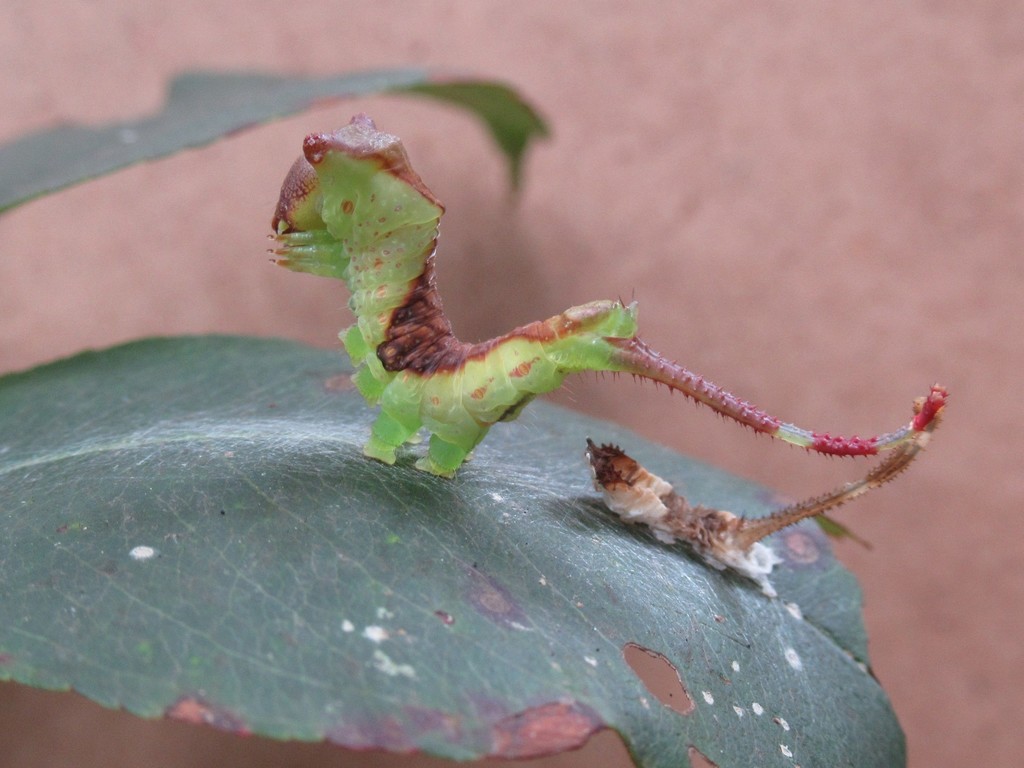
(c) Jake McCumber, some rights reserved (CC BY) · licence
Family: Notodontidae · Class: Insecta · Order: Lepidoptera
Furcula scolopendrina (Zigzag Furcula Moth) is a California animal in the Notodontidae family.
The Zigzag Furcula Moth (Furcula scolopendrina) is a medium-sized moth in the family Notodontidae, characterized by its distinctive wing patterns and caterpillar morphology. Adults have a wingspan of approximately 35 to 45 mm (1.4 to 1.8 inches). The forewings display a complex pattern of brown, gray, and white markings, with zigzag lines that give the species its common name. The hindwings are typically lighter, ranging from pale gray to whitish. Males can be distinguished from females by their more feathered antennae and slightly smaller size. Furcula scolopendrina has an extensive range from British Columbia south to northern Mexico. Within California, the species occurs throughout much of the state where suitable host plants are present, from coastal regions to montane areas. The moth is considered widespread across its range, though local populations may vary in density depending on habitat availability and environmental conditions. This species inhabits riparian woodlands, stream corridors, and areas adjacent to water sources where its host plants thrive. The moth is found from near sea level to elevations of approximately 2,000 meters (6,600 feet). Adults are typically active during late spring through early fall, with peak flight periods varying by elevation and latitude. The species shows a preference for areas with mature willows and cottonwoods, though it can also utilize younger stands when present. Larvae feed exclusively on plants in the family Salicaceae, including willows (Salix species) and cottonwoods (Populus species), as well as birch species (Betulaceae). The caterpillars are notable for their distinctive appearance, featuring prominent dorsal humps and a bifurcated tail structure typical of the genus Furcula. When disturbed, larvae can retract their head into the thorax and rear up, displaying their forked tail appendages as a defensive behavior. Development typically requires one generation per year in most of its range, though two generations may occur in warmer southern areas. Furcula scolopendrina undergoes complete metamorphosis, with eggs laid on host plant foliage in late spring or early summer. Caterpillars feed through the summer months, pupating in cocoons constructed in bark crevices or soil litter. Adults emerge the following spring. The species overwinters in the pupal stage, with timing of emergence synchronized to host plant leaf development. Currently, Furcula scolopendrina does not hold any federal or state conservation listing status. The species appears to maintain stable populations throughout much of its range, benefiting from its ability to utilize multiple host plant genera and its broad geographic distribution. However, like many riparian-associated species, local populations may face pressure from habitat modification, water diversions, and urbanization that affects riparian corridors. The moth's dependence on native Salicaceae and Betulaceae species makes it potentially vulnerable to changes in riparian forest composition or health, though its widespread distribution provides some resilience against localized habitat loss.
Classification
Class: Insecta · Order: Lepidoptera · Family: Notodontidae
Frequently asked questions
How is Furcula scolopendrina classified?
Furcula scolopendrina belongs to class Insecta, order Lepidoptera, family Notodontidae.
What family does Furcula scolopendrina belong to?
Furcula scolopendrina is in the Notodontidae family.
What is Furcula scolopendrina?
The Zigzag Furcula Moth (Furcula scolopendrina) is a medium-sized moth in the family Notodontidae, characterized by its distinctive wing patterns and caterpillar morphology.
Is Furcula scolopendrina found in California?
Yes. Furcula scolopendrina is recorded in California in The California Species Project's catalogue.
Related species
Other California species in the same genus, family, or bioregion.
Data from The California Species Project — 14,000+ California species with verified data from CNPS, CDFW, USFWS, and more.