Galgula partita
Wedgling Moth
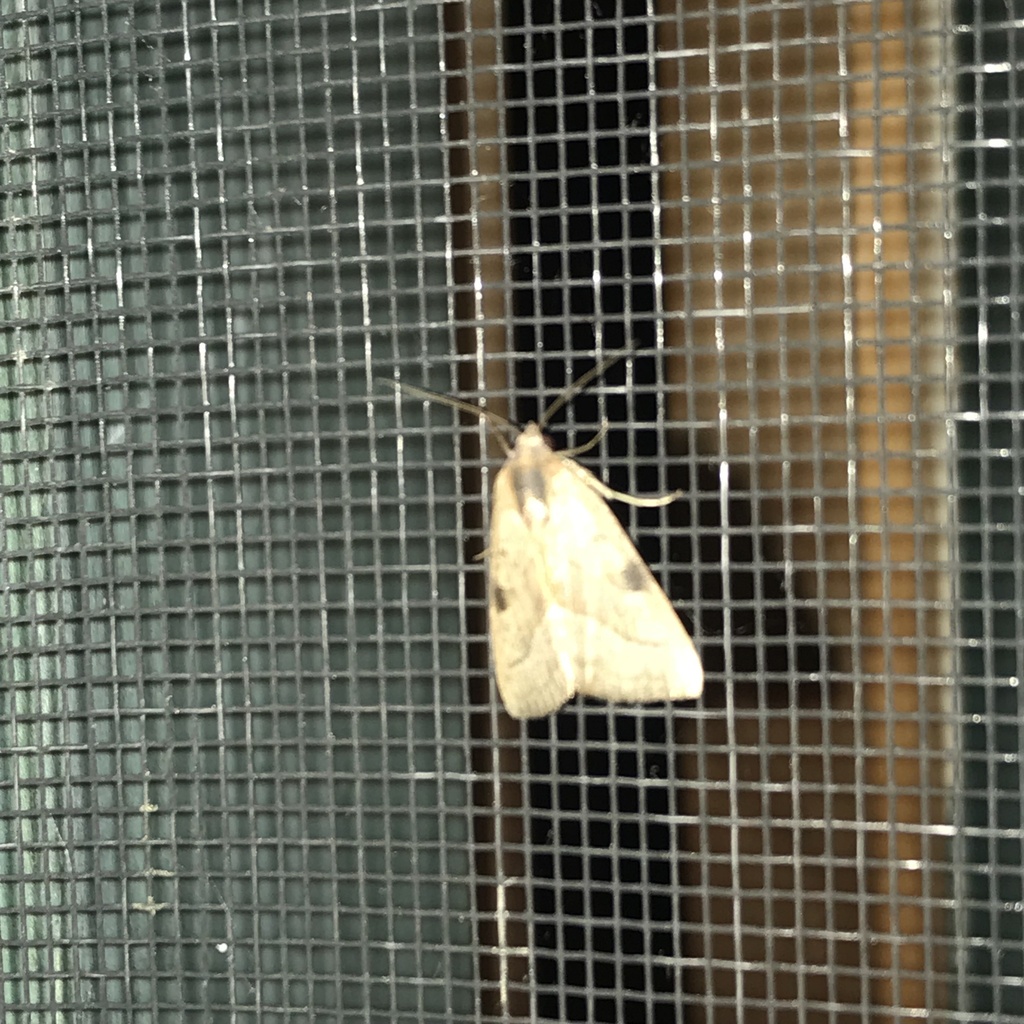
(c) Desiree L. Narango, some rights reserved (CC BY) · licence
Family: Noctuidae · Class: Insecta · Order: Lepidoptera
Galgula partita (Wedgling Moth) is a California animal in the Noctuidae family.
The Wedgling Moth (Galgula partita) is a nocturnal moth in the family Noctuidae. Adult moths are small to medium-sized with forewings typically measuring 12-16 mm in length. The forewings are brown to grayish-brown with distinctive pale wedge-shaped markings that give the species its common name. The hindwings are lighter, often pale brown or whitish. The species exhibits the typical noctuid body structure with a robust thorax and feathery antennae in males. Galgula partita has an extensive range across most of North America, extending from southern Canada to Guatemala and throughout the Caribbean islands (BugGuide). The species is notably absent from the Canadian prairie provinces but occurs widely across the continental United States. Its range also extends beyond the Americas to include introduced populations on Madeira, the Canary Islands, and portions of Spain (iNaturalist). The species inhabits a variety of habitats including deciduous and mixed forests, woodland edges, suburban areas, and agricultural landscapes. Adults are attracted to artificial lights and can be found in areas with diverse vegetation that supports their larval host plants. The moth demonstrates considerable ecological adaptability, allowing it to colonize diverse environments across its broad geographic range. Adult Wedgling Moths are nocturnal and fly throughout much of the year in warmer regions, with multiple generations possible annually. Peak flight periods vary by latitude, with northern populations typically showing more defined seasonal patterns. The species overwinters as pupae in the soil. Larvae feed on a variety of low-growing herbaceous plants, though specific host plant relationships have not been comprehensively documented across their range. Adults are attracted to nectar sources and artificial lights, making them commonly encountered at porch lights and moth traps. Galgula partita is not currently listed under any conservation legislation and appears to maintain stable populations across most of its range. The species' wide distribution, broad habitat tolerance, and apparent adaptability to human-modified landscapes suggest it faces no immediate conservation concerns. Its successful establishment in Atlantic islands indicates strong dispersal capabilities and ecological flexibility. However, like many nocturnal insects, the species may face localized impacts from light pollution and habitat fragmentation in urbanized areas. The taxonomic classification places this species in the subfamily Hadeninae within Noctuidae, though some authorities have historically placed it in different subfamilies. The species was originally described by Guenée in 1852 and has remained taxonomically stable. Scientific documentation for specific aspects of this species' biology, including detailed host plant relationships and population dynamics, remains limited across much of its range.
Classification
Class: Insecta · Order: Lepidoptera · Family: Noctuidae
Frequently asked questions
How is Galgula partita classified?
Galgula partita belongs to class Insecta, order Lepidoptera, family Noctuidae.
What family does Galgula partita belong to?
Galgula partita is in the Noctuidae family.
What is Galgula partita?
The Wedgling Moth (Galgula partita) is a nocturnal moth in the family Noctuidae.
Is Galgula partita found in California?
Yes. Galgula partita is recorded in California in The California Species Project's catalogue.
Related species
Other California species in the same genus, family, or bioregion.
Data from The California Species Project — 14,000+ California species with verified data from CNPS, CDFW, USFWS, and more.