Galleria mellonella
Greater Wax Moth
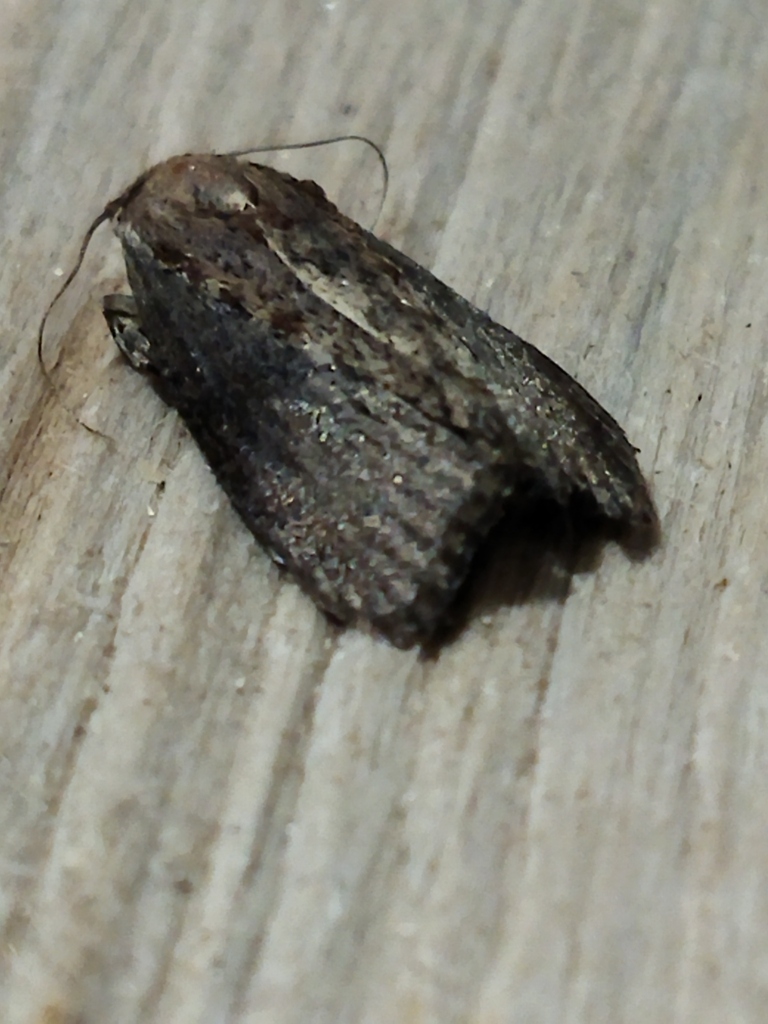
(c) SteveM4560, some rights reserved (CC BY) · licence
Family: Pyralidae · Class: Insecta · Order: Lepidoptera
Galleria mellonella (Greater Wax Moth) is a California animal in the Pyralidae family.
The greater wax moth is a medium-sized lepidopteran with adults measuring 15 to 20 mm (0.6 to 0.8 inches) in wingspan for males and 20 to 35 mm (0.8 to 1.4 inches) for females. Males display brownish-gray forewings with darker markings and pale hindwings, while females are typically larger with more subdued coloration. The species exhibits pronounced sexual dimorphism, with males possessing more developed wing venation and females having a more robust abdomen adapted for egg-laying. Larvae are creamy white caterpillars that can reach 25 mm (1.0 inch) in length, with brown heads and distinctive prolegs. Galleria mellonella has a cosmopolitan distribution, occurring across temperate and subtropical regions worldwide. The species is widely distributed throughout California, found in areas where European honey bees maintain colonies. Historical records indicate the moth's range has expanded alongside beekeeping activities, with populations established from sea level to elevations exceeding 1,500 meters (4,900 feet) in montane regions. The greater wax moth is exclusively associated with honey bee colonies and their infrastructure. Adults are attracted to beehives, where they seek entry to deposit eggs. The species thrives in environments containing beeswax, honey, and bee-related organic matter. Larvae develop within honeycomb structures, feeding on wax, pollen, honey, and bee larvae. The moth shows preference for weakened or abandoned colonies but can infest healthy hives under favorable conditions. Adults are nocturnal and exhibit strong positive phototaxis. Mating occurs during evening hours, with males producing ultrasonic calls at frequencies of 80 to 120 kHz to attract females. Females deposit 300 to 600 eggs in crevices within beehives, with eggs hatching after 5 to 10 days depending on temperature. Larval development occurs over 4 to 10 weeks through seven instars, during which caterpillars construct silk tunnels throughout honeycomb. Pupation takes place in cocoons spun in protected areas of the hive. The species can complete multiple generations per year in warmer climates, with 2 to 3 generations typical in California. As a non-native species, the greater wax moth is not afforded conservation protection and is generally considered a pest of managed honey bee colonies. The species poses significant economic threats to beekeeping operations, with larvae capable of destroying entire combs and weakening colonies. Integrated pest management strategies focus on maintaining strong bee colonies, proper hive ventilation, and removal of excess wax and debris. The moth has gained recent scientific attention as a model organism for immunity research and as a potential tool for biodegrading plastic waste, with studies demonstrating larval ability to digest polyethylene. Climate change may expand the species' range and increase generation frequency in northern latitudes, potentially intensifying its impact on apiculture.
Classification
Class: Insecta · Order: Lepidoptera · Family: Pyralidae
Frequently asked questions
How is Galleria mellonella classified?
Galleria mellonella belongs to class Insecta, order Lepidoptera, family Pyralidae.
What family does Galleria mellonella belong to?
Galleria mellonella is in the Pyralidae family.
What is Galleria mellonella?
The greater wax moth is a medium-sized lepidopteran with adults measuring 15 to 20 mm (0.6 to 0.8 inches) in wingspan for males and 20 to 35 mm (0.8 to 1.4 inches) for females.
Is Galleria mellonella found in California?
Yes. Galleria mellonella is recorded in California in The California Species Project's catalogue.
Related species
Other California species in the same genus, family, or bioregion.
Data from The California Species Project — 14,000+ California species with verified data from CNPS, CDFW, USFWS, and more.