Gallinago delicata
Wilson's Snipe
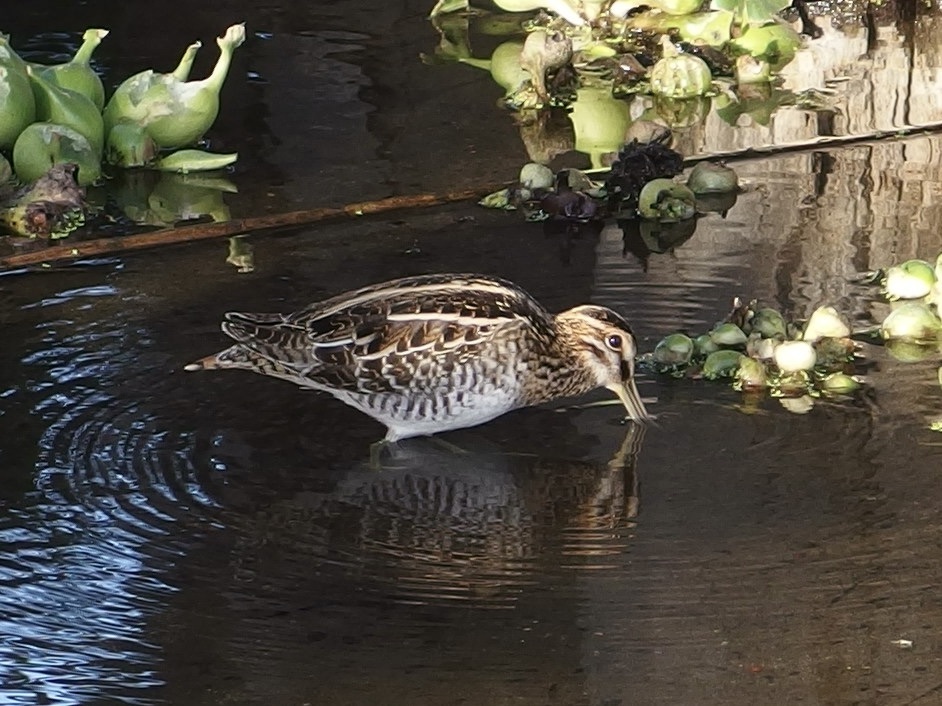
(c) Sue Carnahan, some rights reserved (CC BY) · licence
Family: Scolopacidae · Class: Aves · Order: Charadriiformes
Gallinago delicata (Wilson's Snipe) is a California animal in the Scolopacidae family.
Wilson's Snipe is a medium-sized shorebird measuring 23 to 28 cm (9 to 11 inches) in length with a wingspan of 39 to 45 cm (15 to 18 inches). Adults weigh between 80 and 140 grams. The species displays cryptic plumage with brown, buff, and white streaking throughout the upperparts that provides excellent camouflage in marsh vegetation. The underparts are pale with dark barring on the flanks and undertail coverts. The most distinctive feature is an extremely long, straight bill measuring 6 to 7 cm, which is flexible at the tip and used for probing soft substrates. The legs are relatively short and greenish-yellow in color. Both sexes appear similar, though females average slightly larger than males. Wilson's Snipe breeds across northern North America from Alaska to Newfoundland, extending south through the western United States including California's Sierra Nevada and Cascade ranges. In California, breeding occurs primarily in mountain meadows and wetlands at elevations from 1,200 to 3,400 meters (4,000 to 11,200 feet). During winter, the species migrates to lower elevations and southern latitudes, with populations found throughout California's Central Valley, coastal marshes, and suitable wetland habitats from sea level to 1,500 meters elevation. Year-round residents occur in some areas of northern California. The species inhabits freshwater and brackish wetlands including marshes, swamps, bogs, wet meadows, and the muddy edges of ponds, lakes, and slow-moving streams. Wilson's Snipe requires areas with soft, organic soils for foraging and dense vegetation for cover and nesting. Breeding habitat typically consists of sedge meadows, cattail marshes, and wet grasslands with scattered hummocks or elevated areas for nest placement. During migration and winter, birds utilize rice fields, seasonal wetlands, and managed waterfowl areas. Wilson's Snipe feeds primarily by probing soft mud and organic matter with its sensitive bill tip, which contains specialized nerve endings for detecting prey. The diet consists mainly of earthworms, beetle larvae, fly larvae, and other invertebrates, supplemented by seeds and plant material. Breeding occurs from April through July, with males performing distinctive aerial courtship displays involving steep dives that produce winnowing sounds created by air rushing through specialized tail feathers. Females construct ground nests in dense vegetation, laying 3 to 4 olive-brown eggs with dark markings. Incubation lasts 18 to 20 days, and young are precocial, leaving the nest within hours of hatching. Wilson's Snipe is not federally or state listed and maintains stable populations across most of its range. According to the North American Breeding Bird Survey, populations have remained relatively stable since 1970, though some regional declines have occurred due to wetland loss and degradation. The species benefits from wetland conservation programs including the North American Waterfowl Management Plan and California's Central Valley Habitat Joint Venture. Primary threats include habitat loss from agricultural conversion, urban development, and altered hydrology in wetland systems. Climate change may affect breeding habitat availability in mountain regions through altered precipitation patterns and earlier snowmelt.
Classification
Class: Aves · Order: Charadriiformes · Family: Scolopacidae
Frequently asked questions
How is Gallinago delicata classified?
Gallinago delicata belongs to class Aves, order Charadriiformes, family Scolopacidae.
What family does Gallinago delicata belong to?
Gallinago delicata is in the Scolopacidae family.
What is Gallinago delicata?
Wilson's Snipe is a medium-sized shorebird measuring 23 to 28 cm (9 to 11 inches) in length with a wingspan of 39 to 45 cm (15 to 18 inches).
Is Gallinago delicata found in California?
Yes. Gallinago delicata is recorded in California in The California Species Project's catalogue.
Related species
Other California species in the same genus, family, or bioregion.
Data from The California Species Project — 14,000+ California species with verified data from CNPS, CDFW, USFWS, and more.