Gallinago gallinago
Common Snipe
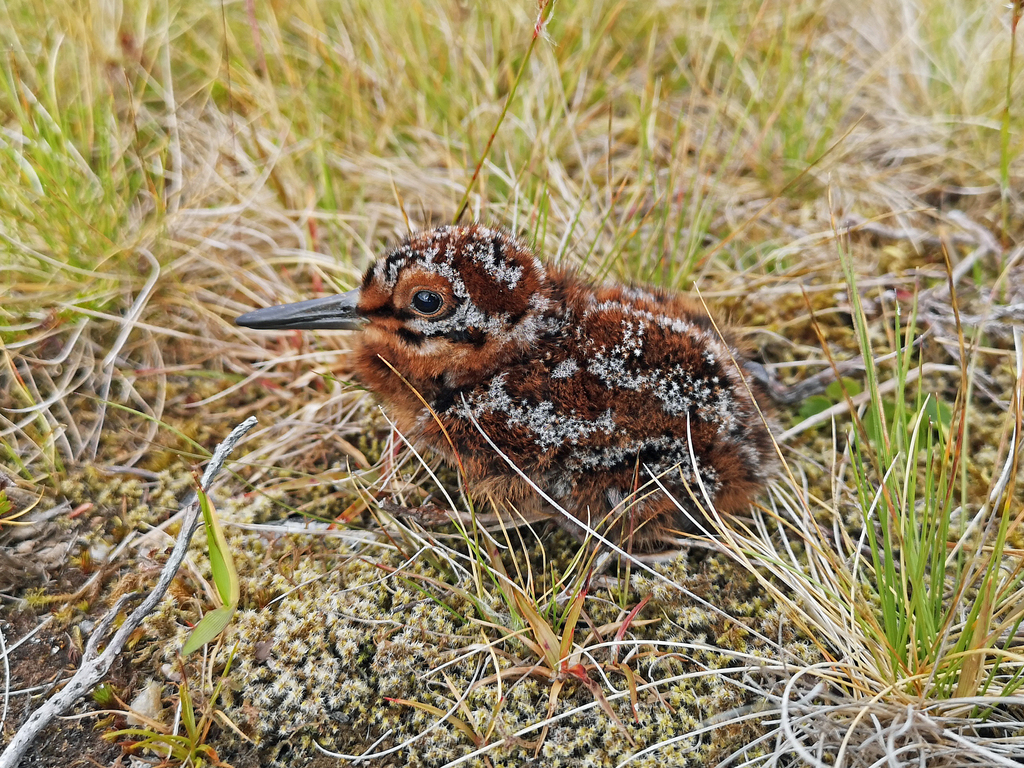
(c) Nigel Voaden, some rights reserved (CC BY) · licence
Family: Scolopacidae · Class: Aves · Order: Charadriiformes
Gallinago gallinago (Common Snipe) is a California animal in the Scolopacidae family.
The Common Snipe is a medium-sized shorebird measuring 25 to 27 cm (10 to 11 inches) in length with a wingspan of 44 to 47 cm (17 to 19 inches). Adults weigh 80 to 140 grams (2.8 to 4.9 ounces). The species displays cryptic brown, buff, and black streaked plumage that provides excellent camouflage in marshy vegetation. The most distinctive feature is an extremely long, straight bill measuring 65 to 68 mm (2.6 to 2.7 inches), which comprises nearly one-quarter of the bird's total length. The bill tip is flexible and highly sensitive, adapted for probing soft substrates. The crown shows prominent dark stripes separated by a buff central stripe, and the back displays four distinct buff stripes running lengthwise. Common Snipe breed across northern North America from Alaska to Newfoundland, extending south through the northern United States. In California, the species occurs primarily as a migrant and winter resident from September through April. During migration and winter, Common Snipe are found throughout the Central Valley, coastal areas, and suitable habitat in the Sierra Nevada foothills up to approximately 1,500 meters (5,000 feet) elevation. The species is most numerous in the Sacramento and San Joaquin valleys during peak migration periods in October and March. Common Snipe inhabit freshwater and brackish wetlands including marshes, wet meadows, flooded agricultural fields, sewage ponds, and shallow pond edges. The species requires soft, saturated soils or mud for foraging, along with emergent vegetation for cover. Optimal habitat includes areas with water depths of 2 to 15 cm (0.8 to 6 inches) and dense stands of sedges, rushes, or grasses. Agricultural areas such as flooded rice fields provide important habitat during winter months in California's Central Valley. Common Snipe are primarily crepuscular and nocturnal, most active during dawn and dusk hours. They feed by probing deep into soft substrates with rapid, sewing machine-like bill movements. The diet consists mainly of earthworms, insect larvae, small crustaceans, and seeds. When threatened, snipe rely on their cryptic plumage and freeze motionless until the last moment, then explode into flight with a distinctive zigzag pattern. During the breeding season on northern grounds, males perform distinctive aerial courtship displays, diving at steep angles while specialized tail feathers create a distinctive winnowing sound. Nests are simple scrapes lined with grass, typically containing four olive-brown eggs with dark markings. Common Snipe are not federally or state-listed in California and maintain stable populations across most of their range. According to the North American Breeding Bird Survey, populations have remained relatively stable over the past several decades, though some regional declines have been documented. The species faces ongoing threats from wetland drainage and conversion, particularly in wintering areas. Climate change may affect the timing of migration and availability of suitable habitat. In California, conservation efforts focus on maintaining and restoring wetland habitat through programs such as the Central Valley Joint Venture and wildlife-friendly agricultural practices in rice-growing regions.
Classification
Class: Aves · Order: Charadriiformes · Family: Scolopacidae
Frequently asked questions
How is Gallinago gallinago classified?
Gallinago gallinago belongs to class Aves, order Charadriiformes, family Scolopacidae.
What family does Gallinago gallinago belong to?
Gallinago gallinago is in the Scolopacidae family.
What is Gallinago gallinago?
The Common Snipe is a medium-sized shorebird measuring 25 to 27 cm (10 to 11 inches) in length with a wingspan of 44 to 47 cm (17 to 19 inches).
Is Gallinago gallinago found in California?
Yes. Gallinago gallinago is recorded in California in The California Species Project's catalogue.
Related species
Other California species in the same genus, family, or bioregion.
Data from The California Species Project — 14,000+ California species with verified data from CNPS, CDFW, USFWS, and more.