Gallus gallus
Red Junglefowl
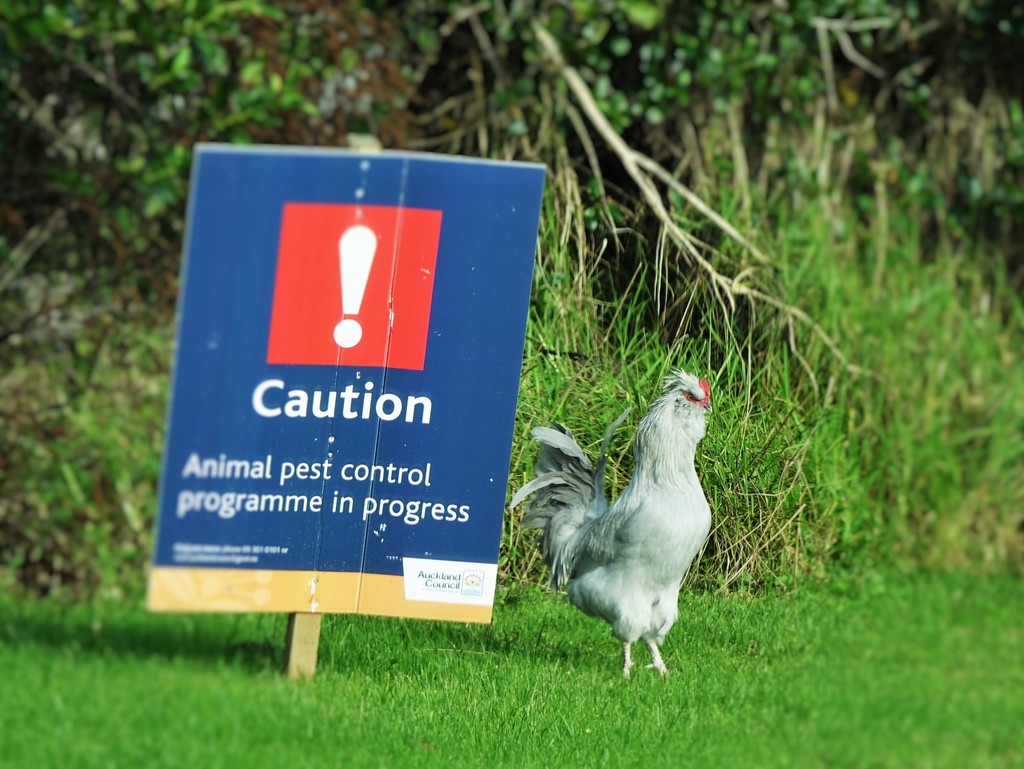
(c) Jacqui Geux, some rights reserved (CC BY) · licence
Family: Phasianidae · Class: Aves · Order: Galliformes
Gallus gallus (Red Junglefowl) is a California animal in the Phasianidae family.
The Red Junglefowl is a medium-sized galliform bird and the primary wild ancestor of domestic chickens. Males measure 65-75 cm (26-30 inches) in total length and weigh 1.0-1.5 kg (2.2-3.3 pounds), while females are smaller at 42-46 cm (17-18 inches) and 0.5-1.0 kg (1.1-2.2 pounds) (Johnsgard 1999). Males display distinctive sexual dimorphism with iridescent dark green and black plumage, bright red combs and wattles, and long, arched black tail feathers. The neck hackles are golden-orange, transitioning to darker body plumage with metallic green highlights. Females exhibit cryptic brown plumage with darker barring and much smaller red facial skin (McGowan et al. 2020). Naturally, Red Junglefowl range across Southeast Asia, from northeastern India through southern China and throughout the Malay Peninsula and Indonesian archipelago. The species has been introduced to numerous Pacific islands, including Hawaii, where established populations now occur (BirdLife International 2016). Within California, Red Junglefowl are not native but may occasionally appear as escaped domestic birds reverting to wild-type appearance, particularly in rural areas with existing feral chicken populations. The species inhabits tropical and subtropical forests, preferring dense secondary growth, forest edges, and bamboo thickets. They occupy elevations from sea level to approximately 2,000 meters (6,600 feet) (Madge & McGowan 2002). Red Junglefowl favor areas with dense understory vegetation providing cover, nearby water sources, and open patches for foraging. They roost in trees at night, typically 4-8 meters (13-26 feet) above ground. Red Junglefowl are omnivorous ground foragers, scratching through leaf litter to locate seeds, fruits, insects, worms, and small vertebrates. Their diet varies seasonally, with increased fruit consumption during fruiting periods and higher protein intake from invertebrates during breeding season (Collias & Collias 1996). The species exhibits polygynous mating systems, with dominant males maintaining territories and harems of 2-5 females. Breeding occurs year-round in tropical regions, with peak activity during dry seasons. Females construct simple ground nests concealed in dense vegetation, laying 4-6 buff-colored eggs. Incubation lasts 19-21 days, with chicks precocial and capable of following the hen within hours of hatching (del Hoyo et al. 1994). Red Junglefowl are not federally listed in the United States, as they are not native to North America. However, within their native range, some subspecies face population pressures from habitat loss due to deforestation and agricultural conversion. The species demonstrates strong adaptability, successfully colonizing disturbed habitats and establishing feral populations in introduced ranges. In Hawaii, feral chickens derived from Red Junglefowl ancestry have become abundant on several islands, occasionally creating management challenges in sensitive ecosystems (Long 1981). Conservation efforts in native ranges focus on forest preservation and sustainable land use practices. The species' close genetic relationship to domestic chickens makes it valuable for genetic diversity conservation and poultry breeding programs (Fumihito et al. 1994).
Classification
Class: Aves · Order: Galliformes · Family: Phasianidae
Frequently asked questions
How is Gallus gallus classified?
Gallus gallus belongs to class Aves, order Galliformes, family Phasianidae.
What family does Gallus gallus belong to?
Gallus gallus is in the Phasianidae family.
What is Gallus gallus?
The Red Junglefowl is a medium-sized galliform bird and the primary wild ancestor of domestic chickens.
Is Gallus gallus found in California?
Yes. Gallus gallus is recorded in California in The California Species Project's catalogue.
Related species
Other California species in the same genus, family, or bioregion.
Data from The California Species Project — 14,000+ California species with verified data from CNPS, CDFW, USFWS, and more.