Gambusia afinis
Western mosquitofish
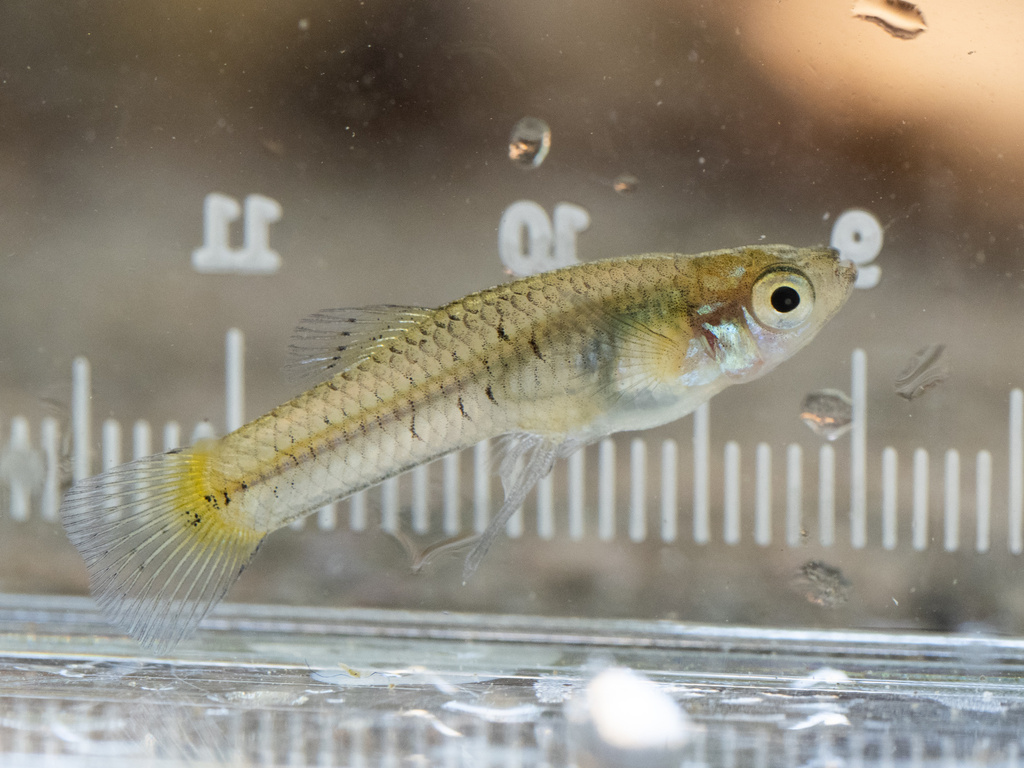
(c) Turner Brockman, some rights reserved (CC BY-SA) · licence
Family: Poeciliidae · Class: Teleostei · Order: Cyprinodontiformes
Gambusia afinis (Western mosquitofish) is a California animal in the Poeciliidae family.
The Western mosquitofish is a small, robust freshwater fish native to the southeastern United States but now widely established throughout California and much of North America. Adults typically measure 25 to 45 mm (1.0 to 1.8 inches) in total length, with females growing larger than males. The body is laterally compressed with a broad head and upturned mouth adapted for surface feeding. Coloration ranges from pale olive to gray-brown dorsally, fading to silver or white ventrally. Males are smaller and more slender than females, with a modified anal fin called a gonopodium used for reproduction. Females display a distinctive gravid spot near the anal fin when pregnant. Originally native to the Mississippi River drainage and Gulf Coast states from Alabama to Texas, Western mosquitofish were intentionally introduced to California beginning in 1922 for mosquito control. The species is now established in suitable aquatic habitats throughout the state, including the Central Valley, coastal regions, and desert areas. Populations occur from sea level to elevations exceeding 1,500 meters (4,900 feet), making it one of the most widespread non-native fish species in California. Western mosquitofish inhabit a wide variety of freshwater environments including ponds, lakes, slow-moving streams, irrigation canals, drainage ditches, and constructed wetlands. The species demonstrates exceptional tolerance to environmental extremes, surviving in water temperatures from 3 to 40°C (37 to 104°F) and tolerating salinity levels up to 15 parts per thousand. They prefer shallow, vegetated areas with minimal current and can survive in waters with very low dissolved oxygen concentrations. This species is an opportunistic omnivore, feeding primarily on mosquito larvae and other aquatic invertebrates, but also consuming algae, detritus, and small fish eggs. Western mosquitofish are livebearers with internal fertilization. Females can produce multiple broods annually, with gestation periods of 3 to 4 weeks depending on water temperature. Brood sizes range from 10 to 80 young, with larger females producing more offspring. The species reaches sexual maturity rapidly, often within 6 to 8 weeks of birth under favorable conditions. Western mosquitofish are not listed under state or federal endangered species legislation and maintain stable populations throughout their introduced range in California. However, the species is considered ecologically problematic due to its aggressive predation on native aquatic invertebrates, amphibian larvae, and small native fish species (Pyke, 2008). Research has documented negative impacts on California native species including California newts, Pacific tree frogs, and native fish communities. The species' rapid reproduction and environmental tolerance make population control extremely difficult once established. While originally introduced for beneficial mosquito control purposes, current management perspectives recognize Western mosquitofish as an invasive species that poses ongoing threats to native aquatic ecosystems throughout California.
Classification
Class: Teleostei · Order: Cyprinodontiformes · Family: Poeciliidae
Frequently asked questions
How is Gambusia afinis classified?
Gambusia afinis belongs to class Teleostei, order Cyprinodontiformes, family Poeciliidae.
What family does Gambusia afinis belong to?
Gambusia afinis is in the Poeciliidae family.
What is Gambusia afinis?
The Western mosquitofish is a small, robust freshwater fish native to the southeastern United States but now widely established throughout California and much of North America.
Is Gambusia afinis found in California?
Yes. Gambusia afinis is recorded in California in The California Species Project's catalogue.
Related species
Other California species in the same genus, family, or bioregion.
Data from The California Species Project — 14,000+ California species with verified data from CNPS, CDFW, USFWS, and more.