Gasterosteus aculeatus santaannae
Santa Ana threespine stickleback
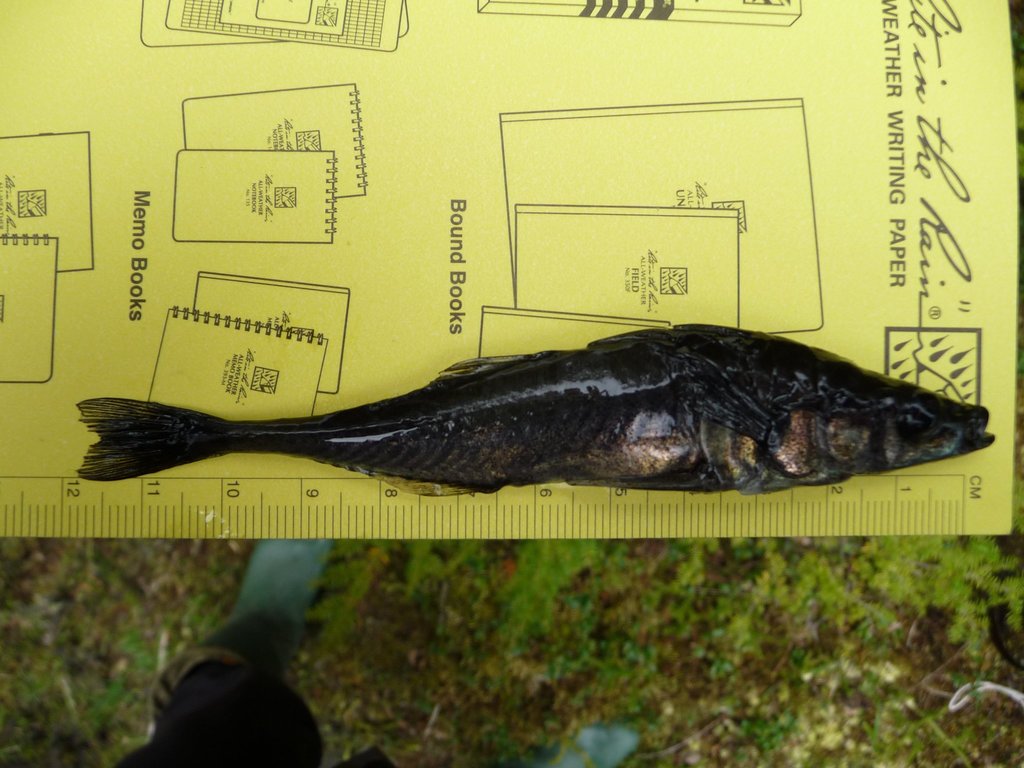
(c) Bruce Deagle, some rights reserved (CC BY) · licence
Family: Gasterosteidae · Class: Actinopterygii · Order: Perciformes
Conservation status: G5T1Q S1
Gasterosteus aculeatus santaannae (Santa Ana threespine stickleback) is a California animal in the Gasterosteidae family.
The Santa Ana threespine stickleback is a small freshwater fish endemic to the Santa Ana River drainage in southern California. This subspecies of the widespread threespine stickleback typically measures 25 to 50 mm (1.0 to 2.0 inches) in total length. The body is fusiform and laterally compressed, with the characteristic three dorsal spines that give the species its name. Two additional spines are present on the pelvic fins. The body coloration varies seasonally, with breeding males developing bright red coloration on the throat and belly while females and non-breeding males remain more subdued with olive-brown backs and silvery sides. Historically, the Santa Ana threespine stickleback was distributed throughout the Santa Ana River system in Orange, Riverside, and San Bernardino counties. The subspecies inhabited the mainstem Santa Ana River and its tributaries, including Santiago Creek, San Antonio Creek, and Mill Creek. Current populations are severely restricted compared to the historical range, with most extant populations confined to small creek segments and constructed habitats within the upper watershed. The subspecies inhabits slow-flowing streams, backwaters, and shallow pools with moderate to dense aquatic vegetation. Optimal habitat includes areas with water temperatures ranging from 10 to 20 degrees Celsius (50 to 68 degrees Fahrenheit) and dissolved oxygen levels above 5 mg/L. The fish require areas with fine sediment and organic debris for foraging, along with emergent and submerged vegetation that provides cover and spawning substrate. Elevation ranges from near sea level to approximately 500 meters (1,640 feet) in the upper watershed. Santa Ana threespine sticklebacks are carnivorous, feeding primarily on small invertebrates including chironomid larvae, amphipods, copepods, and aquatic worms. Breeding occurs from February through July, with peak activity in spring months. Males establish territories in shallow areas and construct nests using plant material bound together with kidney secretions. After attracting females to deposit eggs, males provide parental care by guarding and aerating the nest until fry emerge. Females may produce multiple clutches of 50 to 100 eggs during the breeding season. The Santa Ana threespine stickleback is ranked G5T1Q S1, indicating it is critically imperiled in California with five or fewer occurrences. The subspecies has experienced severe population decline due to habitat loss, water diversions, channelization, and introduction of non-native species. Urban development throughout the Santa Ana River watershed has eliminated much of the historical habitat through stream modification and pollution. Introduced species, particularly mosquitofish and centrarchid fishes, compete for resources and prey upon stickleback juveniles. Current conservation efforts focus on habitat restoration, water quality improvement, and captive breeding programs to prevent extinction of this endemic subspecies.
Classification
Class: Actinopterygii · Order: Perciformes · Family: Gasterosteidae
Conservation status
G5T1Q S1
Frequently asked questions
How is Gasterosteus aculeatus santaannae classified?
Gasterosteus aculeatus santaannae belongs to class Actinopterygii, order Perciformes, family Gasterosteidae.
What family does Gasterosteus aculeatus santaannae belong to?
Gasterosteus aculeatus santaannae is in the Gasterosteidae family.
Is Gasterosteus aculeatus santaannae protected or of conservation concern?
Gasterosteus aculeatus santaannae carries the following status: G5T1Q S1.
What is Gasterosteus aculeatus santaannae?
The Santa Ana threespine stickleback is a small freshwater fish endemic to the Santa Ana River drainage in southern California.
Is Gasterosteus aculeatus santaannae found in California?
Yes. Gasterosteus aculeatus santaannae is recorded in California in The California Species Project's catalogue.
Related species
Other California species in the same genus, family, or bioregion.
Data from The California Species Project — 14,000+ California species with verified data from CNPS, CDFW, USFWS, and more.