Gavia adamsii
Yellow-billed Loon
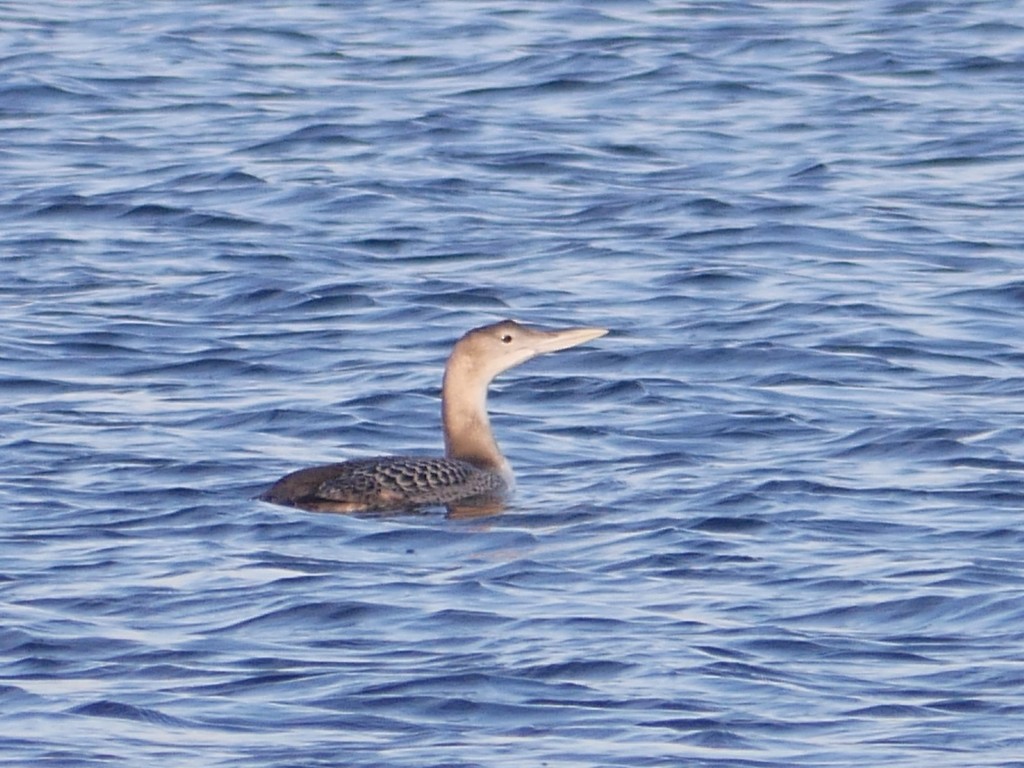
(c) Alexis Tinker-Tsavalas, some rights reserved (CC BY) · licence
Family: Gaviidae · Class: Aves · Order: Gaviiformes
Gavia adamsii (Yellow-billed Loon) is a California animal in the Gaviidae family.
The Yellow-billed Loon is the largest member of the loon family (Gaviidae) and one of the most northern-breeding waterfowl species in North America. Adults measure 76 to 91 cm (30 to 36 inches) in length with a wingspan of 137 to 152 cm (54 to 60 inches), weighing 4.1 to 6.4 kg (9 to 14 pounds). The species is distinguished from other loons by its distinctive yellow bill, which is straight along the culmen and upturned at the tip. In breeding plumage, adults display a black head and neck with white striping, a checkerboard pattern of white spots on a black back, and white underparts. The bill becomes bright yellow during the breeding season, contrasting with the pale yellow or ivory coloration seen in winter. Yellow-billed Loons breed in the Arctic tundra of Alaska, northern Canada, and northeastern Russia. In North America, breeding occurs primarily on the North Slope of Alaska and in the Northwest Territories. During migration and winter, the species moves to coastal marine waters along the Pacific and Atlantic coasts. In California, Yellow-billed Loons are irregular winter visitors and migrants, occurring primarily along the coast from October through April. Most observations are from central and northern California waters, with occasional sightings as far south as San Diego County. Breeding habitat consists of large, deep freshwater lakes in Arctic tundra regions, typically lakes exceeding 50 hectares in area with depths greater than 2 meters. These lakes must remain ice-free for at least 100 days to support successful breeding. During winter and migration, Yellow-billed Loons inhabit nearshore marine waters, bays, and occasionally large inland lakes. They prefer areas with depths of 5 to 50 meters where fish populations are abundant. Yellow-billed Loons are piscivorous, feeding primarily on fish ranging from 10 to 35 cm in length, including Arctic cod, sculpin, and whitefish in breeding areas, and various marine fish species during winter. They are pursuit divers, using their powerful legs for underwater propulsion while hunting. Breeding typically begins in late May or early June, with pairs establishing territories on large tundra lakes. Females lay 1 to 2 olive-brown eggs in ground nests near the water's edge. Both parents incubate eggs for 27 to 30 days and care for young, which fledge after 60 to 65 days. The Yellow-billed Loon is not federally listed under the Endangered Species Act but faces conservation concerns due to climate change impacts on Arctic breeding habitat. The species is considered a Bird of Conservation Concern by the U.S. Fish and Wildlife Service. Primary threats include warming temperatures reducing ice-free periods on breeding lakes, changes in prey availability, and potential disturbance from increased Arctic development. Population estimates suggest approximately 16,000 to 32,000 individuals worldwide, with the majority breeding in Alaska and northwestern Canada.
Classification
Class: Aves · Order: Gaviiformes · Family: Gaviidae
Frequently asked questions
How is Gavia adamsii classified?
Gavia adamsii belongs to class Aves, order Gaviiformes, family Gaviidae.
What family does Gavia adamsii belong to?
Gavia adamsii is in the Gaviidae family.
What is Gavia adamsii?
The Yellow-billed Loon is the largest member of the loon family (Gaviidae) and one of the most northern-breeding waterfowl species in North America.
Is Gavia adamsii found in California?
Yes. Gavia adamsii is recorded in California in The California Species Project's catalogue.
Related species
Other California species in the same genus, family, or bioregion.
Data from The California Species Project — 14,000+ California species with verified data from CNPS, CDFW, USFWS, and more.