Gavia arctica
Arctic Loon
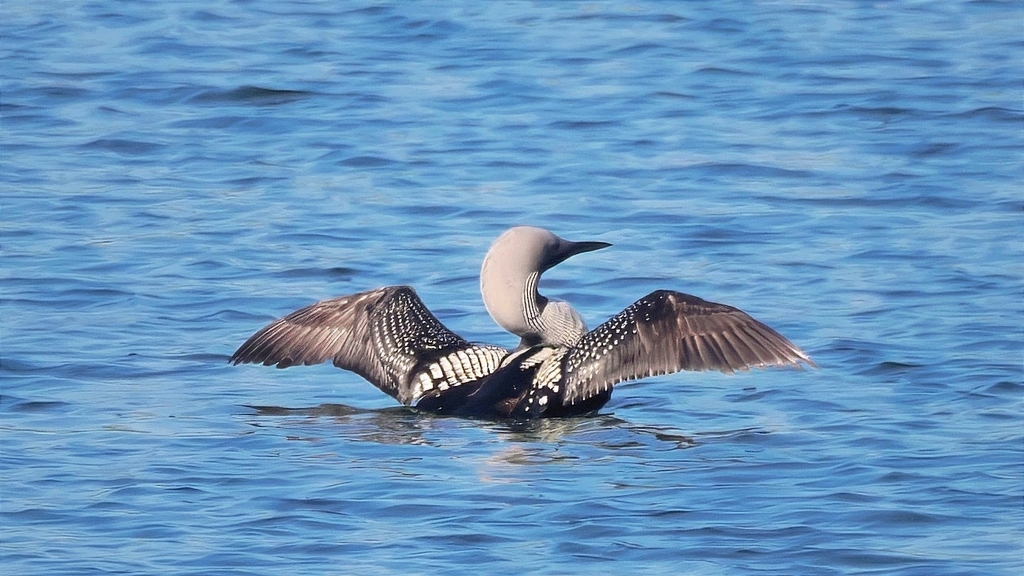
(c) Олеся, some rights reserved (CC BY) · licence
Family: Gaviidae · Class: Aves · Order: Gaviiformes
Gavia arctica (Arctic Loon) is a California animal in the Gaviidae family.
The Arctic Loon is a medium-sized waterbird measuring 58 to 73 centimeters (23 to 29 inches) in length with a wingspan of 110 to 130 centimeters (43 to 51 inches). Adults weigh between 1.3 to 3.4 kilograms (2.9 to 7.5 pounds). During breeding season, adults display distinctive plumage with a gray head and neck, black throat patch bordered by white stripes, and a black back marked with white square spots arranged in regular rows. The underparts are white. In winter plumage, the upperparts become dark brownish-gray while the underparts remain white, with a distinct dark cap extending below the eye level. The Arctic Loon breeds across northern regions of Europe, Asia, and Alaska. In North America, the breeding range extends from Alaska east to Hudson Bay. The species is an uncommon to rare migrant and winter visitor along the California coast, typically occurring from October through April. Most California observations are recorded along the immediate coastline from Del Norte County south to San Luis Obispo County, with occasional sightings extending to southern California waters. During the breeding season, Arctic Loons inhabit freshwater lakes in boreal forest, tundra, and taiga regions. These lakes typically range from 5 to 100 hectares in size and have clear water with adequate fish populations. Along the California coast, wintering birds utilize nearshore marine waters, remaining within several kilometers of shore in depths generally less than 40 meters. They prefer areas with sandy or rocky bottoms and adequate small fish populations. Arctic Loons are piscivorous, feeding primarily on fish measuring 10 to 20 centimeters in length. Common prey species include herring, cod, sculpins, and other small marine fish during winter coastal residence. They hunt by diving underwater, using their webbed feet for propulsion while pursuing prey. Dives typically last 30 to 60 seconds and reach depths of 3 to 8 meters. Breeding occurs from May through August on northern lakes, where pairs construct nests at water's edge or on small islands. Females typically lay two olive-brown eggs spotted with dark markings. Incubation lasts 28 to 30 days, with both parents sharing duties. The Arctic Loon is not federally listed under the Endangered Species Act and lacks special conservation status in California. The species is considered secure globally, though populations may face localized threats from habitat degradation, oil spills, and climate change effects on breeding lake ecosystems. In California waters, potential threats include marine pollution, oil spills, and fishing net entanglement. The species' dependence on clean aquatic environments makes it vulnerable to water quality degradation both on breeding grounds and wintering areas.
Classification
Class: Aves · Order: Gaviiformes · Family: Gaviidae
Frequently asked questions
How is Gavia arctica classified?
Gavia arctica belongs to class Aves, order Gaviiformes, family Gaviidae.
What family does Gavia arctica belong to?
Gavia arctica is in the Gaviidae family.
What is Gavia arctica?
The Arctic Loon is a medium-sized waterbird measuring 58 to 73 centimeters (23 to 29 inches) in length with a wingspan of 110 to 130 centimeters (43 to 51 inches).
Is Gavia arctica found in California?
Yes. Gavia arctica is recorded in California in The California Species Project's catalogue.
Related species
Other California species in the same genus, family, or bioregion.
Data from The California Species Project — 14,000+ California species with verified data from CNPS, CDFW, USFWS, and more.