Gavia pacifica
Pacific Loon
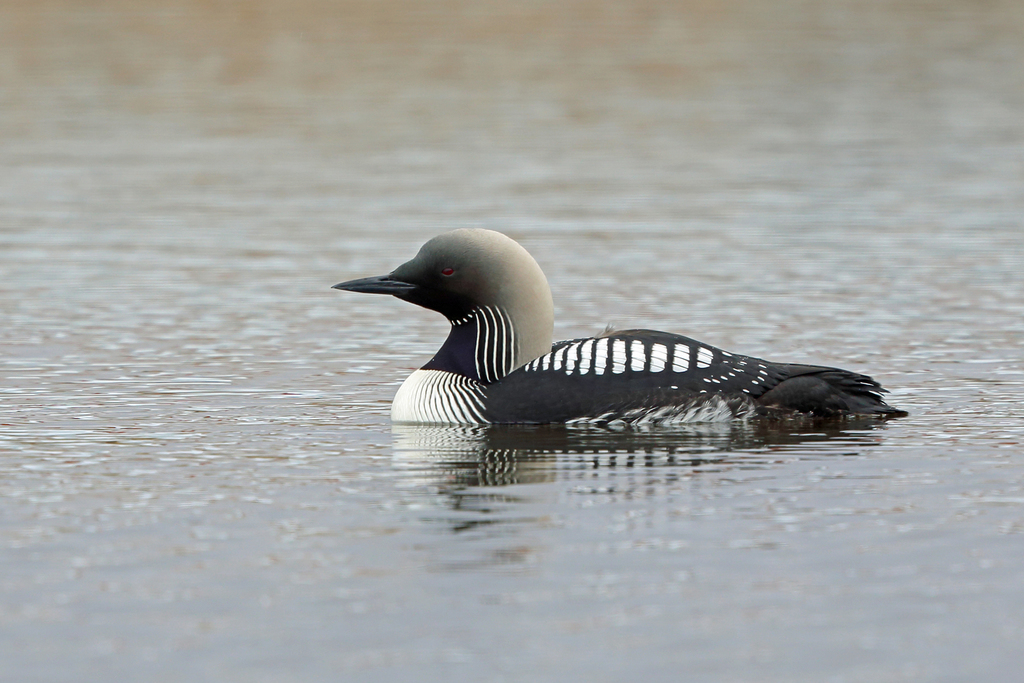
(c) Nigel Voaden, some rights reserved (CC BY) · licence
Family: Gaviidae · Class: Aves · Order: Gaviiformes
Gavia pacifica (Pacific Loon) is a California animal in the Gaviidae family.
The Pacific Loon is a medium-sized aquatic bird measuring 58 to 74 cm (23 to 29 inches) in length with a wingspan of 110 to 128 cm (43 to 50 inches). Adults weigh between 1 to 2.5 kg (2.2 to 5.5 pounds). During breeding season, adults display distinctive plumage with a black head and neck marked by white striping on the throat and nape. The back is black with white checkered patterning, while the underparts are white. In winter plumage, the head and neck become grayish-brown above with white below, and the back appears dark gray-brown. The bill is straight, pointed, and dark gray to black. Juveniles resemble winter adults but with more mottled upperparts. Pacific Loons breed across Alaska and northern Canada, with the species' range extending from the Aleutian Islands east to Hudson Bay. In California, Pacific Loons are primarily winter visitors and migrants along the entire coastline from October through April. They are regular in offshore waters and occasionally observed in large inland bodies of water including the Salton Sea, Lake Tahoe, and major Central Valley reservoirs. Small numbers may summer in California waters, though breeding does not occur within the state. During the breeding season, Pacific Loons inhabit freshwater lakes in tundra and boreal forest regions, preferring lakes larger than 5 hectares with clear water and fish populations. In California, wintering birds occupy marine environments, typically remaining 1 to 10 km offshore in waters 10 to 80 meters deep. They favor areas with moderate wave action and avoid heavily polluted nearshore zones. Migrants may use large inland lakes and reservoirs as stopover sites. Pacific Loons are piscivorous, diving to depths of 9 meters or more to capture fish. Their diet consists primarily of small schooling fish including sardines, anchovies, smelt, and juvenile rockfish in marine environments. They are pursuit divers, using their feet for propulsion underwater while wings remain folded. Breeding occurs from May through August on northern lakes, where pairs establish territories and construct nests on shorelines or small islands. Females typically lay two olive-brown eggs with dark spotting. Both parents incubate eggs for 23 to 25 days and tend young for approximately 60 to 65 days until fledging. Pacific Loons are not federally listed and maintain stable global populations estimated at 200,000 to 300,000 individuals according to Partners in Flight. However, the species faces threats from marine pollution, particularly oil spills, plastic ingestion, and gill net entanglement. Climate change affects both breeding habitat in the Arctic and marine food webs along the Pacific Coast. In California waters, disturbance from vessel traffic and coastal development may impact wintering populations. The species is protected under the Migratory Bird Treaty Act, and monitoring programs track population trends during Christmas Bird Counts and breeding bird surveys.
Classification
Class: Aves · Order: Gaviiformes · Family: Gaviidae
Frequently asked questions
How is Gavia pacifica classified?
Gavia pacifica belongs to class Aves, order Gaviiformes, family Gaviidae.
What family does Gavia pacifica belong to?
Gavia pacifica is in the Gaviidae family.
What is Gavia pacifica?
The Pacific Loon is a medium-sized aquatic bird measuring 58 to 74 cm (23 to 29 inches) in length with a wingspan of 110 to 128 cm (43 to 50 inches).
Is Gavia pacifica found in California?
Yes. Gavia pacifica is recorded in California in The California Species Project's catalogue.
Related species
Other California species in the same genus, family, or bioregion.
Data from The California Species Project — 14,000+ California species with verified data from CNPS, CDFW, USFWS, and more.