Geina periscelidactylus
Grape Plume Moth
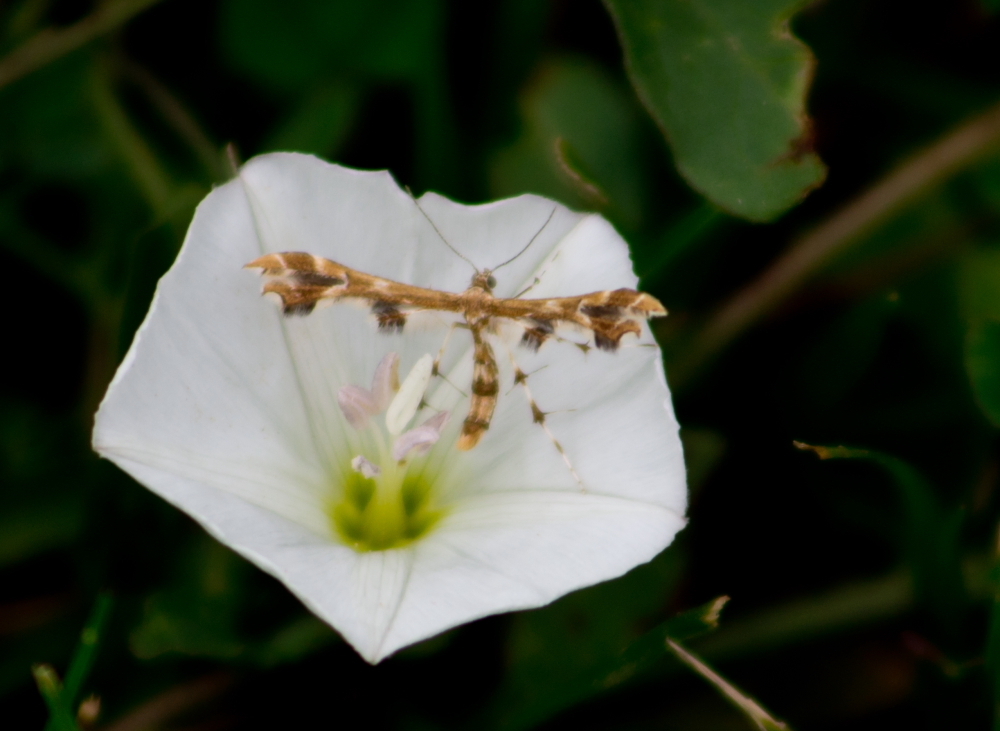
(c) psweet, some rights reserved (CC BY-SA) · licence
Family: Pterophoridae · Class: Insecta · Order: Lepidoptera
Geina periscelidactylus (Grape Plume Moth) is a California animal in the Pterophoridae family.
The Grape Plume Moth is a small member of the plume moth family Pterophoridae, characterized by the deeply divided wings that give plume moths their distinctive feathered appearance. Adults typically measure 7-12 mm in wingspan, with forewings that are split into two lobes and hindwings divided into three lobes. The forewings are grayish-brown with darker markings and pale scaling, while the hindwings are lighter with fringed margins. When at rest, the moth holds its wings perpendicular to its body in a T-shaped position, creating the characteristic plume moth silhouette. Geina periscelidactylus occurs across much of North America, with records from Canada south to Mexico. In California, the species has been documented throughout much of the state, including both coastal and inland regions. The distribution extends eastward across the United States, making it one of the more widespread plume moths in North America (Butterflies and Moths of North America). The species inhabits diverse environments where its host plants occur, including gardens, vineyards, wild grape stands, and woodland edges. Adults can be found from sea level to moderate elevations in areas supporting Vitis species. The moth shows a preference for locations with Virginia creeper and wild grape vines, often occurring in riparian zones, forest margins, and disturbed areas where these climbing plants establish. Grape Plume Moths are closely associated with grape family plants (Vitaceae), with larvae feeding primarily on grape species (Vitis) and Virginia creeper (Parthenocissus quinquefolia). The caterpillars create feeding damage by boring into flower buds, young shoots, and developing grape clusters. Adult moths are active primarily during evening and nighttime hours, attracted to artificial lights. The species produces multiple generations per year in warmer regions, with flight periods extending from late spring through early fall. Larvae overwinter in plant debris or soil near the base of host plants. Geina periscelidactylus is not currently listed under federal or state endangered species acts. The species appears to maintain stable populations across its range, likely benefiting from the widespread cultivation of grapes and the presence of native Vitaceae in natural areas. In some regions, the moth is considered a minor agricultural pest of grape crops, though damage levels rarely reach economically significant thresholds. Climate change may potentially expand the species' range northward as suitable habitat and host plants become available in previously unsuitable areas. The moth's adaptation to both wild and cultivated host plants suggests resilience to habitat modifications, though intensive pesticide use in commercial vineyards may locally impact populations. Taxonomic uncertainty exists regarding some populations, with specimens sometimes difficult to distinguish from the closely related Geina sheppardi without detailed morphological examination. Both species occur in overlapping ranges and utilize similar host plants, contributing to identification challenges in field studies (BugGuide).
Classification
Class: Insecta · Order: Lepidoptera · Family: Pterophoridae
Frequently asked questions
How is Geina periscelidactylus classified?
Geina periscelidactylus belongs to class Insecta, order Lepidoptera, family Pterophoridae.
What family does Geina periscelidactylus belong to?
Geina periscelidactylus is in the Pterophoridae family.
What is Geina periscelidactylus?
The Grape Plume Moth is a small member of the plume moth family Pterophoridae, characterized by the deeply divided wings that give plume moths their distinctive feathered appearance.
Is Geina periscelidactylus found in California?
Yes. Geina periscelidactylus is recorded in California in The California Species Project's catalogue.
Related species
Other California species in the same genus, family, or bioregion.
Data from The California Species Project — 14,000+ California species with verified data from CNPS, CDFW, USFWS, and more.