Gelechia versutella
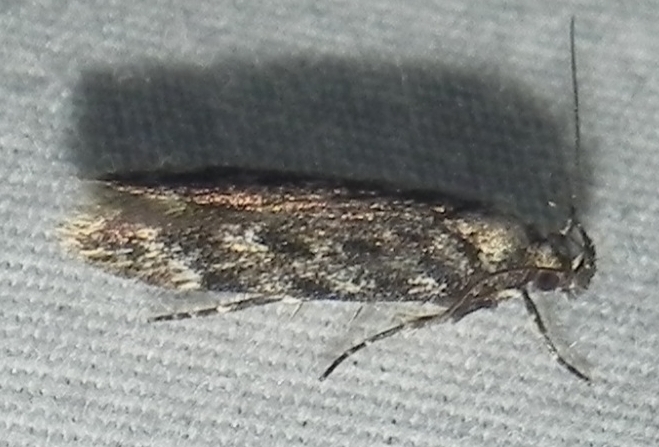
(c) btk, some rights reserved (CC BY) · licence
Family: Gelechiidae · Class: Insecta · Order: Lepidoptera
Gelechia versutella is a California animal in the Gelechiidae family.
Gelechia versutella is a small moth in the family Gelechiidae, commonly known as twirler moths or gelechiid moths. This species belongs to a diverse family of microlepidoptera that includes over 4,700 described species worldwide. Adult moths typically measure 8 to 12 mm in wingspan, characteristic of the genus Gelechia. The forewings are generally narrow and elongated with a pointed apex, while the hindwings are fringed and slightly broader relative to their length. Coloration patterns in Gelechia species often include mottled brown, gray, or tan forewings with subtle markings that provide camouflage when at rest. The distribution and range of Gelechia versutella remain poorly documented in the scientific literature. Many species within the genus Gelechia have restricted distributions, and some are known from only limited localities. Without comprehensive survey data, the current range of G. versutella in California or elsewhere cannot be definitively established. The species may be endemic to specific regions or may have a broader but incompletely documented distribution. Habitat preferences for Gelechia versutella are not well-established in available literature. Members of the family Gelechiidae occupy diverse ecological niches, from arid scrublands to forested environments. Many species are associated with specific host plants, and larval development typically occurs within plant tissues. Some gelechiid moths inhabit coastal areas, while others are found in montane or desert environments. The specific elevation range and microhabitat requirements for G. versutella require further investigation. Life history and ecological information for Gelechia versutella are limited. Like other gelechiid moths, this species likely undergoes complete metamorphosis with egg, larval, pupal, and adult stages. Larvae of many Gelechia species are leaf miners, stem borers, or gall makers, developing within host plant tissues. Adult moths are typically nocturnal and may be attracted to artificial lights. Flight periods vary among species but often coincide with host plant phenology. Specific information regarding reproductive behavior, number of generations per year, and overwintering strategies for G. versutella remains undocumented. The conservation status of Gelechia versutella has not been formally assessed by federal or state agencies. The species lacks official listing status under the Endangered Species Act or California Endangered Species Act. Population trends and threats are unknown due to insufficient survey data and taxonomic uncertainty within the genus. Many microlepidoptera face challenges from habitat loss, climate change, and pesticide use, but species-specific impacts on G. versutella have not been evaluated. The lack of comprehensive distributional and ecological data represents a significant knowledge gap that limits conservation planning efforts. Further research is needed to assess population status, habitat requirements, and potential conservation needs for this species. Taxonomic verification and morphological studies may also be necessary to confirm species boundaries and relationships within the Gelechia complex.
Classification
Class: Insecta · Order: Lepidoptera · Family: Gelechiidae
Frequently asked questions
How is Gelechia versutella classified?
Gelechia versutella belongs to class Insecta, order Lepidoptera, family Gelechiidae.
What family does Gelechia versutella belong to?
Gelechia versutella is in the Gelechiidae family.
What is Gelechia versutella?
Gelechia versutella is a small moth in the family Gelechiidae, commonly known as twirler moths or gelechiid moths.
Is Gelechia versutella found in California?
Yes. Gelechia versutella is recorded in California in The California Species Project's catalogue.
Related species
Other California species in the same genus, family, or bioregion.
Data from The California Species Project — 14,000+ California species with verified data from CNPS, CDFW, USFWS, and more.