Geothlypis philadelphia
Mourning Warbler
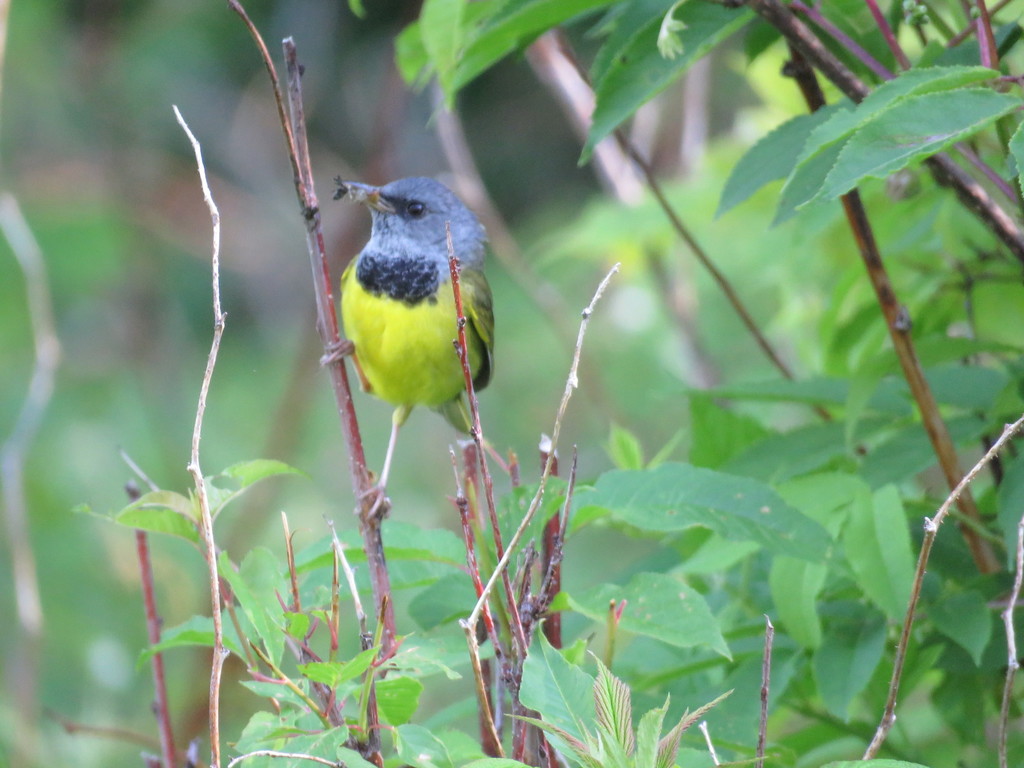
(c) Jason Hill, some rights reserved (CC BY) · licence
Family: Parulidae · Class: Aves · Order: Passeriformes
Geothlypis philadelphia (Mourning Warbler) is a California animal in the Parulidae family.
The Mourning Warbler is a small songbird measuring 13 to 15 cm (5.1 to 5.9 inches) in length with a wingspan of 18 to 23 cm (7.1 to 9.1 inches). Adult males display a distinctive slate-gray hood covering the head, throat, and upper breast, contrasting sharply with bright yellow underparts. The back and wings are olive-green, and males lack the white eye-ring found in similar species. Adult females and immatures show a lighter gray-brown hood with a pale throat and may display a faint, broken white eye-ring. Both sexes have pink legs and a thin, pointed bill typical of insectivorous warblers. The Mourning Warbler breeds primarily in the boreal forests of Canada and the northern United States, with its range extending south through the Great Lakes region and into the northern Rocky Mountains. In California, this species occurs primarily as a rare migrant, with most records from fall migration between late August and early October. Sightings are most frequent along the coast and in montane areas, particularly in the Sierra Nevada and northern California mountains. Spring migration records are exceptionally rare in the state. Breeding habitat consists of dense understory in mixed and deciduous forests, particularly areas with thick shrub layers and forest clearings created by logging or natural disturbance. During migration, Mourning Warblers utilize a variety of woodland habitats including riparian corridors, oak woodlands, and montane forests. The species shows a preference for areas with dense vegetative cover at heights of 1 to 4 meters above ground. Mourning Warblers are primarily insectivorous, foraging for caterpillars, beetles, flies, and other small arthropods by gleaning from foliage and occasionally catching insects in flight. During migration, they supplement their diet with small fruits and berries. The species breeds from May through July, constructing cup-shaped nests on or near the ground in dense shrubs or herbaceous vegetation. Females typically lay 3 to 5 eggs, which are incubated for 12 to 13 days. Males are territorial during breeding season, defending areas through song and aggressive displays. The Mourning Warbler is not federally listed and is considered secure across most of its range, though populations have shown localized declines in some areas due to habitat loss and fragmentation. According to the North American Breeding Bird Survey, continental populations remained relatively stable from 1966 to 2019, with some regional variation. In California, the species' status as a rare migrant means it faces limited direct conservation threats within the state, though habitat preservation in riparian and montane areas benefits this and other migrant species. Climate change may affect migration timing and routes, potentially altering the species' occurrence patterns in California.
Classification
Class: Aves · Order: Passeriformes · Family: Parulidae
Frequently asked questions
How is Geothlypis philadelphia classified?
Geothlypis philadelphia belongs to class Aves, order Passeriformes, family Parulidae.
What family does Geothlypis philadelphia belong to?
Geothlypis philadelphia is in the Parulidae family.
What is Geothlypis philadelphia?
The Mourning Warbler is a small songbird measuring 13 to 15 cm (5.1 to 5.9 inches) in length with a wingspan of 18 to 23 cm (7.1 to 9.1 inches).
Is Geothlypis philadelphia found in California?
Yes. Geothlypis philadelphia is recorded in California in The California Species Project's catalogue.
Related species
Other California species in the same genus, family, or bioregion.
Data from The California Species Project — 14,000+ California species with verified data from CNPS, CDFW, USFWS, and more.