Geothlypis trichas
Common Yellowthroat
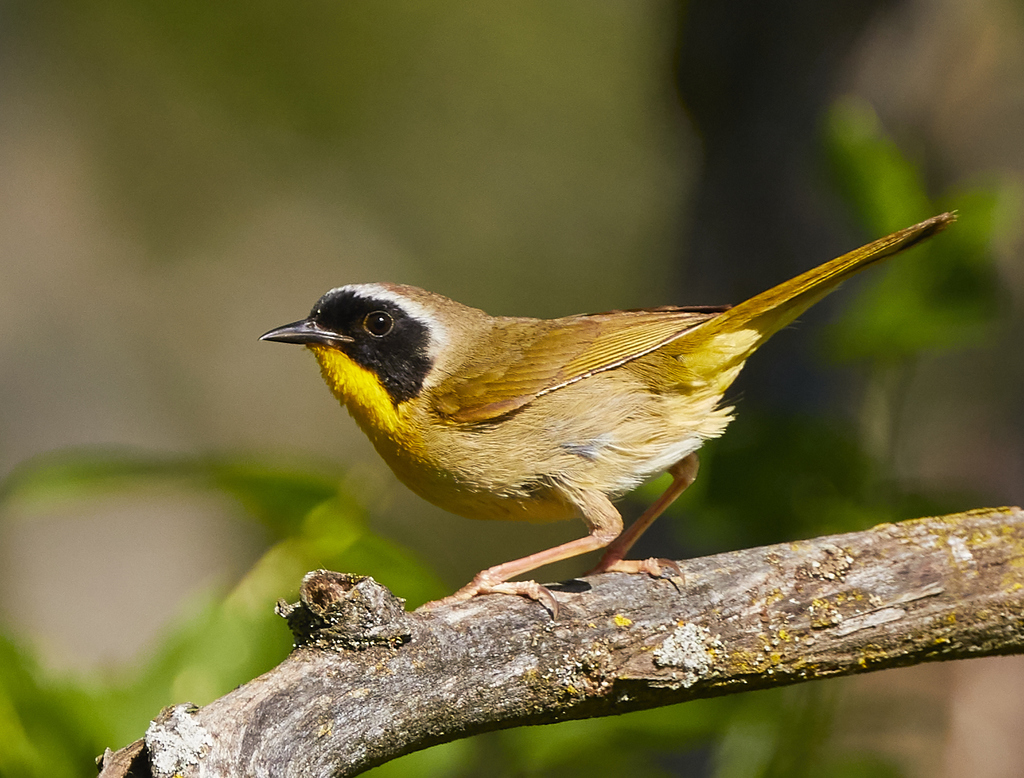
no rights reserved · CC0
Family: Parulidae · Class: Aves · Order: Passeriformes
Geothlypis trichas (Common Yellowthroat) is a California animal in the Parulidae family.
The Common Yellowthroat is a small songbird measuring 11-13 cm (4.3-5.1 inches) in length with a wingspan of 15-20 cm (5.9-7.9 inches). Adult males are distinguished by a distinctive black mask extending from the bill to behind the eye, bordered above by a white stripe. The mask contrasts with bright yellow throat and breast coloration, while the upperparts are olive-brown and the belly is whitish. Females lack the black mask and are duller overall, with olive-brown upperparts, pale yellow throat and breast, and whitish underparts. Both sexes have short, slightly curved bills adapted for insectivory and relatively long tails often held cocked upward. The Common Yellowthroat breeds throughout California except in the highest elevations of the Sierra Nevada and Cascade ranges and the most arid desert regions. The species occurs from sea level to approximately 2,500 meters (8,200 feet) elevation. Breeding populations are found in all major watersheds and coastal areas from the Mexican border north to Oregon. During winter, many California populations remain resident, particularly in coastal and Central Valley regions, while others migrate to areas of Mexico and Central America. This warbler inhabits dense, low vegetation near water sources including freshwater and brackish marshes, wet meadows, riparian thickets, and edges of ponds and streams. Critical habitat components include cattails, tules, willows, and other emergent vegetation that provides nesting sites and foraging areas. The species also utilizes agricultural areas with adequate cover, including irrigation ditches and field margins with dense herbaceous growth. Common Yellowthroats are primarily insectivorous, gleaning insects, spiders, and other small arthropods from vegetation surfaces. They forage by hopping through dense cover, occasionally making short flights to capture prey. Males establish territories of 0.1-0.4 hectares during breeding season, defending areas with song and aggressive displays. Nesting occurs from March through August, with females constructing cup-shaped nests 0.3-1 meter above ground in dense vegetation. Clutches typically contain 3-5 white eggs with brown spotting, incubated for 12 days. Females raise 2-3 broods annually in favorable conditions. The Common Yellowthroat is not federally or state listed and maintains stable populations across most of its California range. According to the North American Breeding Bird Survey, populations have remained relatively stable over the past several decades, though some local declines have occurred in areas with extensive wetland habitat loss. Primary threats include destruction of riparian and wetland habitats through agricultural conversion, urban development, and water diversions. Climate change poses potential future risks through altered precipitation patterns affecting wetland hydrology. Conservation efforts focus on wetland protection and restoration programs, including those implemented through the Central Valley Joint Venture and California waterfowl habitat initiatives.
Classification
Class: Aves · Order: Passeriformes · Family: Parulidae
Frequently asked questions
How is Geothlypis trichas classified?
Geothlypis trichas belongs to class Aves, order Passeriformes, family Parulidae.
What family does Geothlypis trichas belong to?
Geothlypis trichas is in the Parulidae family.
What is Geothlypis trichas?
The Common Yellowthroat is a small songbird measuring 11-13 cm (4.3-5.1 inches) in length with a wingspan of 15-20 cm (5.9-7.9 inches).
Is Geothlypis trichas found in California?
Yes. Geothlypis trichas is recorded in California in The California Species Project's catalogue.
Related species
Other California species in the same genus, family, or bioregion.
Data from The California Species Project — 14,000+ California species with verified data from CNPS, CDFW, USFWS, and more.