Gila bicolor
Tui chub
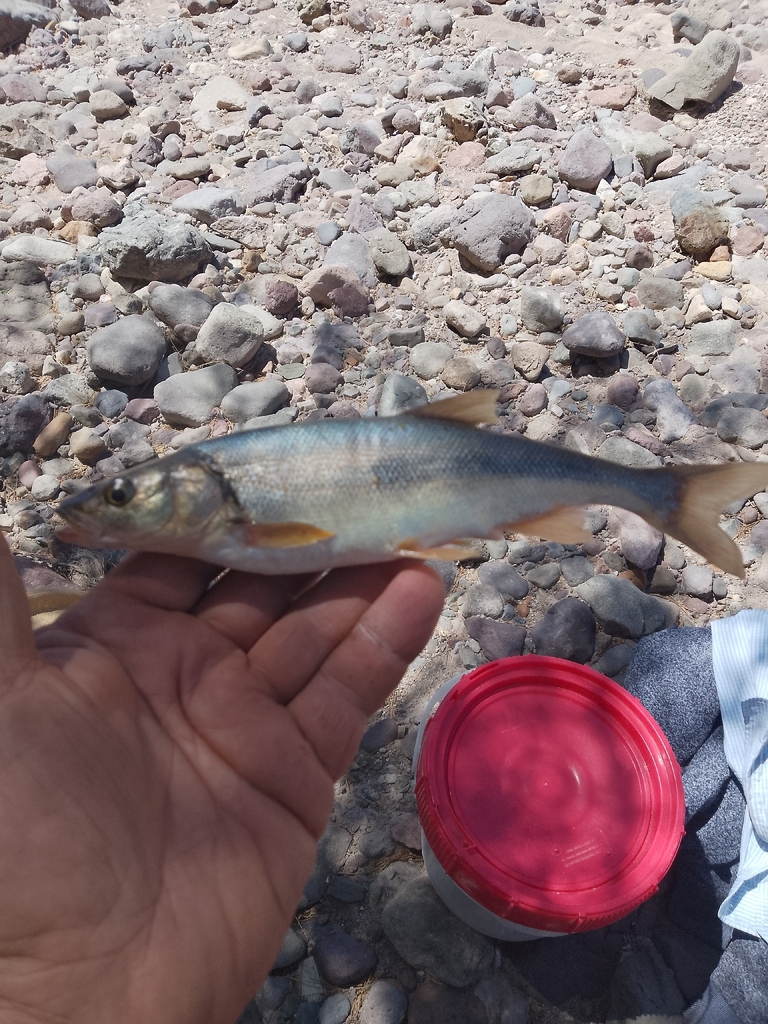
(c) Lic. Kevin Miguel Garibaldi Fierro, some rights reserved (CC BY) · licence
Family: Leuciscidae · Class: Actinopterygii · Order: Cypriniformes
Gila bicolor (Tui chub) is a California animal in the Leuciscidae family.
The Tui chub is a medium-sized freshwater fish native to the Great Basin and portions of California. Adults typically measure 150 to 300 mm (6 to 12 inches) in total length, with some populations reaching up to 400 mm (16 inches). The body is laterally compressed with a relatively deep profile, particularly in older individuals. Coloration varies among populations but generally consists of a dark olive to brownish dorsal surface, silvery sides, and a pale ventral surface. The species exhibits a single dorsal fin positioned at mid-body, and the mouth is terminal with pharyngeal teeth adapted for processing plant material and small invertebrates. Historically, Tui chub occupied numerous isolated lake systems throughout the Great Basin, including portions of northeastern California, Nevada, and southeastern Oregon. In California, the species occurs in the Lahontan Basin, including Eagle Lake in Lassen County, and historically inhabited several other lake systems in the Sierra Nevada and Cascade Range watersheds. Many California populations have been extirpated due to habitat modification and introduced species, with current distribution significantly reduced from historical range. Tui chub inhabit lacustrine environments, preferring areas with emergent and submerged vegetation along shorelines and in shallow bays. The species tolerates a wide range of water temperatures and can survive in both fresh and moderately saline conditions. Optimal habitat includes areas with abundant aquatic vegetation, particularly in lakes with stable water levels and minimal disturbance. Spawning occurs in shallow areas over gravel or rocky substrates, typically near vegetation or structure. Tui chub are omnivorous, feeding on algae, aquatic plants, zooplankton, aquatic insects, and small crustaceans. Diet composition varies seasonally and with fish size, with juveniles consuming more zooplankton and adults incorporating more plant material. Spawning occurs from April through July, depending on water temperature and local conditions. Females produce adhesive eggs that attach to substrate or vegetation, with clutch sizes ranging from several thousand to over 100,000 eggs depending on female size. Sexual maturity is typically reached at 2 to 3 years of age. While not federally listed, many Tui chub populations face conservation challenges throughout their range. The Eagle Lake population in California represents one of the more stable populations, though it has experienced fluctuations due to water level variations and introduced species interactions. Primary threats include habitat modification, water diversions, introduction of non-native fish species, and climate-related changes to lake levels. Several subspecies and isolated populations have been proposed for special conservation status due to their restricted distributions and declining numbers. Conservation efforts focus on habitat protection, water level management, and control of invasive species in remaining suitable habitats.
Classification
Class: Actinopterygii · Order: Cypriniformes · Family: Leuciscidae
Frequently asked questions
How is Gila bicolor classified?
Gila bicolor belongs to class Actinopterygii, order Cypriniformes, family Leuciscidae.
What family does Gila bicolor belong to?
Gila bicolor is in the Leuciscidae family.
What is Gila bicolor?
The Tui chub is a medium-sized freshwater fish native to the Great Basin and portions of California.
Is Gila bicolor found in California?
Yes. Gila bicolor is recorded in California in The California Species Project's catalogue.
Related species
Other California species in the same genus, family, or bioregion.
Data from The California Species Project — 14,000+ California species with verified data from CNPS, CDFW, USFWS, and more.