Gila bicolor obesa
Lahontan Creek tui chub
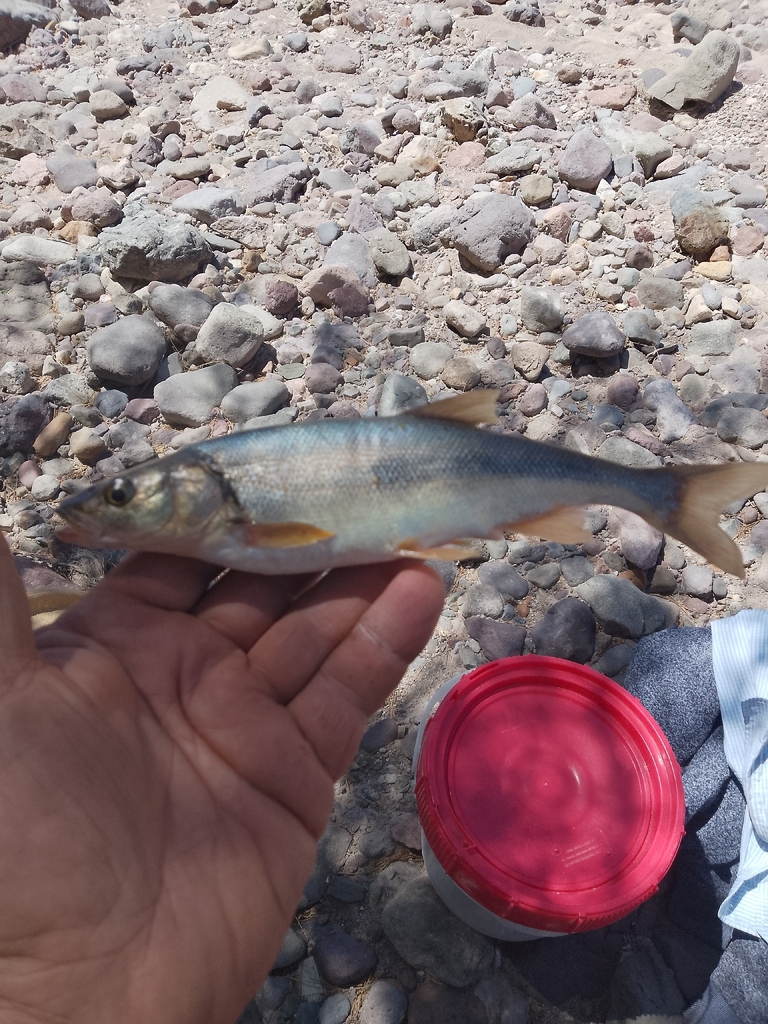
(c) Lic. Kevin Miguel Garibaldi Fierro, some rights reserved (CC BY) · licence
Family: Leuciscidae · Class: Actinopterygii · Order: Cypriniformes
Gila bicolor obesa (Lahontan Creek tui chub) is a California animal in the Leuciscidae family.
The Lahontan Creek tui chub (Gila bicolor obesa) is a subspecies of tui chub endemic to the Lahontan Basin of eastern California and western Nevada. Adults typically measure 150 to 300 mm (6 to 12 inches) in total length, with a robust, deep-bodied form that distinguishes this subspecies from other tui chub populations. The body is olive-brown to dark gray dorsally, becoming lighter on the sides and belly. The head is relatively large with a terminal mouth, and the dorsal fin is positioned above the pelvic fins. Breeding males develop tubercles on the head and body during spawning season. Historically, the Lahontan Creek tui chub occupied numerous creek systems throughout the Lahontan Basin, including tributaries to the Truckee, Carson, and Walker river systems in eastern California. The subspecies was documented in creeks from the Sierra Nevada foothills eastward into Nevada. Current distribution is severely restricted compared to historical range, with extant populations limited to a few isolated creek systems in Mono and Inyo counties, California. This subspecies inhabits small to medium-sized creeks with clear, cool water and rocky or gravel substrates. Preferred habitat includes pools and runs with moderate current, typically at elevations ranging from 1,200 to 2,100 meters (4,000 to 7,000 feet). Water temperatures generally remain below 20°C (68°F) during summer months. The species requires areas with adequate cover provided by undercut banks, fallen logs, or overhanging vegetation. Lahontan Creek tui chub are omnivorous, feeding on aquatic insects, algae, detritus, and small crustaceans. Adults consume larger prey items including terrestrial insects that fall into the water. Spawning occurs from April through July, depending on water temperature and flow conditions. Females deposit adhesive eggs in shallow areas over gravel substrates. The species exhibits schooling behavior, particularly juveniles, and shows strong site fidelity to specific creek reaches. The Lahontan Creek tui chub faces severe conservation challenges due to habitat loss and fragmentation. Primary threats include water diversions for agricultural and municipal use, livestock grazing impacts on riparian zones, and introduced species competition. Many historical populations have been extirpated through habitat modification and drought conditions. Hybridization with other tui chub subspecies poses an additional threat to genetic integrity. The subspecies lacks formal federal or state listing status, despite significant population declines. Current populations are small and isolated, making them vulnerable to local extinctions from drought, pollution events, or catastrophic disturbances. Conservation efforts focus on habitat restoration, water rights protection, and monitoring of remaining populations to prevent further losses.
Classification
Class: Actinopterygii · Order: Cypriniformes · Family: Leuciscidae
Frequently asked questions
How is Gila bicolor obesa classified?
Gila bicolor obesa belongs to class Actinopterygii, order Cypriniformes, family Leuciscidae.
What family does Gila bicolor obesa belong to?
Gila bicolor obesa is in the Leuciscidae family.
What is Gila bicolor obesa?
The Lahontan Creek tui chub (Gila bicolor obesa) is a subspecies of tui chub endemic to the Lahontan Basin of eastern California and western Nevada.
Is Gila bicolor obesa found in California?
Yes. Gila bicolor obesa is recorded in California in The California Species Project's catalogue.
Related species
Other California species in the same genus, family, or bioregion.
Data from The California Species Project — 14,000+ California species with verified data from CNPS, CDFW, USFWS, and more.