Gila bicolor ssp. 1
Eagle Lake tui chub
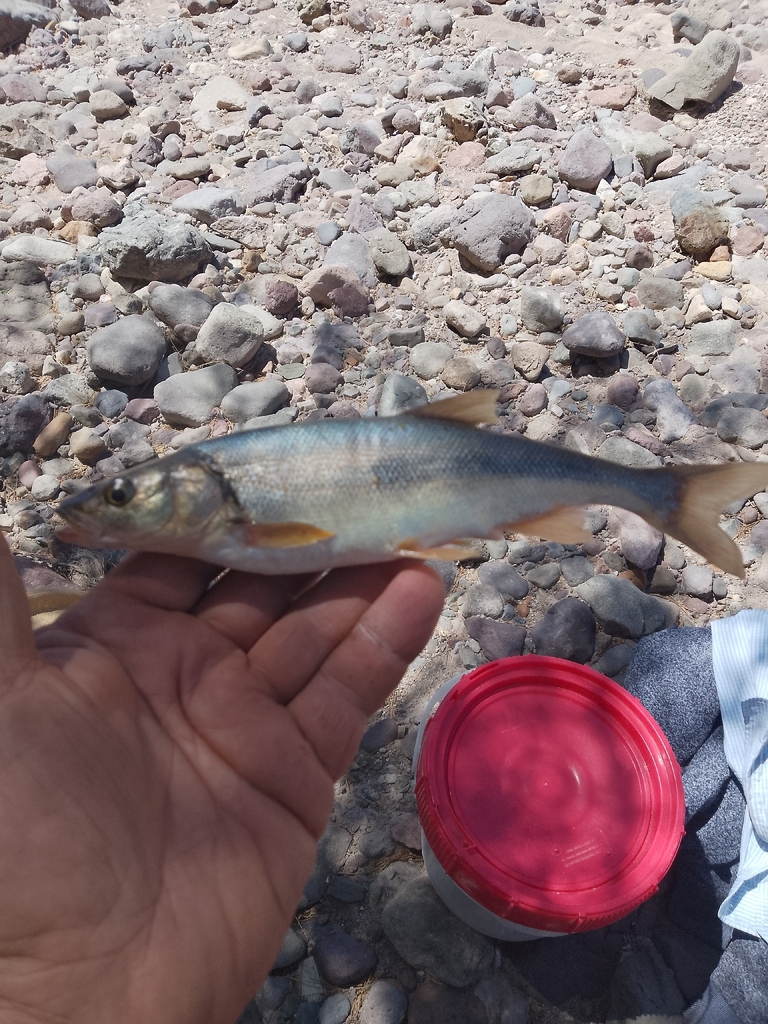
(c) Lic. Kevin Miguel Garibaldi Fierro, some rights reserved (CC BY) · licence
Family: Leuciscidae · Class: Actinopterygii · Order: Cypriniformes
Conservation status: G4T1T2 S1S2
Gila bicolor ssp. 1 (Eagle Lake tui chub) is a California animal in the Leuciscidae family.
The Eagle Lake tui chub (Gila bicolor ssp. 1) is a freshwater cyprinid fish endemic to Eagle Lake in Lassen County, California. Adults typically reach 150 to 300 mm (6 to 12 inches) in total length, with a robust, laterally compressed body. The species exhibits a silvery coloration with darker dorsal surfaces and lighter ventral areas. The body is elongated with a relatively large head and terminal mouth adapted for surface and midwater feeding. Scales are cycloid and relatively large, numbering 45 to 55 along the lateral line. The Eagle Lake tui chub occurs exclusively in Eagle Lake, a closed-basin alkaline lake located in northeastern California at an elevation of approximately 1,524 meters (5,000 feet). This represents one of the most restricted ranges of any native California fish species. The lake covers roughly 103 square kilometers (40 square miles) and has no surface outlet, creating unique chemical conditions that have shaped the evolution of this endemic subspecies. The species inhabits the alkaline waters of Eagle Lake, which maintains a pH between 8.5 and 9.6 and total dissolved solids ranging from 1,000 to 4,000 parts per million. Water temperatures can reach 24°C (75°F) in summer and drop to near freezing in winter. The tui chub occupies both littoral and pelagic zones, moving between shallow nearshore areas and deeper open water depending on season and life stage. Adults prefer depths of 3 to 15 meters (10 to 50 feet) but move to shallower areas during spawning. Eagle Lake tui chub are omnivorous, feeding on zooplankton, aquatic insects, algae, and organic detritus. Adults consume primarily chironomid larvae, amphipods, and cladocerans, while juveniles feed heavily on zooplankton. Spawning occurs from May through July when water temperatures reach 15 to 18°C (59 to 64°F). Females broadcast adhesive eggs over rocky substrates in shallow water, typically at depths of 1 to 3 meters. Clutch sizes range from 2,000 to 8,000 eggs depending on female size. Sexual maturity is reached at 2 to 3 years of age. The subspecies is classified as G4T1T2 S1S2, indicating it is critically imperiled to imperiled both globally as a subspecies and within California. Population estimates suggest fewer than 10,000 adults remain, representing a significant decline from historical levels. Primary threats include water level fluctuations due to drought and water diversions, which can concentrate fish in reduced habitat and increase susceptibility to winter kill events. Introduced species, particularly Sacramento perch and rainbow trout, compete for resources and may hybridize with native tui chub. Climate change poses additional risks through altered precipitation patterns and increased water temperatures that may exceed thermal tolerance limits.
Classification
Class: Actinopterygii · Order: Cypriniformes · Family: Leuciscidae
Conservation status
G4T1T2 S1S2
Frequently asked questions
How is Gila bicolor ssp. 1 classified?
Gila bicolor ssp. 1 belongs to class Actinopterygii, order Cypriniformes, family Leuciscidae.
What family does Gila bicolor ssp. 1 belong to?
Gila bicolor ssp. 1 is in the Leuciscidae family.
Is Gila bicolor ssp. 1 protected or of conservation concern?
Gila bicolor ssp. 1 carries the following status: G4T1T2 S1S2.
What is Gila bicolor ssp. 1?
The Eagle Lake tui chub (Gila bicolor ssp.
Is Gila bicolor ssp. 1 found in California?
Yes. Gila bicolor ssp. 1 is recorded in California in The California Species Project's catalogue.
Related species
Other California species in the same genus, family, or bioregion.
Data from The California Species Project — 14,000+ California species with verified data from CNPS, CDFW, USFWS, and more.