Gila bicolor ssp. 2
High Rock Spring tui chub
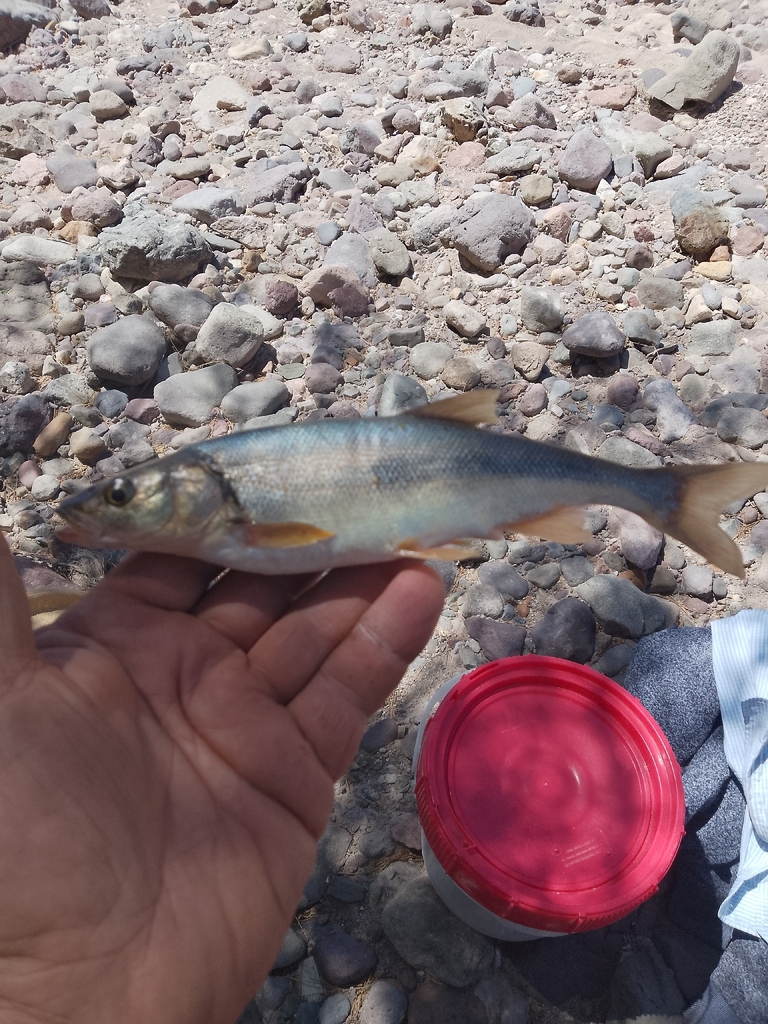
(c) Lic. Kevin Miguel Garibaldi Fierro, some rights reserved (CC BY) · licence
Family: Leuciscidae · Class: Actinopterygii · Order: Cypriniformes
Conservation status: G4TX SX
Gila bicolor ssp. 2 (High Rock Spring tui chub) is a California animal in the Leuciscidae family.
The High Rock Spring tui chub (Gila bicolor ssp. 2) was a subspecies of tui chub endemic to California's High Rock Springs system. This fish belonged to the minnow family Leuciscidae and represented one of several geographically isolated tui chub populations that evolved distinct characteristics in desert spring environments throughout the western United States. Like other tui chub subspecies, the High Rock Spring tui chub likely possessed the typical body form of its species complex: a streamlined, laterally compressed body adapted for life in still or slow-moving waters. Tui chubs generally display silvery coloration with darker backs, though specific morphological details for this particular subspecies have not been documented in available literature. The subspecies was restricted to the High Rock Springs area in northeastern California, likely within the Great Basin region. High Rock Springs represents part of the isolated desert spring systems that historically supported endemic fish populations throughout the Great Basin. These springs typically occur in remote desert locations where groundwater reaches the surface, creating small aquatic habitats surrounded by arid landscapes. The habitat would have consisted of spring-fed pools and associated wetland areas. Desert springs in this region typically maintain relatively constant temperatures year-round and support limited aquatic vegetation. Based on other tui chub subspecies ecology, the High Rock Spring population likely inhabited areas with aquatic vegetation that provided cover from predators and supported invertebrate prey populations (USFWS). Tui chubs are generally omnivorous, feeding on aquatic invertebrates, algae, and plant material. Reproductive behavior in related subspecies involves females depositing adhesive eggs over aquatic vegetation, with each female capable of producing thousands of eggs per breeding season, typically occurring in spring months (USFWS). The High Rock Spring population would have likely followed similar ecological patterns, though specific behavioral and reproductive data for this subspecies were never adequately documented. The High Rock Spring tui chub is now extinct in California, as indicated by its Global/State Rank of G4TX SX, where 'SX' denotes state extinction. The subspecies' decline and eventual extinction likely resulted from the same factors threatening other desert spring fish populations: habitat modification, water diversion, introduction of non-native species, and potential climate-related changes affecting spring flow patterns. Desert springs represent extremely fragile ecosystems, and the loss of even small amounts of water or introduction of competing species can rapidly eliminate endemic populations. The extinction of the High Rock Spring tui chub represents the loss of a unique evolutionary lineage adapted to specific desert spring conditions. This subspecies was part of the broader pattern of tui chub diversification across isolated Great Basin waters, where geographic separation led to the evolution of distinct local populations. The loss underscores the vulnerability of desert spring ecosystems and their endemic species to human activities and environmental change. Currently, no conservation actions can restore this extinct subspecies, emphasizing the importance of protecting remaining desert spring habitats and their native fish communities throughout California and the Great Basin region.
Classification
Class: Actinopterygii · Order: Cypriniformes · Family: Leuciscidae
Conservation status
G4TX SX
Frequently asked questions
How is Gila bicolor ssp. 2 classified?
Gila bicolor ssp. 2 belongs to class Actinopterygii, order Cypriniformes, family Leuciscidae.
What family does Gila bicolor ssp. 2 belong to?
Gila bicolor ssp. 2 is in the Leuciscidae family.
Is Gila bicolor ssp. 2 protected or of conservation concern?
Gila bicolor ssp. 2 carries the following status: G4TX SX.
What is Gila bicolor ssp. 2?
The High Rock Spring tui chub (Gila bicolor ssp.
Is Gila bicolor ssp. 2 found in California?
Yes. Gila bicolor ssp. 2 is recorded in California in The California Species Project's catalogue.
Related species
Other California species in the same genus, family, or bioregion.
Data from The California Species Project — 14,000+ California species with verified data from CNPS, CDFW, USFWS, and more.