Gila bicolor vaccaceps
Cowhead Lake Tui Chub
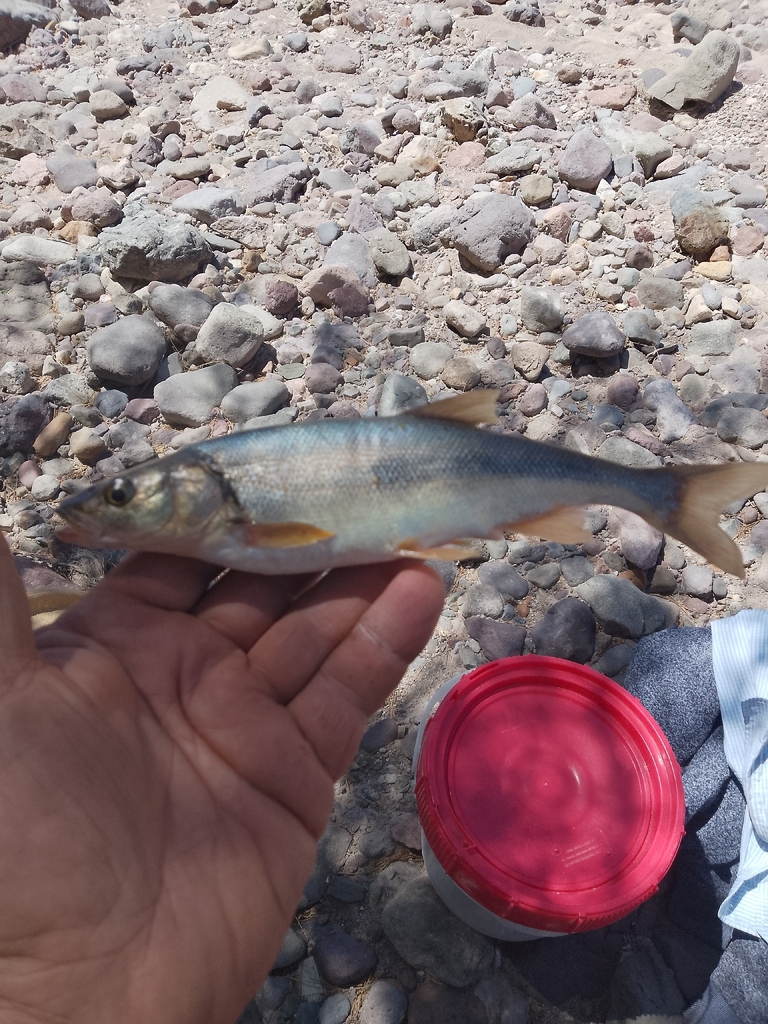
(c) Lic. Kevin Miguel Garibaldi Fierro, some rights reserved (CC BY) · licence
Family: Cyprinidae · Class: Actinopterygii · Order: Cypriniformes
Conservation status: G4T1 S1
Gila bicolor vaccaceps (Cowhead Lake Tui Chub) is a California animal in the Cyprinidae family.
The Cowhead Lake tui chub (Gila bicolor vaccaceps) is a subspecies of the tui chub endemic to a single lake system in northeastern California. This small cyprinid fish typically measures 100 to 200 mm (4 to 8 inches) in total length, with a streamlined body adapted for lake environments. The species exhibits the characteristic tui chub body plan with a moderately compressed form, small scales, and a terminal mouth. Coloration is generally olive-brown to dark gray dorsally, fading to silver or white on the ventral surface. The fins are typically dusky, and breeding males may develop subtle tubercles on the head and fins. The Cowhead Lake tui chub is restricted to Cowhead Lake, located in Modoc County, California, near the Oregon border. This remote alpine lake sits at approximately 1,524 meters (5,000 feet) elevation in the Warner Mountains. The subspecies represents one of the most geographically restricted fish taxa in California, with its entire range encompassing only this single water body and its immediate tributaries. Cowhead Lake is a natural alpine lake characterized by cold, clear water with rocky and sandy substrates. The lake experiences seasonal temperature fluctuations typical of high-elevation systems, with winter ice cover and summer surface temperatures reaching 20°C (68°F). Aquatic vegetation is sparse, consisting primarily of submerged macrophytes in shallow areas. The fish occupy both littoral and pelagic zones, moving between depths seasonally in response to temperature and food availability. As with other tui chub subspecies, Cowhead Lake tui chubs are omnivorous, feeding on aquatic invertebrates, algae, detritus, and small crustaceans. Their diet includes chironomid larvae, amphipods, and zooplankton. Spawning occurs in spring when water temperatures rise, typically from May through July. Adults move to shallow areas with gravel or rocky substrates to spawn. Females deposit adhesive eggs among rocks and vegetation, with males providing external fertilization. The species likely exhibits similar longevity to related tui chub populations, with individuals living 5 to 8 years. The Cowhead Lake tui chub holds a Global/State Rank of G4T1 S1, indicating it is critically imperiled both globally and within California. This ranking reflects the extreme vulnerability associated with single-population endemism. While not federally or state listed as of December 2025, the subspecies faces significant conservation concerns due to its restricted range. Potential threats include habitat degradation, water level fluctuations, introduction of non-native fish species, and climate change impacts on alpine lake systems. The isolated nature of Cowhead Lake provides some protection from human disturbance, but also increases vulnerability to catastrophic events. Any significant environmental change to this single lake system could result in the subspecies' extinction. Conservation efforts focus on monitoring population status and preventing the introduction of competing or predatory fish species that could disrupt the lake's native ecosystem.
Classification
Class: Actinopterygii · Order: Cypriniformes · Family: Cyprinidae
Conservation status
G4T1 S1
Frequently asked questions
How is Gila bicolor vaccaceps classified?
Gila bicolor vaccaceps belongs to class Actinopterygii, order Cypriniformes, family Cyprinidae.
What family does Gila bicolor vaccaceps belong to?
Gila bicolor vaccaceps is in the Cyprinidae family.
Is Gila bicolor vaccaceps protected or of conservation concern?
Gila bicolor vaccaceps carries the following status: G4T1 S1.
What is Gila bicolor vaccaceps?
The Cowhead Lake tui chub (Gila bicolor vaccaceps) is a subspecies of the tui chub endemic to a single lake system in northeastern California.
Is Gila bicolor vaccaceps found in California?
Yes. Gila bicolor vaccaceps is recorded in California in The California Species Project's catalogue.
Related species
Other California species in the same genus, family, or bioregion.
Data from The California Species Project — 14,000+ California species with verified data from CNPS, CDFW, USFWS, and more.