Gila ditaenia
Sonora chub
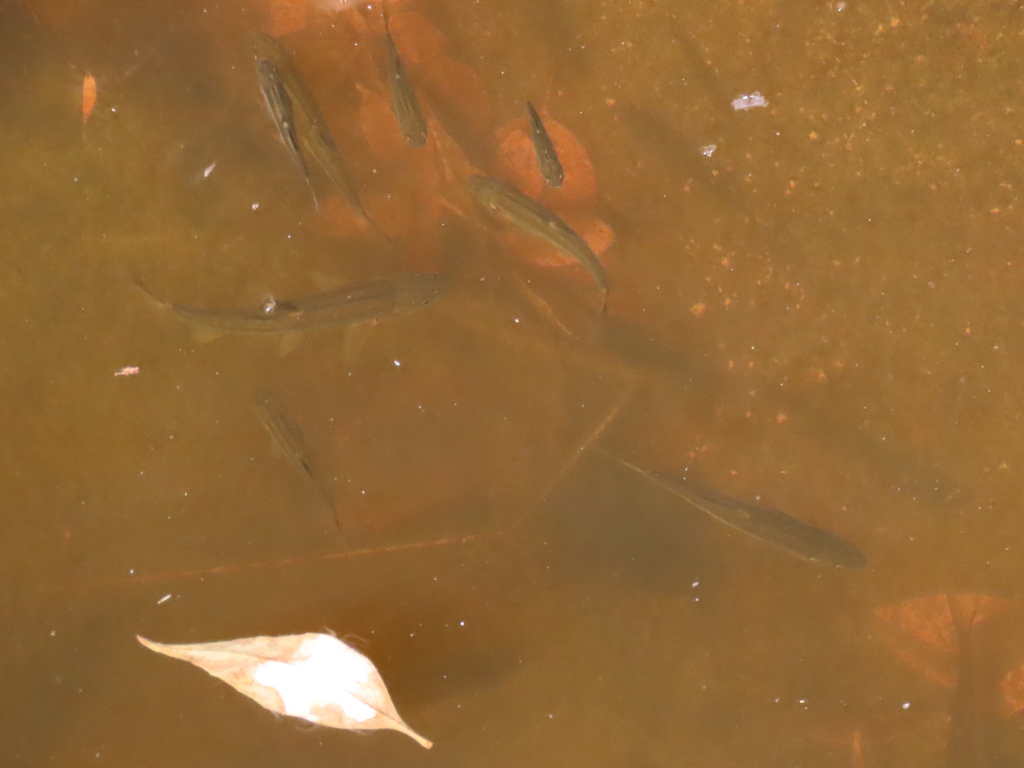
(c) Alina Martin, some rights reserved (CC BY) · licence
Family: Unknown · Class: Unknown · Order: Unknown
Conservation status: Threatened
Gila ditaenia (Sonora chub) is a California animal in the Unknown family.
The Sonora chub is a small, secretive freshwater fish in the minnow family (Cyprinidae) endemic to the Sonoran Desert region. Adults typically measure 2 to 4 inches (51 to 102 mm) in total length, with a compressed, silvery body and relatively large eyes adapted for life in often turbid desert streams. The species exhibits the typical chub body form with a moderately deep profile and terminal mouth positioned for feeding in the water column. Historically and currently, the Sonora chub occurs only in southeastern Arizona and northwestern Sonora, Mexico. In Arizona, the species is found in Santa Cruz County, specifically in Sycamore Creek and Peñasco Creek within the Atascosa Mountains, and California Gulch. According to USFWS, the current distribution appears relatively similar to its historical range, though few collections are available for comparison (USFWS 2022). The species also persists in intermittent and perennial streams in adjacent Sonora, Mexico. Sonora chub inhabit intermittent desert streams, dwelling primarily in shallow pools less than 2 feet deep that are adjacent to or near areas of fairly swift current (USFWS 2022). These desert aquatic systems are characterized by extreme fluctuations in water availability, with pools sometimes becoming isolated during dry periods. The species appears adapted to these harsh conditions, utilizing both permanent and temporary water sources throughout its range. The Sonora chub is highly secretive in behavior, and relatively little is documented about its specific ecological requirements and life history. As a desert stream fish, it likely feeds on aquatic invertebrates, algae, and organic detritus typical of intermittent stream ecosystems. The species' reproductive biology and seasonal behavior patterns remain poorly studied, reflecting the challenges of conducting research in remote desert watersheds with highly variable water conditions. The Sonora chub was listed as federally threatened in 1986, with critical habitat designated for sections of Sycamore Creek and Peñasco Creek in Santa Cruz County, Arizona. At the time of listing, primary threats included the presence of exotic fishes and their parasites, along with potential mining activities in the watershed. Current population estimates suggest the species maintains a precarious existence in the wild, though captive populations provide some security. The Arizona-Sonora Desert Museum maintains approximately 400 to 500 individuals in captivity, representing a strong counterbalance to threats facing wild populations (USFWS 2022). In 2024, USFWS initiated an evaluation to potentially expand critical habitat designation to include California Gulch, responding to a petition that presented substantial scientific information supporting habitat revision. The species' continued survival depends on maintaining water quality and flow regimes in its limited desert stream habitat while managing threats from invasive species and human activities in these fragile ecosystems.
Classification
Class: Unknown · Order: Unknown · Family: Unknown
Conservation status
Threatened
Frequently asked questions
How is Gila ditaenia classified?
Gila ditaenia belongs to class Unknown, order Unknown, family Unknown.
What family does Gila ditaenia belong to?
Gila ditaenia is in the Unknown family.
Is Gila ditaenia protected or of conservation concern?
Gila ditaenia carries the following status: Threatened.
What is Gila ditaenia?
The Sonora chub is a small, secretive freshwater fish in the minnow family (Cyprinidae) endemic to the Sonoran Desert region.
Is Gila ditaenia found in California?
Yes. Gila ditaenia is recorded in California in The California Species Project's catalogue.
Related species
Other California species in the same genus, family, or bioregion.
Data from The California Species Project — 14,000+ California species with verified data from CNPS, CDFW, USFWS, and more.