Gila elegans
Bonytail
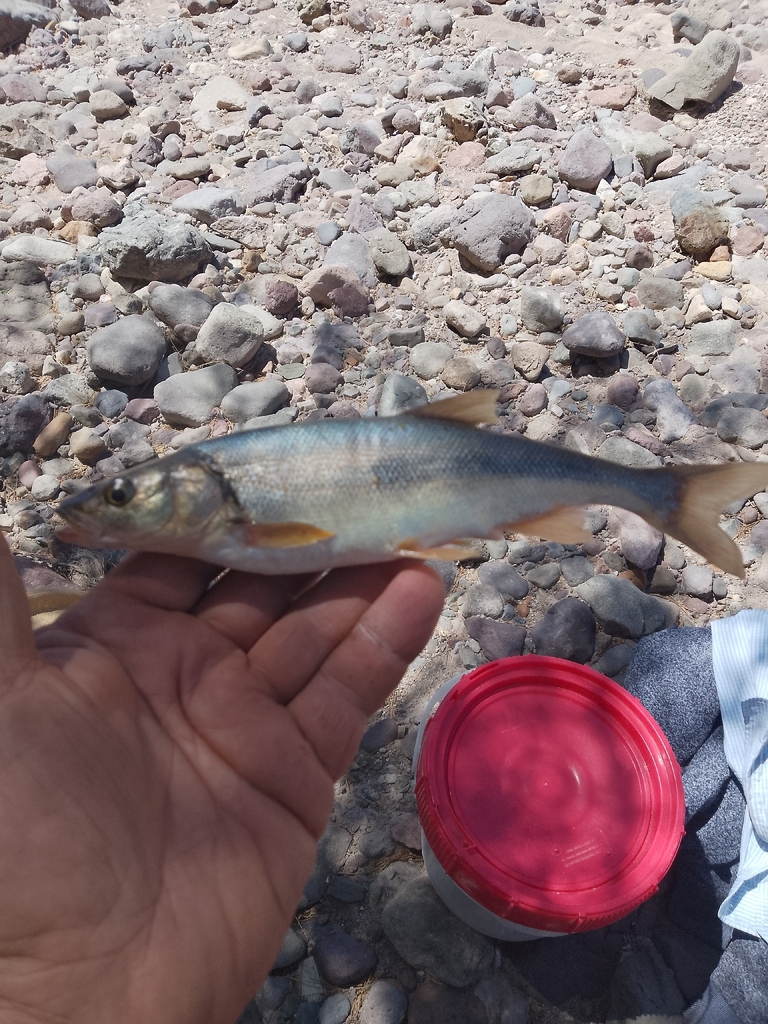
(c) Lic. Kevin Miguel Garibaldi Fierro, some rights reserved (CC BY) · licence
Family: Cyprinidae · Class: Actinopterygii · Order: Cypriniformes
Conservation status: SE ST · Endangered · G1 SH
Gila elegans (Bonytail) is a California animal in the Cyprinidae family.
The bonytail (Gila elegans), also known as the bonytail chub, is a large-bodied freshwater fish endemic to the Colorado River basin. Adults typically reach 300 to 500 mm (12 to 20 inches) in total length and can weigh up to 1.4 kg (3 pounds). The species exhibits a streamlined, torpedo-shaped body with a distinctively narrow caudal peduncle, giving rise to its common name. The body is bronze to olive-green dorsally, fading to silver or white ventrally. The head is relatively small with a subterminal mouth, and the fins are typically dusky or yellowish. Juveniles display more prominent coloration with darker vertical bars along the sides. Historically, bonytail occurred throughout the mainstream Colorado River and its major tributaries from Wyoming south to the Gulf of California, including portions of the Green, Yampa, White, Gunnison, San Juan, Virgin, and Gila rivers. In California, the species was documented in the lower Colorado River along the state's southeastern border. According to the U.S. Fish and Wildlife Service, wild bonytail populations have been extirpated from most of their historic range, with reproducing populations now limited to portions of the upper Colorado River basin in Colorado and Utah. Bonytail inhabit large river systems, preferring deep pools and eddies with moderate to swift currents. The species occurs in waters ranging from near-freezing to 32°C (90°F) and can tolerate highly turbid conditions typical of desert rivers. Adults are typically found in depths of 1 to 7 meters in areas with rocky or sandy substrates. Juveniles utilize shallow backwaters and tributary mouths with slower currents and finer sediments. As opportunistic omnivores, bonytail feed on algae, aquatic invertebrates, small fish, and detritus. Adults are primarily piscivorous, consuming native and non-native fish species. Spawning occurs from late spring through early summer when water temperatures reach 16 to 20°C (61 to 68°F). Females broadcast adhesive eggs over rocky substrates in flowing water, with clutch sizes ranging from 2,000 to 10,000 eggs. Sexual maturity is reached at 4 to 6 years of age. The species is long-lived, with individuals documented surviving over 40 years in the wild. The U.S. Fish and Wildlife Service listed bonytail as endangered in 1980 due to severe population declines caused by habitat modification, water diversions, and introduction of non-native fish species. Dam construction has fragmented river systems and altered natural flow regimes, while introduced predators and competitors have further reduced recruitment and survival. According to USFWS recovery efforts, fewer than 1,000 adult bonytail remain in the wild as of recent surveys. Conservation efforts include captive breeding programs, habitat restoration, non-native fish removal, and flow management through the Upper Colorado River Endangered Fish Recovery Program. Despite these efforts, natural reproduction remains extremely limited, and the species continues to depend on stocking of hatchery-raised individuals for population persistence.
Classification
Class: Actinopterygii · Order: Cypriniformes · Family: Cyprinidae
Conservation status
SE ST · Endangered · G1 SH
Frequently asked questions
How is Gila elegans classified?
Gila elegans belongs to class Actinopterygii, order Cypriniformes, family Cyprinidae.
What family does Gila elegans belong to?
Gila elegans is in the Cyprinidae family.
Is Gila elegans protected or of conservation concern?
Gila elegans carries the following status: SE ST · Endangered · G1 SH.
What is Gila elegans?
The bonytail (Gila elegans), also known as the bonytail chub, is a large-bodied freshwater fish endemic to the Colorado River basin.
Is Gila elegans found in California?
Yes. Gila elegans is recorded in California in The California Species Project's catalogue.
Related species
Other California species in the same genus, family, or bioregion.
Data from The California Species Project — 14,000+ California species with verified data from CNPS, CDFW, USFWS, and more.